

Visby: The Walled Hanseatic Marvel
On the island of Gotland, Visby stands as a fairy-tale town wrapped in a formidable stone embrace. The 'Ringmuren', or Ring Wall, is the star attraction. It's the best-preserved medieval city wall in Scandinavia, a 3.4-kilometre circuit of limestone with
dozens of towers still intact. Construction began around 1250, a declaration of the city's wealth as a key hub in the Hanseatic League, a powerful medieval commercial and defensive confederation. Walking beside the wall, you can almost hear the echoes of its dramatic past, including a Danish invasion in 1361. It’s this wall, combined with a labyrinth of cobbled lanes and church ruins, that earned the Hanseatic Town of Visby its UNESCO World Heritage status and makes it a truly standout destination. The city’s decline in importance after the Middle Ages ironically ensured its preservation, saving it from the demolition and modernisation that levelled similar fortifications across Europe.
Sigtuna: Where Sweden Began
Nestled on the shores of Lake Mälaren, Sigtuna holds the distinguished title of Sweden's first town, founded around 980 AD by King Erik the Victorious. Its main street, Stora Gatan, is believed to follow the same path it did over a thousand years ago, making it the country's oldest. Sigtuna was Sweden’s original capital and a critical centre for the new Christian faith, once boasting seven churches. Today, the atmospheric ruins of St. Peter's, St. Lawrence's, and St. Olaf's stand as silent witnesses to its former glory. The town is also famously rich in Viking runestones, with more than 150 scattered throughout the municipality, telling stories of power and faith from a bygone era. Its historical significance, combined with idyllic wooden houses and lakeside charm, makes it an essential stop for any history enthusiast.
Lund: A City of Faith and Knowledge
Lund, located in the southern region of Skåne, is a vibrant university city with a medieval soul. Founded around 990, its history is dominated by the magnificent Lund Cathedral, consecrated in 1145. This imposing Romanesque structure, with its twin towers and an astronomical clock dating to the 1440s, remains the heart of the city. The medieval street plan is still largely intact, inviting visitors to wander through narrow, cobbled lanes. Beyond the cathedral, you can explore Kulturen, an open-air museum where historic buildings have been moved to showcase life from the Middle Ages onwards. For centuries, Lund was a crucial ecclesiastical centre for all of Scandinavia, and that profound history can be felt in its ancient buildings and peaceful churchyards.
Kalmar: The Castle of the Union
Kalmar's identity is inextricably linked to its stunning Renaissance castle, which began as a defensive tower in the 12th century to protect against pirates. Kalmar Castle grew into one of the realm’s most important strongholds, strategically located near the former Danish border. Its most significant historical moment came in 1397 with the signing of the Kalmar Union, an agreement engineered by Queen Margareta to unite Denmark, Norway, and Sweden under a single monarch as a counterweight to the Hanseatic League. Though the union eventually dissolved, the castle remains a symbol of Nordic history. Extensively remodelled by Vasa kings in the 16th century, it is now a magnificent palace that offers a journey from medieval fortress to Renaissance splendour.
Ystad: Half-Timbered Charm
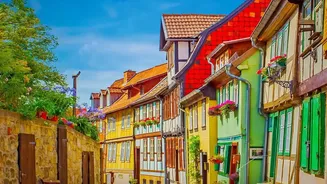
Famous to modern audiences as the setting for the 'Wallander' detective novels, Ystad is a picturesque coastal town in Skåne with an authentic medieval core. The town is renowned for its hundreds of pastel-coloured, half-timbered houses lining cobblestone streets, some dating back centuries. Key historical landmarks include the 13th-century Greyfriars Abbey, one of the best-preserved medieval monasteries in Sweden, and the massive St. Mary's Church (S:ta Maria Kyrka), which has origins around 1200. Walking through Ystad feels like stepping into a storybook, where every corner reveals charming courtyards and beautifully preserved architecture. Its blend of medieval history and seaside atmosphere makes it a unique and captivating destination.