







The Oxygen Problem on Mars
To establish a human presence on Mars, astronauts need a lot of oxygen. Not just for breathing, but for rocket propellant to return home. Launching four astronauts from the Martian surface could require about 25 metric tons of liquid oxygen—far too much
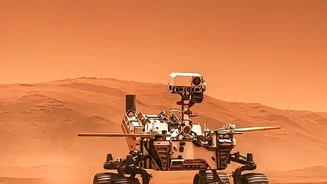
to economically ship from Earth. The solution is to 'live off the land' through a process called In-Situ Resource Utilization (ISRU). This means making what you need from local materials. On Mars, the most abundant resource is the atmosphere, which is about 96% carbon dioxide (CO2). The pioneering Mars Oxygen In-Situ Resource Utilization Experiment, or MOXIE, proved this was possible. A toaster-sized instrument aboard the Perseverance rover, MOXIE successfully and repeatedly used a process called solid oxide electrolysis to split CO2 molecules, producing pure oxygen.
From Toaster-Sized to Human-Scale
MOXIE was a phenomenal success. Between 2021 and its final run in August 2023, it generated 122 grams of oxygen, proving the technology works in the harsh Martian environment. It even exceeded its production targets, at its best creating 12 grams of oxygen per hour. But this is a tiny fraction of what's needed. The total oxygen MOXIE produced would only sustain a small dog for about 10 hours. To support a human crew and their return journey, future systems need to be hundreds of times more productive. This is the challenge of scaling: moving from a successful science experiment to a robust, industrial-scale production plant. The next step isn't just a bigger MOXIE; it's a completely different class of machine.
How Improved Reactors Change the Game
The focus of current research is on creating reactors that are not only larger but also more efficient, reliable, and capable of continuous operation. The original MOXIE worked by heating Martian air to 800°C and using an electric current to separate the carbon and oxygen atoms. Improved reactor designs are exploring ways to optimize this process. This includes enhancing the catalysts that facilitate the chemical reaction, improving the durability of the ceramic electrolysis cells to withstand thousands of hours of operation, and designing systems for better thermal management. One key area of development is building a complete system that includes not just the oxygen generator but also the machinery to liquefy and store the oxygen as it's produced—something MOXIE did not do. Other novel approaches, like using plasma or algae to process the atmosphere, are also being explored.
The Power-Hungry Road to Breathable Air
Scaling up oxygen production on Mars faces one enormous hurdle: power. The MOXIE experiment drew about 300 watts to produce a few grams of oxygen. A human-scale system, capable of producing two to three kilograms of oxygen per hour, would require a continuous power supply of 25 to 30 kilowatts. This is an immense amount of energy, far beyond what the solar panels on a rover can provide. The consensus among engineers is that such a system would almost certainly require a dedicated nuclear fission power source. This power plant would need to be delivered to Mars and set up ahead of the astronauts' arrival, running continuously for months to fill the oxygen tanks needed for the mission.
What This Means for Future Mars Missions
The development of scaled-up oxygen reactors is a critical enabling technology for the future of Mars exploration. Successfully demonstrating a system that can reliably produce and store metric tons of oxygen would fundamentally change the architecture of human missions. Instead of launching every drop of propellant and every breath of air from Earth at a staggering cost, missions can become more self-sufficient and sustainable. This breakthrough would reduce the number of heavy launches required from Earth, lowering overall mission risk and cost. It would allow for longer stays on the Martian surface and provide a critical safety buffer for astronauts. While the technology is still in development, the success of MOXIE and the focused engineering on its successor systems are turning a science-fiction concept into a tangible engineering roadmap for putting human boots on the Red Planet.