
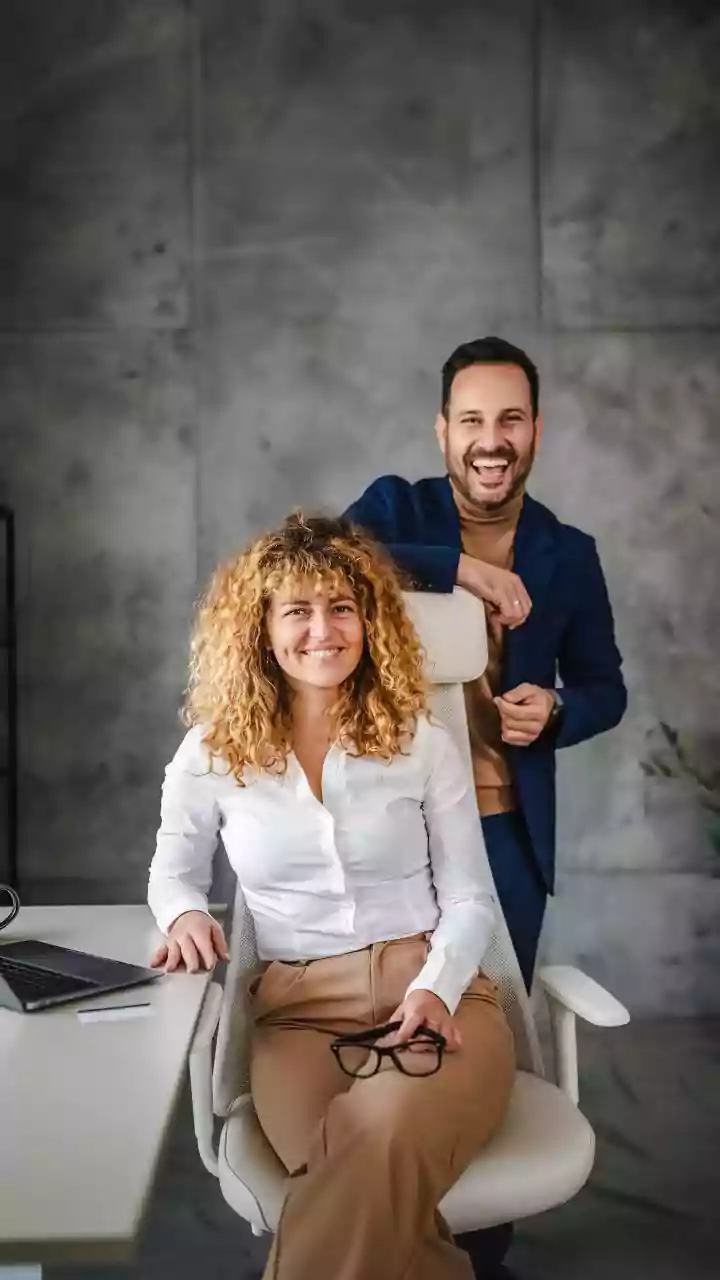





In the high-stakes world of artificial intelligence, a $1.5 trillion valuation is a number that commands attention. This figure, attached to AI safety startup Anthropic, spotlights the remarkable journey of its founders: siblings Dario and Daniela Amodei.
An IPO for the History Books
The headline figure isn't just hype. In mid-November 2026, Anthropic priced its initial public offering at $83 per share, achieving a monumental $1.5 trillion valuation. This places it among the largest and most anticipated IPOs in recent history, raising an initial $81.3 billion. The move to go public provides a massive infusion of capital, essential for the compute-heavy race to build next-generation AI models. The intense investor demand, reportedly six to seven times oversubscribed, signals Wall Street's immense appetite for pure-play AI companies, especially one with a unique origin story.
The Siblings Who Walked Away
The story of Anthropic begins with a departure. In late 2020, siblings Dario and Daniela Amodei left their senior roles at OpenAI, the creator of ChatGPT. Dario was the VP of Research, instrumental in developing models like GPT-2 and GPT-3, while Daniela was the VP of Safety and Policy. They weren't alone; they took five other senior colleagues with them to found Anthropic in early 2021. The split wasn't over sour grapes or a single deal, but a fundamental disagreement on direction. They believed OpenAI was moving too fast and prioritizing commercialization over ensuring the safety and ethical alignment of its increasingly powerful technology. Rather than argue, they decided to build their own vision.
A Different Kind of AI Company
From day one, Anthropic's mission has been 'AI safety'. This isn't just a marketing slogan; it's embedded in its corporate structure as a Public Benefit Corporation, which legally obligates it to balance profit with societal good. Their core philosophy is that as AI gets more powerful, simply scaling it up isn't enough; you must build safety into the training process from the ground up. This led to their pioneering technique known as 'Constitutional AI'. Instead of just human feedback, the AI is trained to follow a set of principles—a constitution—to ensure its responses are helpful and harmless. This approach aims to create AI systems that are reliable, interpretable, and steerable.
Meet Claude: The 'Thoughtful' Chatbot
Anthropic's flagship product is Claude, a family of large language models designed to compete directly with OpenAI's offerings. Available through an API and as a public-facing chatbot, Claude is capable of sophisticated dialogue, content creation, and complex reasoning. Models like Claude Fable, Sonnet, and Opus are tailored for different tasks, from high-speed, cost-effective work to demanding, long-form reasoning and coding. Anthropic's pitch is that its safety-first approach makes Claude a more reliable partner for enterprise customers, reducing the risk of brand-damaging outputs. By September 2026, more than half of the Fortune 500 were already spending significant sums on its services.
The Trillion-Dollar 'Frenemy' Ecosystem
Anthropic's rise is fueled by an intricate web of 'coopetition'. Its biggest investors include the very companies it competes with. Following the IPO, Amazon and Google own a combined 28% of Anthropic, holding non-voting shares. These tech giants are also crucial partners, with Anthropic committed to spending over $110 billion on Amazon's cloud services and over $121 billion on Google's through the early 2030s. This circular flow of capital—where investors are also suppliers and distributors—has raised eyebrows among regulators but has proven essential for funding the astronomical costs of frontier AI development. This makes Anthropic both a powerful independent player and deeply integrated with the giants it seeks to challenge.