


The Grand Challenge: A Round Trip to the Moon
Successfully landing on the Moon with Chandrayaan-3 was a monumental achievement. But a sample return mission like Chandrayaan-4 is an entirely different league of complexity. It's not just about getting there; it's about landing, collecting, and then
launching off the Moon to complete a 384,400-kilometre journey home. This requires a series of perfectly orchestrated steps, from robotic digging to docking in lunar orbit. The goal is to bring up to 3 kilograms of precious lunar soil and rock back to labs on Earth. If successful, India will join the elite club of nations—the US, the former Soviet Union, and China—that have accomplished this feat. The mission, which received cabinet approval in September 2024, is planned for launch around 2028.
A Five-Part Spacecraft for a Complex Job
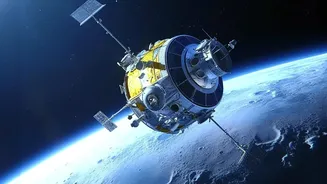
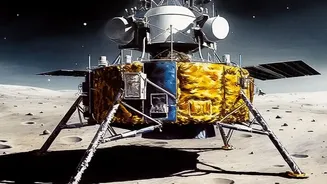
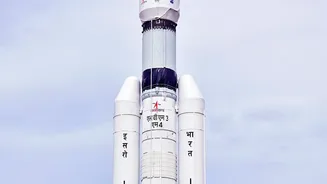
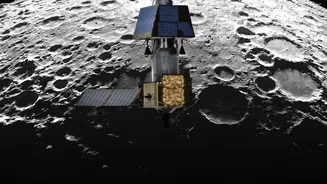
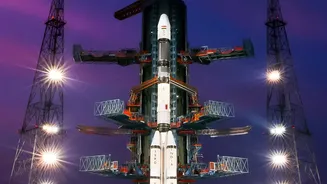
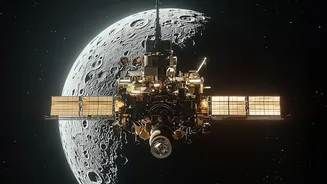
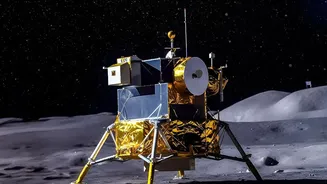
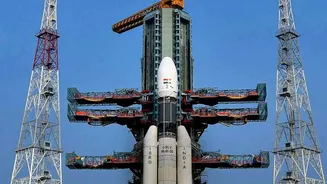
Chandrayaan-4 isn't a single spacecraft but a sophisticated five-module system that will be launched in two parts. The first rocket will carry the Descender Module (the lander) and the Ascender Module. The second will carry the Propulsion, Transfer, and Re-entry Modules. These two stacks will first meet and dock in Earth's orbit—a major milestone for ISRO—before the Propulsion Module pushes the combined craft towards the Moon. Once in lunar orbit, the lander and ascender separate for the landing, while the other modules wait. This modular design is ISRO’s answer to solving the immense logistical puzzle of a sample return mission.
Scoop and Drill: The Robotic Collection Process
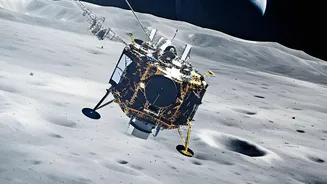
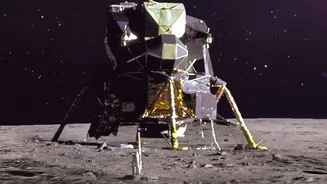
Once safely on the lunar surface, the mission's scientific heart begins its work. The Lander Module is equipped with a robotic arm and a drilling mechanism. The robotic arm will scoop up surface soil, known as regolith, from around the landing site. Simultaneously, the drill will penetrate the lunar surface to collect sub-surface samples, which are crucial because they are shielded from the harsh radiation and temperature swings of the surface, potentially preserving valuable scientific clues. Both sets of samples, totalling about 2-3 kg, are then carefully transferred into separate containers housed within the Ascender Module, the vehicle that will make the journey back up to orbit.
The All-Important Seal: Locking in the Treasure
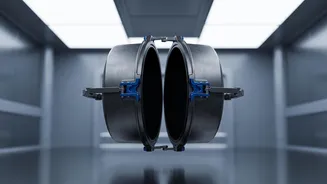
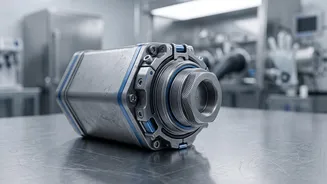
This is where the magic of the return module's design comes into play. Getting the samples back to Earth is useless if they are contaminated by Earth's atmosphere or altered by the vacuum of space. The containers holding the lunar material must be perfectly sealed. Once the samples are transferred into the Ascender Module, an automated process will secure them in vacuum-sealed containers. This technology is designed to prevent any contamination or leakage during the long and arduous journey home. After sealing, the Ascender Module acts as a launchpad, using the Lander as its base to lift off from the Moon's surface—a critical demonstration of technology for future human missions.
The Final Handover and Fiery Re-entry
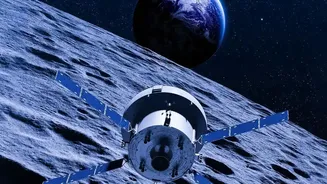
After launching from the Moon, the Ascender docks with the Transfer and Re-entry modules waiting in lunar orbit. Here, another delicate transfer occurs: the sealed sample containers are moved from the Ascender into the Re-entry Module. The Transfer Module then fires its engine, propelling itself and the precious cargo on a path back to Earth. As it approaches our planet, the Re-entry Module separates. This capsule is designed like a heat shield, built to withstand the extreme temperatures of atmospheric re-entry before making a safe landing, delivering its pristine cargo from another world into the hands of scientists.