






A Cosmic Whodunit Begins
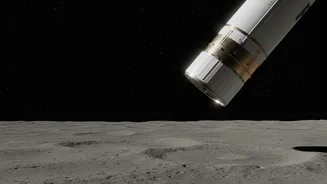
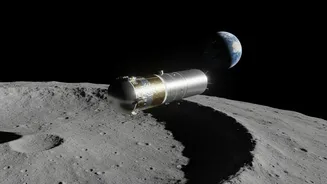
The story started when astronomer Bill Gray, who runs software to track near-Earth objects, flagged a piece of space junk designated WE0913A. His calculations showed it was doomed to crash into the far side of the Moon on March 4, 2022. Initially, the evidence
pointed to a familiar source: a SpaceX Falcon 9 upper stage. This specific stage had completed its mission in 2015, launching the Deep Space Climate Observatory (DSCOVR) satellite, and had been tumbling through a chaotic orbit ever since. The identification seemed plausible, and the stage became a symbol of our growing footprint beyond Earth's orbit.
An Unexpected Plot Twist
Just as the narrative solidified, new information emerged. An engineer at NASA's Jet Propulsion Laboratory pointed out that the DSCOVR spacecraft's trajectory never took it particularly close to the Moon, making it unlikely for its discarded rocket stage to be on a lunar-impact course. This prompted Gray and other astronomers to reconsider. Digging back into launch records, they found a new, more convincing suspect: the upper stage of a Chinese Long March 3C rocket. This rocket launched the Chang'e 5-T1 mission in 2014, and its trajectory was a much better fit. Further analysis of how the object reflected sunlight supported the new theory, as its signature matched the paint used on Chinese rockets, not SpaceX ones. Despite China's Ministry of Foreign Affairs denying the object was theirs, the astronomical community reached a strong consensus based on the orbital data.
Why Is This So Hard?
The misidentification wasn't a simple blunder; it highlighted the immense difficulty of tracking objects in deep space. While military and civilian agencies meticulously track tens of thousands of objects in Low Earth Orbit (LEO) to protect satellites and astronauts, the same isn't true for cis-lunar space—the vast region between Earth and the Moon. Objects this far out are small, faint, and don't reflect much light or radar. Tracking them relies on a small, dedicated, and often-volunteer community of astronomers who use ground-based telescopes. These surveys are primarily designed to find asteroids, and discovering man-made debris is often a side effect. There is no formal, internationally coordinated system for identifying and monitoring every piece of hardware we send into the far reaches of the Earth-Moon system.
A Crowded Future Above
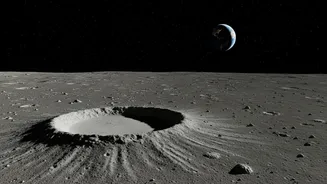
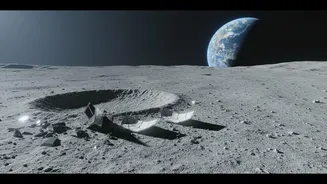
The lunar impactor saga serves as a critical wake-up call. With a renewed global focus on returning to the Moon through programs like NASA's Artemis and other national and commercial missions, the traffic in cis-lunar space is set to increase dramatically. Every mission leaves behind hardware, from spent rocket stages to defunct probes. Without a robust system for tracking this debris, the risk of collisions with active, multi-billion dollar missions grows. The 2022 impact was notable because it was the first documented case of space junk unintentionally hitting the Moon, but experts agree it won't be the last. The strange double crater the Chinese booster left behind also suggested it was carrying an unknown additional mass, adding another layer of mystery and underscoring how little we know about some objects.
The Need for Space Traffic Management
This incident has amplified calls for a comprehensive space traffic management (STM) system that extends beyond LEO. Such a system would involve international cooperation, with space-faring nations and private companies taking greater responsibility for their hardware. This includes sharing trajectory data and designing missions so that upper stages are placed in less problematic orbits or safely deorbited. As the space economy expands, viewing deep space as an infinite dumping ground is no longer viable. Establishing clear rules of the road is essential for ensuring that future exploration and commercial activities can be conducted safely and sustainably. The work of independent trackers like Bill Gray has been crucial, but it can't replace a formal, well-funded global effort.