






The Power of a Rainy Day Scent
That unique, earthy smell after the first rain, known as petrichor, is more than just pleasant; it's a powerful psychological trigger. This aroma comes from a combination of plant oils and a compound called geosmin, produced by soil-dwelling bacteria.
When raindrops hit the ground, these compounds are released into the air and travel to your nose. Our sense of smell has a direct line to the limbic system, the part of the brain that governs emotion and memory. Unlike other senses, smells can bypass rational thought and evoke feelings almost instantly. For many, petrichor is linked to positive, calming memories of relief from heat, childhood holidays, and family time, creating a sense of renewal and relaxation.
Your Brain on Comfort Food
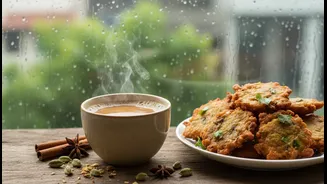
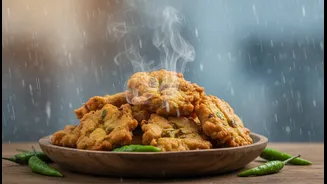
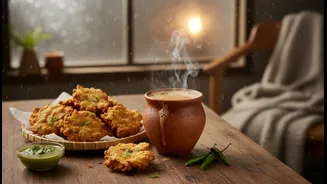
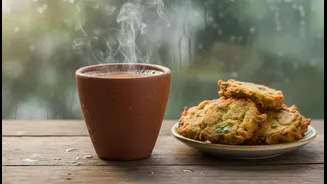
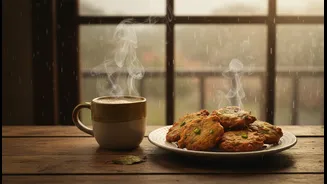
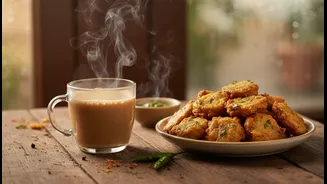
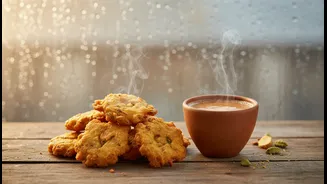
When the weather turns cooler and the sky gets dark, our bodies and brains undergo subtle shifts. The drop in temperature and reduced sunlight can lower levels of serotonin, a neurotransmitter linked to happiness and well-being. To compensate, our brain often craves carbohydrate-rich and high-fat foods. Eating these foods triggers the release of dopamine, a chemical that activates the brain's reward and pleasure centres, providing a temporary mood boost. This is why a plate of hot, crispy pakoras or a sweet, milky chai doesn't just warm your hands; it creates a genuine feeling of chemical comfort, acting as a form of self-medication for the gloomy weather.
A Hug in Culinary Form
Beyond brain chemistry, our monsoon cravings are deeply rooted in nostalgia. The foods we yearn for are often the ones we associate with being cared for and feeling safe. Think of your mother making pakoras on a rainy afternoon or sharing a steaming cup of tea with family while watching the downpour. These repeated experiences create powerful neural pathways. Over years, the brain learns to associate the sensory cues of the monsoon—the dark clouds, the sound of rain, the cool breeze—with the rewarding feeling of these specific foods. The craving isn't just for the food itself, but for the entire emotional experience it represents: togetherness, safety, and the comfort of a cherished ritual.
A Shared Cultural Ritual
This phenomenon isn't just personal; it's a shared cultural experience across India. From Mumbai's vada pav and bhajiyas to Kolkata's telebhaja and Delhi's samosas, every region has its own beloved monsoon snacks. These aren't just random preferences. The appeal of hot, crispy foods provides a delightful sensory contrast to the damp, humid atmosphere. The ritual of stopping at a roadside stall for bhutta or gathering at home for chai becomes a way of connecting with the season and with each other. Watching others share their own rainy-day food moments on social media further reinforces this collective tradition, making the craving feel even more universal and immediate.