


The Humidity Effect: Why Makeup Melts
High humidity is more than just uncomfortable; it’s a scientific challenge for cosmetics. When moisture in the air is high, it prevents your sweat from evaporating efficiently, creating a constant film on your skin. This environment signals your skin to
produce more oil. This combination of sweat and excess sebum is disastrous for makeup, as it breaks down the binding agents that are supposed to keep foundation, eyeliner, and other products in place. The result is a cascade of unwanted effects: foundation becomes patchy, eyeliner smudges, and powders turn cakey. High humidity also opens up pores, making them more susceptible to clogging with this mix of oil, dirt, and melting makeup.
Decoding 'Climate-Tested' and 'Sweat-Proof'
Many brands are now marketing products as 'climate-tested' or 'climate-adaptive'. While this sounds promising, these are not officially regulated terms in India. There isn't a single, standardized 'climate test' mandated by the Bureau of Indian Standards (BIS) specifically for humidity performance. Instead, the term often means the product was formulated with environmental stressors like heat, pollution, or humidity in mind. A more useful label to look for is 'sweat-proof', which implies the formula is designed to resist not just water, but also the oils and salts in perspiration. Products that can withstand both are typically best for Indian conditions.
Smart Ingredients for a Longer-Lasting Look
The secret to makeup that endures lies in the ingredient list. To combat melting, look for oil-free or non-comedogenic formulas that won't clog your pores. Mattifying primers that contain silicones (like dimethicone) can create a smooth, gripping barrier between your skin’s oils and your makeup. For foundations and concealers, stick formats or lightweight liquid-to-powder formulas often perform better than heavy, oil-based liquids in humidity, as they are less likely to re-emulsify with sweat. For setting your look, translucent powders with ingredients like silica or talc are excellent for absorbing excess oil throughout the day.
Application Techniques Are Half the Battle
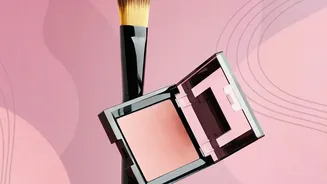
Even the best products can fail if not applied correctly for humid conditions. The golden rule is 'less is more'. Start your routine with minimal, lightweight skincare—a gel-based moisturiser is often better than a heavy cream. Always follow with a primer to create a tenacious base. When applying foundation, use thin, buildable layers rather than one thick coat. This allows each layer to set and gives a more natural, breathable finish. Many makeup artists recommend swapping powder blushes, which can get patchy, for long-wearing cheek tints or stains that fuse with the skin. Finally, never skip a setting spray. A good setting spray acts like a flexible, protective film, locking your makeup in place and shielding it from humidity.
Product Swaps for a Humidity-Proof Kit
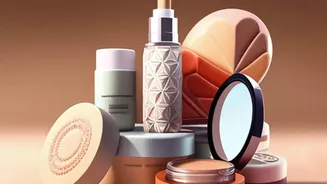
Building a makeup kit that can withstand India's climate involves a few strategic swaps. Instead of a heavy, full-coverage liquid foundation, consider a lightweight skin tint, a stick foundation, or a powder foundation. These formulas are less likely to feel suffocating or slide off. For eyes, waterproof mascara and liquid or gel eyeliners are non-negotiable to prevent 'panda eyes'. For lips, traditional creamy lipsticks can often bleed in the heat. A matte liquid lipstick or a lip stain will offer far greater staying power and a smudge-proof finish. Using blotting papers to absorb shine during the day is also a better option than layering on more powder, which can lead to a cakey appearance.