
Understanding the Sadya Experience
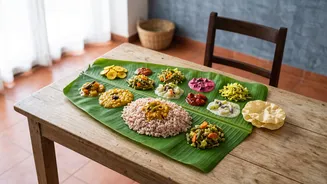
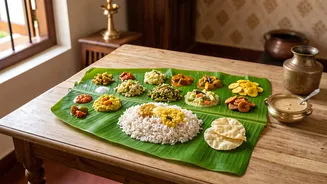
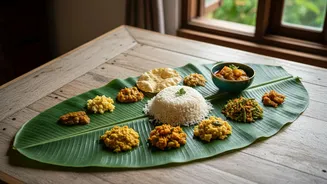
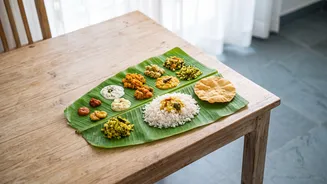
The word 'Sadya' simply means banquet in Malayalam, but the experience is so much more. It’s a multi-course vegetarian meal served on a banana leaf, featuring a stunning variety of dishes that can range from a dozen to over 26. This feast is a tribute
to Kerala's harvest and a symbol of prosperity, prepared to honour the annual return of the mythical King Mahabali. The goal is a perfect balance of flavours—sweet, salty, sour, and spicy—and textures, creating a meal that is both a cultural expression and a delight for the senses.
The Core Ensemble: Non-Negotiable Dishes
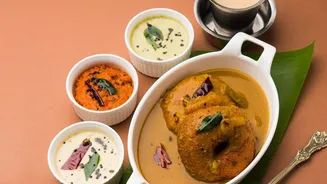
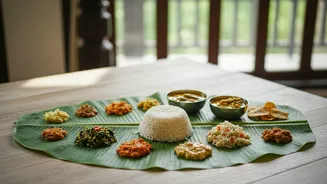
For a first-timer, a full 26-dish Sadya is ambitious. Instead, focus on the essentials that form the soul of the meal. Start with Kerala Matta Rice, a robust red rice that is the centerpiece. For the main curries, Parippu (a simple moong dal curry served with ghee) is the traditional first course, followed by Sambar, the iconic lentil and vegetable stew. To round out the core group, you must have Avial, a thick mixture of various vegetables cooked with coconut and yogurt. These four components provide a complete and satisfying Sadya experience in themselves.
Building the Feast: Key Side Dishes
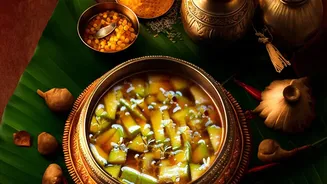
Once you have the basics covered, you can add layers of flavour with a few key side dishes, or 'kootan'. A Thoran, a dry stir-fry of finely chopped vegetables like cabbage or beans with grated coconut, is a must for texture. Olan offers a milder counterpoint; it's a delicate curry of ash gourd and cowpeas in a light coconut milk gravy. Kalan is a thicker, sour curry typically made with yam and raw banana in a yogurt base. Finally, a Pachadi or Kichadi—yogurt-based dishes that can be sweet (like pineapple pachadi) or savory (like cucumber kichadi)—adds a cooling element to the spread.
The Essential Accompaniments
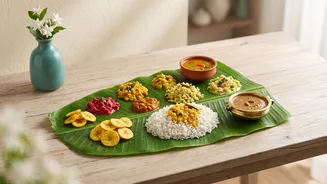
A Sadya is incomplete without its powerful accompaniments. Puli Inji, a sweet, sour, and spicy chutney made from ginger, tamarind, and jaggery, is considered a digestive and a palate cleanser. You'll also need at least one type of pickle (Achar), typically lime or mango. For crunch and texture, crispy Pappadams are non-negotiable, alongside banana chips (Upperi) and their sweet cousin, Sharkara Varatti (jaggery-coated banana chips). A small, ripe banana is also traditionally served on the leaf.
The Grand Finale: Payasam
No feast is complete without dessert. The quintessential Sadya dessert is Payasam. There are many varieties, but two are classics. Palada Payasam is a rich, creamy kheer made with milk and tiny rice flakes called 'ada'. Parippu Payasam is an earthier, richer version made with moong dal, jaggery, and coconut milk. For a home Sadya, preparing one of these is enough to provide that sweet, satisfying finish. It's often served directly on the banana leaf and can be mixed with a crushed banana and pappadam for a unique flavour combination.
A Game Plan for the Home Cook
The key to a stress-free Sadya is planning. Many elements can be prepared in advance. Pickles and Puli Inji can be made days, or even a week, ahead. You can chop all the vegetables for the various dishes the day before and store them in the refrigerator. Grating coconut and keeping it ready is another time-saver. On the day of Onam, start by cooking the dishes that take the longest, like Avial and Sambar. The rice should be cooked last to ensure it’s served hot. Remember, even a simplified Sadya with just a few core dishes captures the true spirit of the festival.
The Art of Serving
The presentation is a crucial part of the tradition. The Sadya is served on a banana leaf with the narrow tip pointing to the left of the guest. All the side dishes, pickles, and chips are placed on the top half of the leaf, starting from the left tip. The bottom half is reserved for the rice. Curries like Parippu and Sambar are poured over the rice in courses. The payasam follows, and the meal often concludes with a glass of spiced buttermilk called Sambharam to aid digestion. Eating with your right hand is the traditional way to enjoy the meal, as it's believed to enhance the connection with the food.