



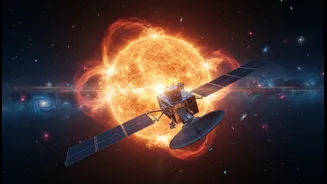


India’s Watchful Eye on the Sun
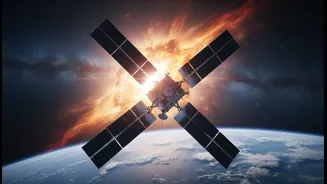
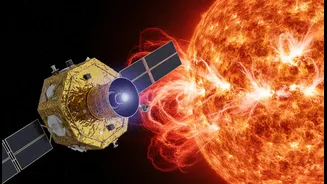
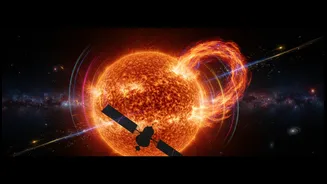
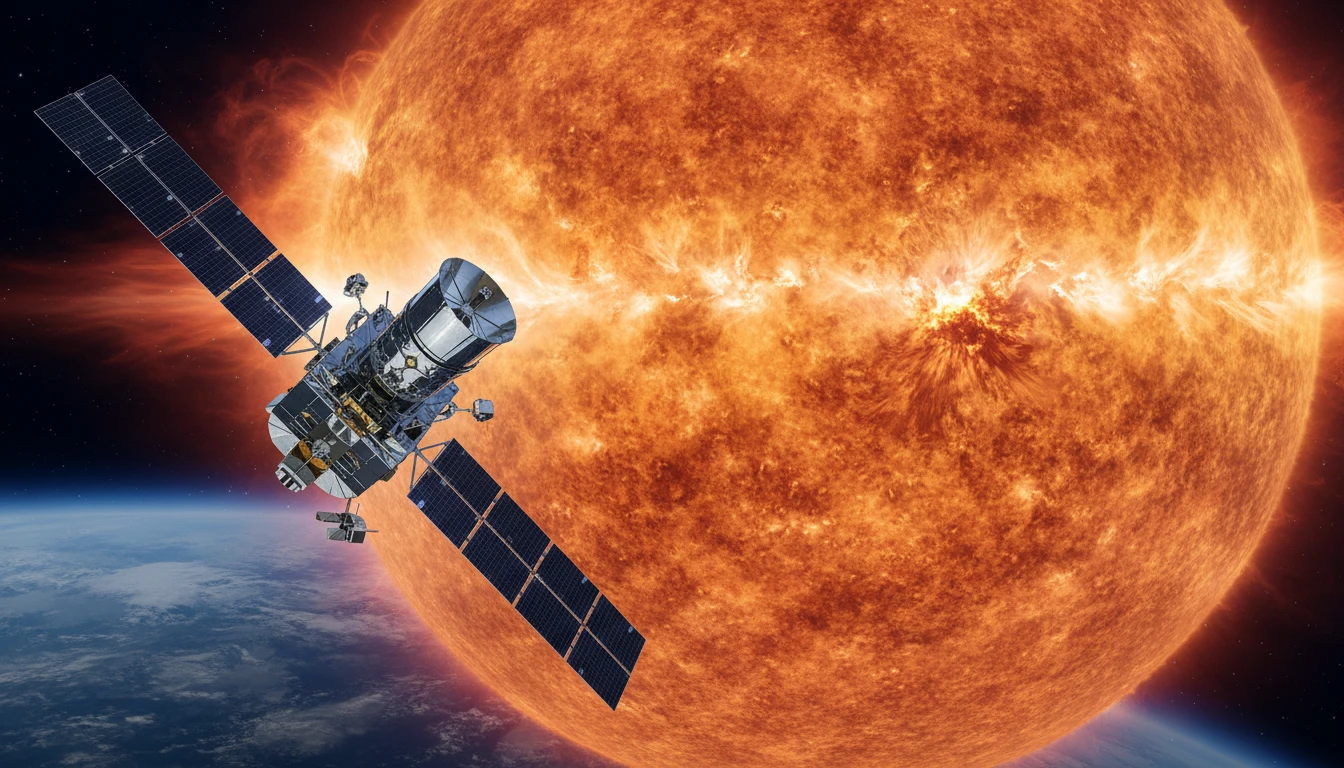
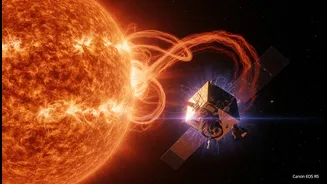
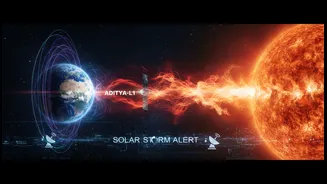
India’s first dedicated solar observatory, Aditya-L1, is a testament to the nation's growing prowess in space. Stationed 1.5 million kilometres from Earth at Lagrange Point 1, it has an uninterrupted view of the Sun. Since becoming operational, the mission
has been instrumental in providing real-time data on solar activities, especially as we are in the midst of a highly active period known as Solar Cycle 25. Early predictions suggested a mild cycle, but activity has been far more intense than expected, with the peak period of solar maximum now extending through 2026. This heightened activity makes Aditya-L1's role crucial, transforming it from a scientific instrument into a vital watchdog for our planet's technological infrastructure.
What Exactly Are Solar Storms?
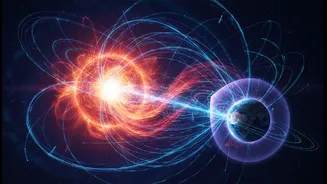
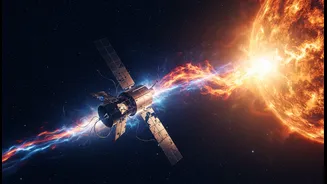
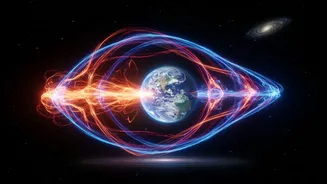
Think of solar storms as the 'weather' of space, but far more powerful than anything on Earth. The Sun constantly sends out a stream of charged particles called solar wind. Sometimes, however, it unleashes much more violent events. These include solar flares, which are intense bursts of radiation, and Coronal Mass Ejections (CMEs), which are massive explosions of plasma and magnetic fields from the Sun's outer atmosphere. When a powerful CME is aimed at Earth, it can slam into our planet's magnetic field, triggering a geomagnetic storm. While this interaction produces beautiful auroras, it can also wreak havoc on our technology.
The Risk to Our High-Tech World
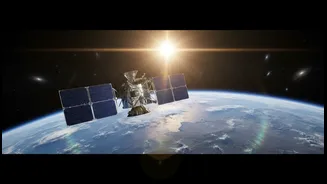
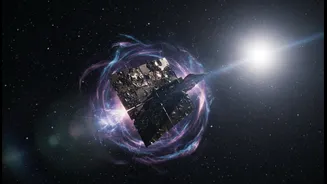
Our modern world is incredibly dependent on technology that is vulnerable to solar storms. A severe geomagnetic storm can induce powerful electrical currents in power grids, potentially causing widespread blackouts and damaging critical transformers. Satellites, which form the backbone of our GPS, communication networks, and financial systems, are also at high risk. The charged particles can damage their sensitive electronics, while the expansion of Earth's atmosphere during a storm can increase drag, causing satellites to lose altitude. In an extreme event, these disruptions could last for days, weeks, or even months, impacting everything from navigation and communication to water supplies that rely on electric pumps.
The New Guardians: Space Weather Forecasters
Just as meteorologists forecast weather on Earth, a new field of specialists is emerging to predict storms in space. Space weather forecasting is a critical, rapidly growing discipline. These experts analyze data from observatories like Aditya-L1 to issue warnings about incoming solar storms. These forecasts give satellite operators, power grid managers, and airlines precious time to take protective measures, such as putting satellites into a safe mode or rerouting flights. ISRO itself plays a key role, with its centres processing satellite data for various agencies and contributing to space weather models.
The Careers Powering Our Solar Shield
The increasing threat from solar storms and the data pouring in from missions like Aditya-L1 are creating a demand for new job roles. These are not just limited to traditional researchers. Careers in heliophysics (the study of the Sun and its influence) now include a range of specializations. There is a need for space weather forecasters, data scientists skilled in analysing vast solar datasets, and engineers who can design more resilient satellites and power grids. Research positions for physicists and astrophysicists are also expanding, with institutions in India and abroad looking for talent to help build predictive models. ISRO-sponsored projects and training programs are helping build this expertise within India, creating an ecosystem for a new generation of solar guardians.