


A Planet of Seasons
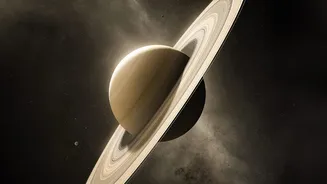
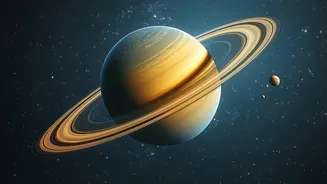
Just like Earth, Saturn is tilted on its axis. This tilt means that as it journeys around the Sun, its hemispheres experience distinct seasons. But there is a major difference in scale. A single year on Saturn lasts for about 29 Earth years, making each
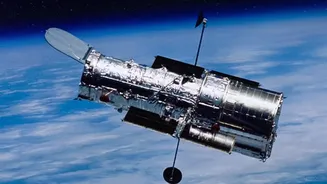
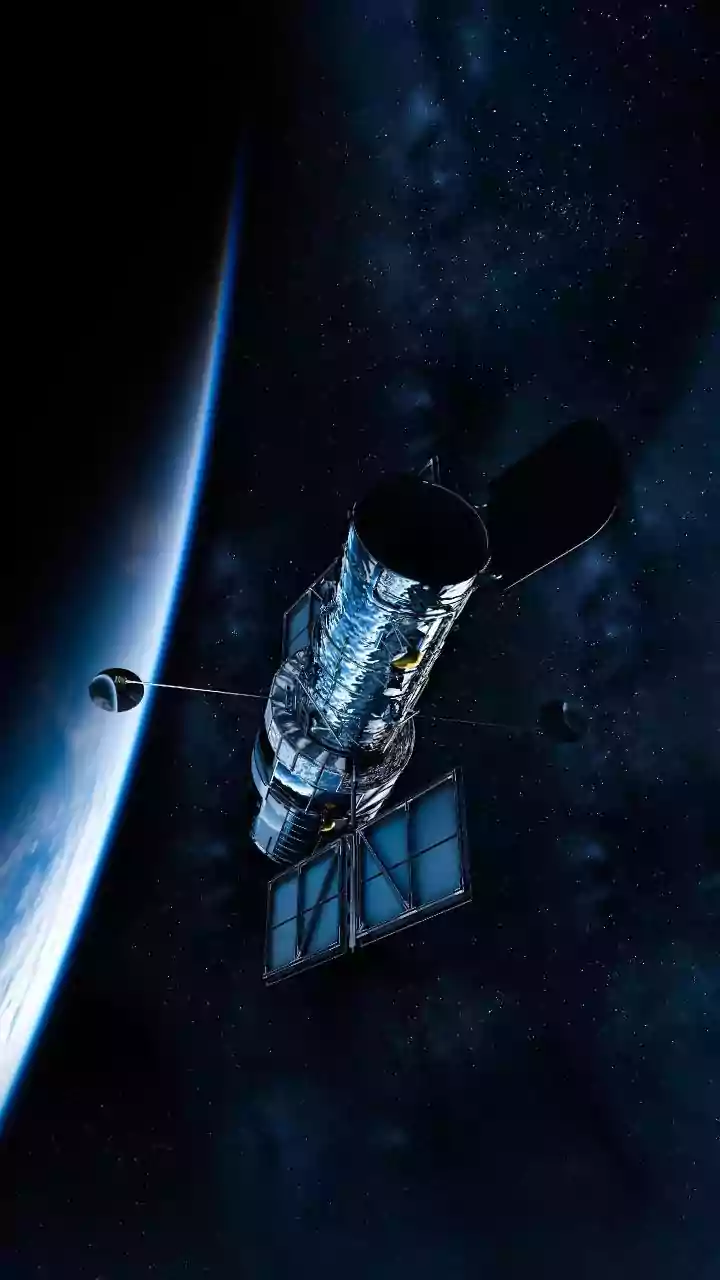
of its seasons more than seven Earth years long. For decades, scientists have been curious about how these long, drawn-out seasons affect the gas giant’s atmosphere. Thanks to the long-running Outer Planets Atmospheres Legacy (OPAL) program, the Hubble Space Telescope has been keeping a yearly watch on the outer planets, providing a unique long-term weather report. These consistent observations are now painting a fascinating picture of subtle, yet significant, seasonal evolution.
Peering Through an Infrared Lens
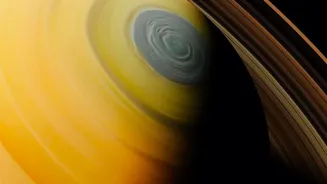
Observing these changes requires more than just a standard camera. By using infrared vision, telescopes like Hubble and the James Webb Space Telescope can peer through the planet's hazy upper atmosphere to see what is happening at different depths. Different wavelengths of infrared light are absorbed or reflected by specific chemicals and clouds, allowing scientists to effectively peel back the layers of Saturn's atmosphere like an onion. This method reveals details about cloud height, temperature, and chemical composition that are invisible in normal light. Recent observations taken in both visible and infrared light provide a more complete, three-dimensional understanding of how Saturn's massive atmospheric system works.
Spotting the Changes
By comparing images taken by Hubble between 2018 and 2020, as Saturn’s northern hemisphere transitioned from summer toward autumn, scientists noted several key changes. The equatorial region brightened by 5 to 10 percent during this period. There were also shifts in wind speeds. In 2018, winds at the equator were measured at a blistering 1,600 kilometres per hour, but by 2019 and 2020, they had slowed to the 1,300 km/h speeds previously recorded by the Cassini spacecraft. This change in wind speed could indicate that the cloud tops were at a different altitude in 2018, a detail only discernible through careful, multi-year observation. A slight reddish haze over the northern hemisphere has also been observed, possibly caused by increased sunlight changing atmospheric circulation or haze production.
The Rings Play a Surprising Role
The headline of the article refers to using the rings' shadow, which is one of many techniques used. Another surprising discovery involves the rings themselves directly influencing the planet's atmosphere. Researchers have found that a constant 'rain' of icy particles from Saturn's rings is heating its upper atmosphere. This was identified by detecting an excess of ultraviolet radiation, seen as a spectral line of hot hydrogen, which couldn't be explained by seasonal solar radiation alone. This phenomenon, where a planet’s rings actively alter its atmosphere, has never been seen elsewhere in our solar system. The Cassini probe, during its final plunge into Saturn in 2017, confirmed that particles from the rings were indeed falling into the planet. This constant interaction is a key piece of the puzzle in understanding Saturn's complex environment.