




The Economic Pressure Cooker
The backdrop to this year's festive shopping is one of significant financial pressure for many families. Retail inflation climbed to a 21-month high of 5.54% in September, with food inflation even higher at 7.74%. This means everyday essentials, from
groceries to fuel, are costing more, leaving less disposable income for discretionary spending. One survey found that over half of Indian households felt their financial situation was worse than a year ago. As a result, while the desire to celebrate remains strong, the capacity to spend lavishly has been curtailed for a significant portion of the population, forcing a re-evaluation of festive expenditure.
A 'Value-First' Mindset Takes Over
Instead of splurging on premium brands, a large number of consumers are now adopting a 'value-first' approach. This doesn't just mean spending less, but spending smarter. The initial days of online festive sales have shown that growth is being driven by a higher volume of purchases, not necessarily higher-priced items. Shoppers are buying more units across categories like affordable fashion, beauty products, and smaller electronics. Data from e-commerce platforms reveals that while order volumes are up, the average order value has declined, indicating a preference for smaller, more frequent purchases over single big-ticket items. This trend highlights a conscious decision to make every rupee count, stretching budgets to cover more ground.
The Smart Shopper's Playbook
In this constrained environment, urban shoppers are becoming masters of strategy. Discounts are the single biggest purchase trigger for nearly half of all consumers. Many shoppers now start their research weeks in advance, comparing prices across online and offline channels before committing. This has led to a boom in the use of affordability options like No-Cost EMIs, cashback offers, and 'buy now, pay later' schemes, which help manage cash flow without sacrificing participation in festive traditions. The hunt for a good bargain is no longer a secondary consideration but a primary driver of purchase decisions, with many consumers stating they will only buy certain products during promotions.
Shifting Category Priorities
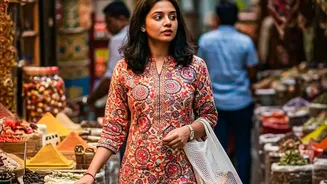
Budget constraints are also causing a clear shift in what people are buying. While fashion, particularly ethnic wear, remains a dominant festive category, shoppers are focusing on both the affordable and premium ends of the spectrum, squeezing the middle. Fast-moving consumer goods (FMCG), beauty, and personal care are seeing strong growth, suggesting a turn towards smaller, more personal indulgences. However, big-ticket discretionary items are feeling the pinch. High gold prices have made jewellery a lower priority for many, and some analysts project a fall in smartphone sales volumes due to rising device costs. Consumers are prioritising essential festive purchases and home upgrades over high-value luxury goods.
The Online and Tier-2 Surge
The digital marketplace continues to be a major arena for festive shopping, with e-commerce platforms seeing massive order volumes in the opening days of their sales. Significantly, a large portion of this growth is coming from outside the major metros. Around two-thirds of consumers who purchased online in the early festive period came from Tier-2 cities and beyond. These emerging markets are also leading the charge in mid-budget spending, signaling a broadening of the consumer base. Furthermore, the rise of 'quick commerce' for both everyday essentials and festive items shows a growing demand for convenience, even among budget-conscious shoppers.