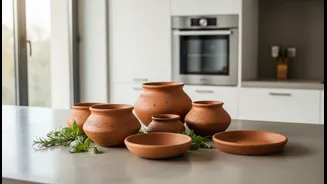





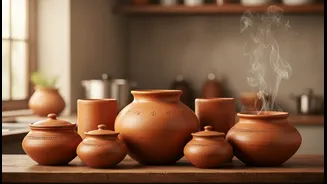

A Return to Health and Tradition
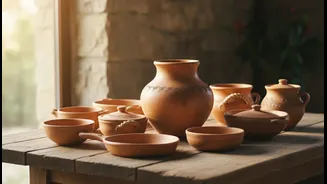
The resurgence of clay cookware is driven by a growing consciousness around health and a desire to reconnect with traditional practices. For generations, earthenware was central to Indian cooking, a practice rooted in Ayurvedic wisdom. Many believe clay's
alkaline nature helps neutralize the acidity of food, making meals easier to digest and balancing the body's pH levels. Unlike some modern cookware, pure, unglazed clay pots are free from chemical coatings, ensuring that no harmful substances leach into your food. This return to earthen pots is seen as a move towards a more natural and mindful way of eating, away from synthetic materials and processed convenience.
The Science of Superior Flavour
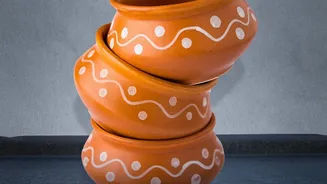
Anyone who has tasted a curry or biryani slow-cooked in a handi will attest to a distinct richness of flavour. This isn't just nostalgia; it's science. Clay is porous, allowing heat and moisture to circulate evenly throughout the pot. This creates a slow, gentle cooking environment that prevents food from burning while retaining its natural juices and nutrients. The pot's ability to hold steam and vapour ensures that the delicate nutrients in vegetables and meats are preserved. Furthermore, this slow-cooking process allows spices to penetrate deeper into the ingredients, resulting in a more aromatic and flavourful dish that is difficult to replicate in metal pans.
Cooking with Less Oil
For the health-conscious, one of the most significant advantages of clay cookware is the reduced need for oil. The slow cooking process and excellent moisture retention mean that food is less likely to stick or dry out. Many find that they can significantly cut down on the amount of oil or ghee used in their cooking, leading to lighter, healthier meals without sacrificing taste. The natural non-stick property of a well-seasoned clay pot helps in preparing dishes that are lower in fat, which is a considerable benefit for everyday cooking.
An Eco-Friendly Kitchen Choice
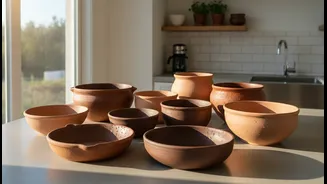
In an era of increasing environmental awareness, clay cookware presents a sustainable alternative to mass-produced utensils. Sourced directly from the earth, these pots are fully biodegradable and leave no harmful waste behind when discarded. Their production generally involves a smaller carbon footprint compared to the industrial manufacturing of metal and non-stick cookware. By choosing handcrafted clay pots, consumers are not only making a healthier choice for their families but also supporting local artisans and preserving a craft that has been passed down through generations. This makes the revival as much about ecological responsibility as it is about culinary preference.
Embracing Earthenware in the Modern Home
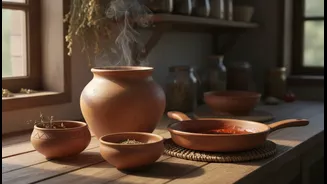
Adopting clay pot cooking requires a slight shift in habits, but it's a simple one. Before its first use, a new clay pot must be 'seasoned'—typically by soaking it in water overnight and then letting it dry. This process strengthens the pot and prevents food from tasting of mud. When cooking, it's best to use low to medium heat, as clay retains warmth efficiently and cooks food gently. Cleaning is also different; harsh soaps should be avoided as the porous surface can absorb them. Instead, hot water and a gentle scrub are all that's needed to keep the pot clean and ready for its next use.