


A New Economic Frontier
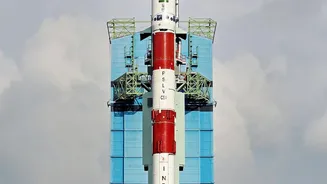
For decades, a career in India's space sector meant one thing: securing a coveted position at the Indian Space Research Organisation (ISRO). Today, the landscape is radically different. Following landmark policy reforms and the establishment of the Indian National
Space Promotion and Authorisation Centre (IN-SPACe), the sector has been opened to private enterprise. Over 400 private space startups have emerged, developing everything from launch vehicles to satellites. This shift from a government-led model to a collaborative public-private ecosystem is the primary driver behind the demand for a new and diverse set of skills.
Data Science and AI: The New Rocket Fuel
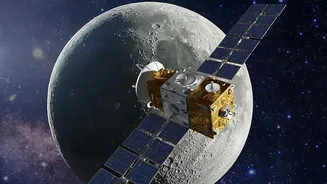
Modern space missions generate an incredible amount of data. From Earth observation satellites monitoring weather patterns and agricultural health to deep space probes, the ability to analyse this information is critical. This has created a massive demand for data scientists, geospatial analysts, and AI/ML specialists. Companies need experts who can build algorithms to process satellite imagery, predict climate trends, and automate spacecraft operations. As ISRO and private firms plan more complex, autonomous missions, AI is no longer a theoretical concept but an essential tool for navigation, spacecraft health monitoring, and mission-critical decisions.
Robotics and Advanced Manufacturing
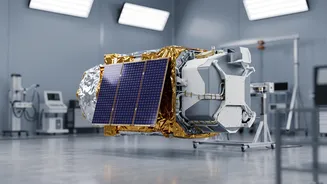
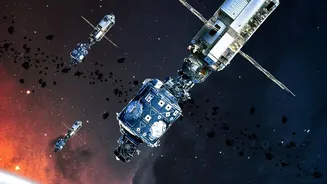
The success of the Pragyan rover on the Moon highlighted the critical role of robotics and autonomous systems. Future missions, including satellite servicing in orbit and building planetary habitats, will rely heavily on advanced robotics. This requires engineers skilled in automation, mechatronics, and AI-driven robotic control. Simultaneously, the need to build lighter, stronger, and more cost-effective spacecraft is driving innovation in manufacturing. Experts in materials science, 3D printing (additive manufacturing), and precision engineering are needed to design and produce the next generation of space hardware.
Space Law and Policy: The Rules of the Road
As space becomes more commercialised and crowded, the need for robust legal frameworks has become urgent. Who is liable if a satellite collides with another? How are launch slots and satellite frequencies allocated? These questions require a new cadre of space lawyers and policy experts. These professionals work with government agencies and private companies on regulatory compliance, international treaties, intellectual property rights, and space insurance. With India aiming to become a major hub for global satellite launches, legal and policy expertise is crucial for smooth and responsible growth.
Space Medicine and Life Sciences
India's ambitious Gaganyaan mission, which aims to send Indian astronauts into orbit, has opened up another critical field: space medicine. Understanding and mitigating the effects of microgravity, radiation, and confinement on the human body is paramount for crewed missions. This requires specialists in fields ranging from physiology and psychology to nutrition and life support systems. As India looks towards a future that includes a space station by 2035, the demand for life scientists and medical professionals focused on human spaceflight will only grow.
Business Development and Finance
With hundreds of startups entering the sector, space is no longer just about science; it is also about building viable businesses. These companies need professionals with skills in business development, marketing, and finance to secure funding, find customers, and manage complex projects. As the Indian space economy aims for a larger share of the global market, individuals who can bridge the gap between deep-tech innovation and commercial strategy will be indispensable. These roles are making the space sector accessible to graduates from management and finance backgrounds like never before.