



A New Look at a Familiar Giant
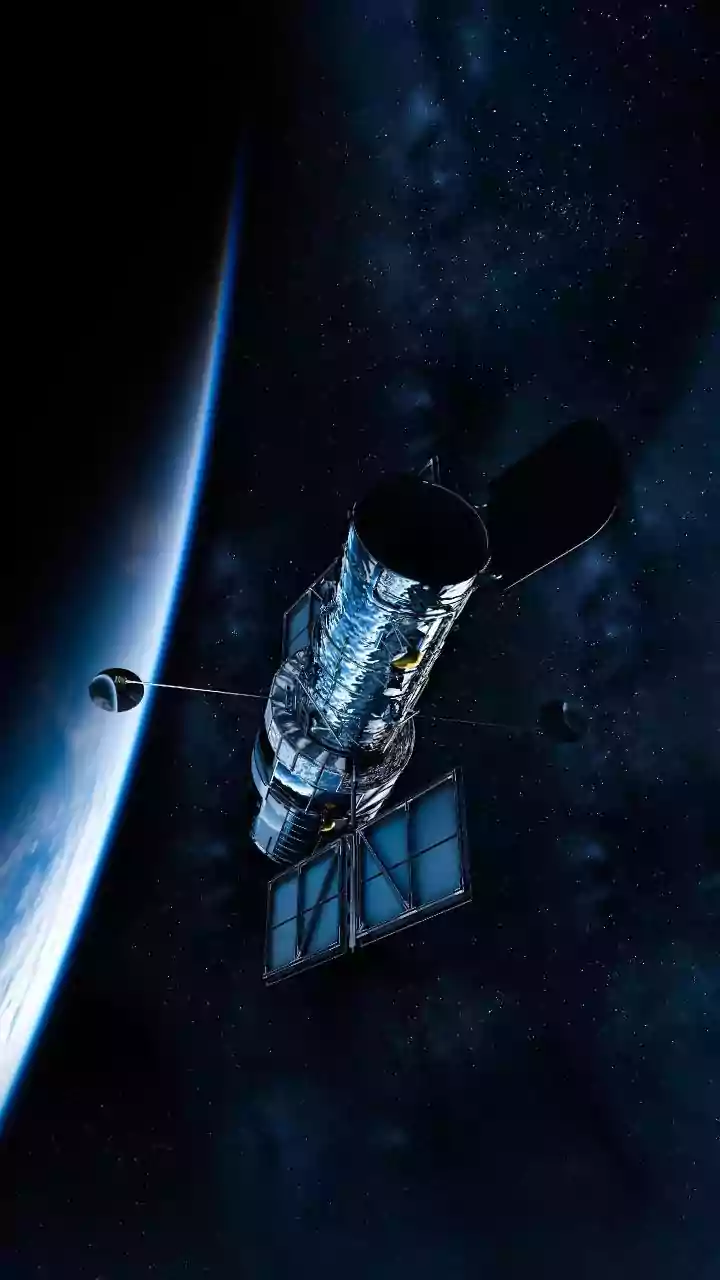
For decades, the Hubble Space Telescope has served as our steadfast eye in the sky, providing stunning portraits of our cosmic neighbours. As part of its Outer Planets Atmospheres Legacy (OPAL) program, Hubble annually monitors the outer planets, creating
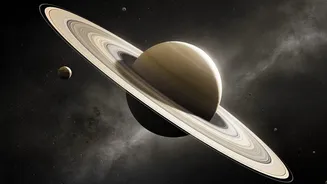
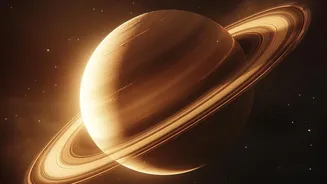
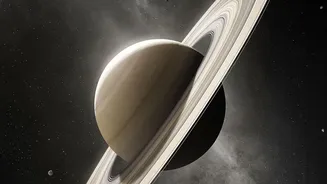
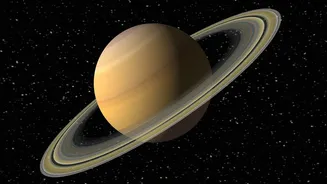
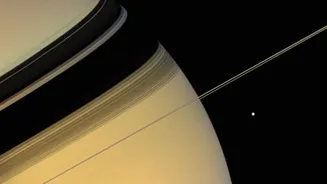
a long-term weather report for these distant worlds. Recent observations focus on Saturn as its northern hemisphere transitions from a more than seven-year-long summer into autumn. These observations, taken over several years, are giving scientists a front-row seat to the subtle but significant atmospheric changes driven by this seasonal shift. By consistently tracking the planet, researchers can move beyond static images and study Saturn as a living, breathing world with its own complex climate systems.
The Power of a Multi-Wavelength View
While the headline specifies infrared, Hubble's strength lies in its ability to capture a wide spectrum, which, when combined with other observatories like the James Webb Space Telescope (JWST), creates a more complete picture. Hubble's visible light observations track colour changes in cloud bands, which can indicate shifts in their altitude or chemical composition. Data captured between 2018 and 2020 showed Saturn's equator brightening by 5 to 10 percent. Simultaneously, infrared views from telescopes like Webb probe deeper, sensing heat and chemical signatures that are invisible to the naked eye. This allows scientists to effectively peel back the layers of Saturn's atmosphere, connecting the visible weather patterns on top to the deeper thermal forces driving them from below.
Understanding Seasons on a Gas Giant
Seasons on Earth are driven by our planet's 23-degree axial tilt. Saturn has a similar tilt of about 27 degrees, but its vast orbit changes the game entirely. Saturn takes a lengthy 29 Earth years to circle the sun, meaning each of its four seasons lasts for more than seven Earth years. This slow, deliberate progression gives scientists a unique opportunity to study how a giant planet's atmosphere responds to gradual changes in solar radiation. The transition from summer to fall in the northern hemisphere, for instance, isn't just a calendar event; it triggers tangible shifts in atmospheric temperature and circulation. The southern hemisphere, meanwhile, is experiencing the opposite, moving out of winter and into spring.
Tracking Winds and Storms
The year-to-year data has revealed fascinating dynamics. For example, wind speeds near Saturn's equator have shown surprising variability. During the Cassini mission (2004-2009), winds were measured at around 1,300 kilometres per hour. Hubble's 2018 observations clocked them at a significantly faster 1,600 kilometres per hour, before they appeared to decrease again in subsequent years. Scientists theorise these changes could mean the cloud tops were at different altitudes, revealing different wind patterns. The observations also help track the persistence and evolution of massive storm systems, including faint traces of the 'Great Springtime Storm' from over a decade ago and the famous hexagonal jet stream at the north pole.
Hubble's Enduring Legacy
Even with the advanced capabilities of newer instruments like the JWST, Hubble's long-running observational programs are irreplaceable. Its decades-long archive provides the historical context needed to make sense of new discoveries. By having a consistent record of Saturn's atmosphere over many years, scientists can distinguish between short-term weather events and true, long-term seasonal patterns. Programs like OPAL ensure that we have an ongoing, year-over-year baseline, which is critical for understanding planets with such long seasonal cycles. This teamwork between telescopes—Hubble providing the long-term context and Webb the deep-dive details—is revolutionising planetary science.