







Decoding Front-of-Pack Buzzwords
Marketers use appealing terms to catch your eye, but they often don't tell the full story. Terms like 'natural', 'multigrain', and 'healthy' are frequently used. For example, a 'multigrain' bread might be made mostly from refined flour, not whole grains.
Similarly, the term 'natural' is loosely regulated and can be applied to products containing ingredients like high-fructose corn syrup. In India, the Food Safety and Standards Authority of India (FSSAI) has been cracking down on brands for using such potentially misleading claims on everything from paneer to snacks. A product advertised as 'healthy' may still contain high levels of sugar or salt.
The Hunt for Hidden Sugar
Foods promoted as 'low-fat' or 'healthy' often compensate for the lack of fat with extra sugar to improve the taste. This is common in products like flavored yogurts, granola bars, and breakfast cereals. Sugar hides on ingredient lists under many different names, such as corn syrup, dextrose, sucrose, and fruit juice concentrate. When reading the ingredients list, remember that they are listed in order of quantity, from most to least. If a form of sugar appears near the top of the list, the product is likely high in added sugars.
Sodium's Sneaky Presence
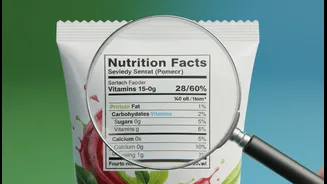
Even foods that don't taste salty can be packed with sodium, which is often used as a preservative to extend shelf life. Savoury snacks, canned soups, sauces, and even some breads can be significant sources. Products labeled 'reduced sodium' simply must have at least 25% less sodium than the regular version, which could still be a high amount. To make an informed choice, check the nutrition facts panel. A daily value (DV) of 5% or less for sodium is considered low, while 20% or more is high.
What Are 'Functional Claims'?
Functional claims suggest a food has a specific benefit on normal body functions, like "calcium builds strong bones" or "fibre promotes regularity". While some of these claims are well-supported, others can be vague or overstated, like a product that claims to "boost your immune system" without strong scientific proof. Regulators like the FSSAI have questioned such claims when they lack scientific substantiation. These statements are different from disease risk reduction claims, such as "a healthy diet may reduce the risk of heart disease," which are more tightly regulated. Consumers should be wary of broad statements that sound too good to be true.
Your Action Plan: Become a Label Detective
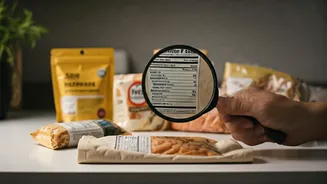
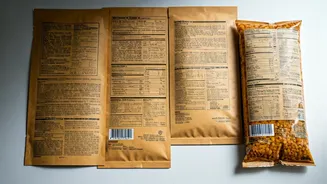
The best way to know what you're eating is to ignore the flashy claims on the front and turn the package over. The Nutrition Facts Label and the ingredients list provide the real story. Start with the serving size, as all other numbers are based on that amount. Check the '% Daily Value' for sodium and added sugars. Look for a short ingredients list with recognizable, whole-food ingredients listed first. Choosing products that are '100% whole grain' is a better bet than 'multigrain'. By becoming a savvy label reader, you can confidently navigate the supermarket and make choices that are truly healthy for you.