
Understanding the Enemy: Light and Obstructions
Before you can solve the problem, it helps to know what you're up against. The two biggest challenges for backyard astronomers are light pollution and physical obstructions. Light pollution comes in two main forms: 'sky glow', which is the hazy orange
dome of light over cities, and 'glare', which is direct light from a nearby source like a porch light or streetlight. Both wash out faint celestial objects. Physical obstructions like trees, buildings, and hills simply block your view of the sky, limiting what you can see. A true astronomical horizon is a flat 360-degree view, but for most people, the local horizon is a jagged line of rooftops and branches.
Scout the Perfect Spot
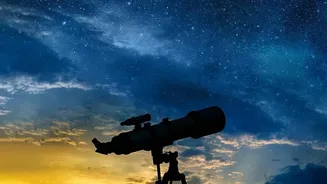
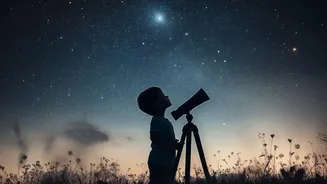
Your first step is reconnaissance. Don't just set up your telescope in the most convenient spot; find the best one. Spend some time in your yard at night. Which area has the widest view of the sky? Where are you least affected by direct light from your house or your neighbours? Look for a spot with a clear view in one or two primary directions—perhaps south or west. A grassy area is often better than a concrete patio or asphalt driveway, as these surfaces absorb heat during the day and radiate it at night, which can disturb the air and create poor 'seeing' conditions, making stars appear fuzzy. If your own yard is too compromised, consider a nearby park or open space that might offer a better vantage point.
Battle the Glare
While you can't do much about the city-wide sky glow from your backyard, you have significant control over local glare. The most obvious step is to turn off all your own outdoor lights. Use blackout curtains to prevent indoor light from spilling out. If a neighbour's security light is the main offender, a polite conversation might solve the problem. You can also create your own temporary light shields. A large piece of cardboard or a pop-up screen can be strategically placed to block a specific streetlight. Some observers even drape a dark cloth over their heads and the eyepiece, like an old-time photographer, to create a personal pocket of darkness. This simple trick dramatically improves contrast.
Maximize Your Horizon
Few people have a perfectly clear horizon, but you can work with what you've got. The goal is to maximize the amount of sky you can see. Sometimes moving your setup just a few metres can open up a key part of the sky that was previously hidden behind a tree. Use a stargazing app on your phone to map out the sky from your chosen location. These apps can show you which constellations will be visible and when, allowing you to plan your observing session around your specific obstructions. If a large tree blocks the eastern sky, you'll know to focus on objects in the west until they set, and then wait for other objects to rise high enough to clear the obstruction.
Gear Up for Comfort and Clarity
Beyond the telescope, a few key pieces of gear can make a world of difference. To protect your night vision, use a red-light flashlight. Red light doesn't cause your pupils to contract as much as white or blue light, preserving your eyes' adaptation to the dark. Light pollution filters can also be a valuable investment. These filters screw onto your eyepiece and are designed to block the specific wavelengths of light emitted by common streetlights, enhancing the contrast of nebulae and other deep-sky objects. Finally, don't underestimate comfort. A good observing chair will save your back and neck during long sessions, making the entire experience more enjoyable and sustainable.
Timing Is Everything
The best time to observe is not always just 'at night'. Wait for 'astronomical twilight', which ends when the sun is 18 degrees below the horizon, for the sky to reach its maximum darkness. The phase of the moon is also critical. A bright, full moon acts like a giant, natural streetlight, washing out all but the brightest stars and planets. For viewing faint galaxies and nebulae, plan your sessions around the new moon. Weather apps that provide 'seeing' and transparency forecasts are also invaluable tools for knowing when atmospheric conditions will be stable enough for sharp views.