






The Mission After the Mission
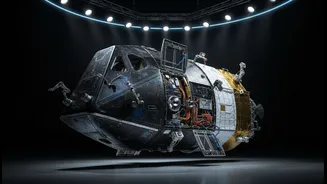
When the Orion capsule from the Artemis I mission splashed down in the Pacific Ocean in December 2022, its journey was only halfway over. The second, arguably more critical, part of its mission began when engineers got their hands on it. The primary goal
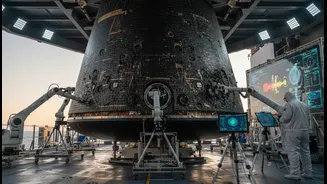
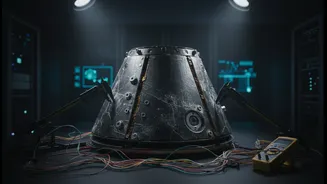
of sending an uncrewed capsule 1.4 million miles through deep space was to test every system to its limit and collect a mountain of data before putting astronauts on board for Artemis II. This post-flight analysis isn't just a routine check-up; it's a deep forensic investigation. Every component, from the life support systems to the bolts holding it together, has been scrutinized to understand how it held up in the harsh environment of space and the violent heat of reentry. This process turns a successful flight into actionable intelligence, ensuring the next Orion vehicle is as safe as humanly possible.
The Heat Shield's Fiery Trial
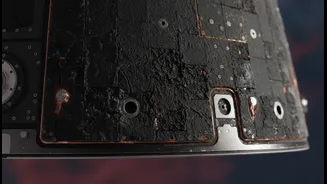
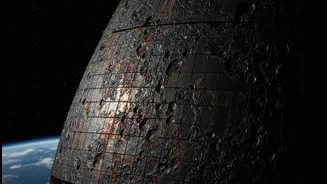
The single most critical component under review was the heat shield, designed to protect the capsule from temperatures reaching 2,760 degrees Celsius. Post-flight inspections revealed that the shield’s ablative material, called Avcoat, wore away differently than predicted. More than 100 instances of unexpected char loss were identified, where small pieces of the charred outer layer broke off during reentry. After an exhaustive investigation, NASA engineers pinpointed the cause. During a specific reentry maneuver, gases created within the heat shield material couldn't escape as expected. This caused pressure to build up, leading to cracking and the liberation of charred material. While flight data showed the crew module's internal temperatures remained safe and stable, this unexpected behavior was a major concern that needed to be fully understood before strapping a crew into the next capsule.
Beyond the Shield's Surface
The deep dive into Orion's performance didn't stop with the heat shield. A report from NASA's Office of Inspector General highlighted other anomalies that required attention. Post-flight examinations found unexpected melting and erosion on the bolts that hold the crew and service modules together, which could create gaps and increase heating during reentry. Furthermore, some key hardware, like the main parachutes, sank before they could be recovered from the ocean. This meant engineers had to rely solely on imagery to assess their performance instead of direct physical inspection. Separately, issues with the circuitry for life support systems and the performance of some batteries were also identified during the broader Artemis testing campaign. Resolving each of these findings is a crucial step on the checklist before Artemis II can get the green light.
A Safe Haven in Deep Space
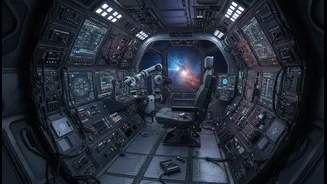
While engineers worked to solve these challenges, the data also delivered a wealth of good news. Inside the capsule, a mannequin nicknamed Commander Moonikin Campos was fitted with sensors to measure what future astronauts will experience. Along with thousands of other passive and active detectors, it collected vital information on radiation levels. The findings confirmed that Orion's shielding effectively protects against the dangers of deep-space radiation, even when passing through the intense Van Allen belts. Data also showed that the forces of acceleration and vibration were within safe limits for a human crew. These results validate the fundamental design of the crew cabin as a safe environment for the long journey to the Moon and back, proving that many of the spacecraft's most essential systems performed beautifully.