


A Sweet Discovery in a Surprising Place
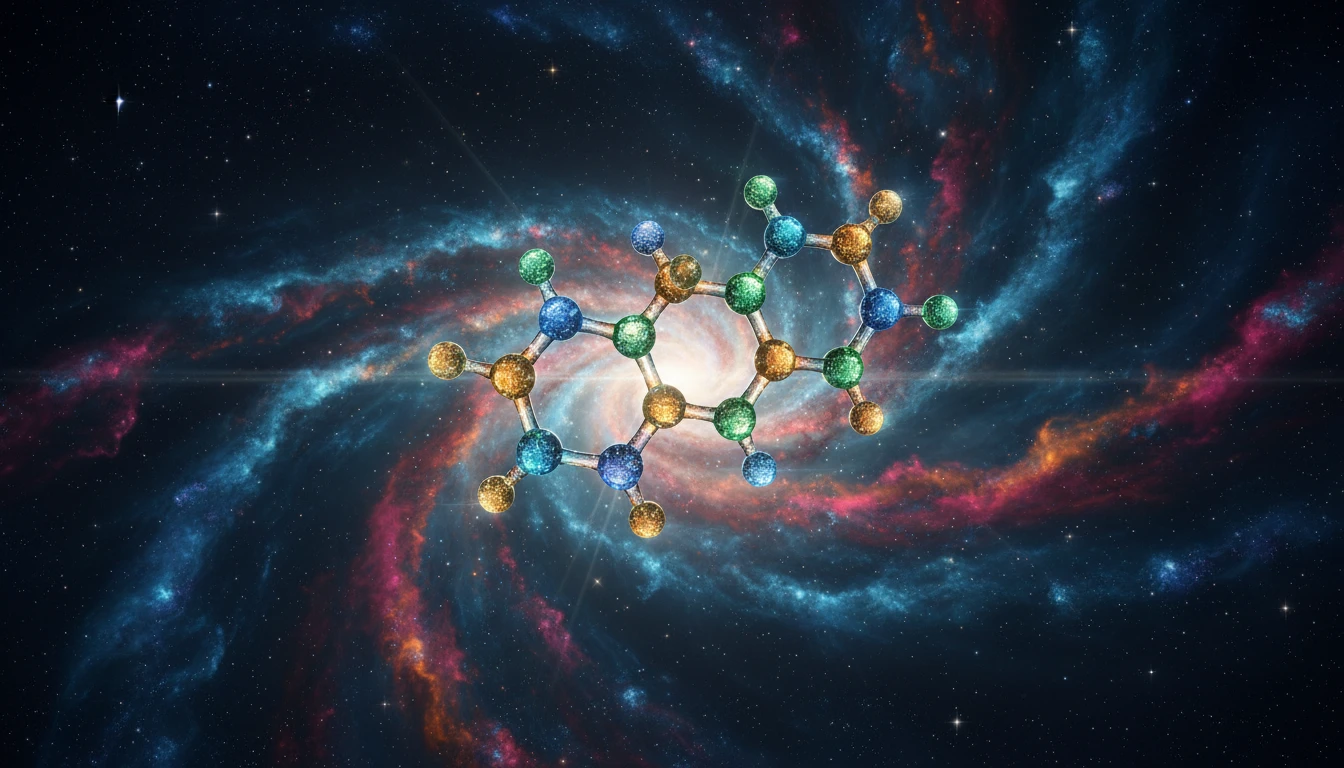
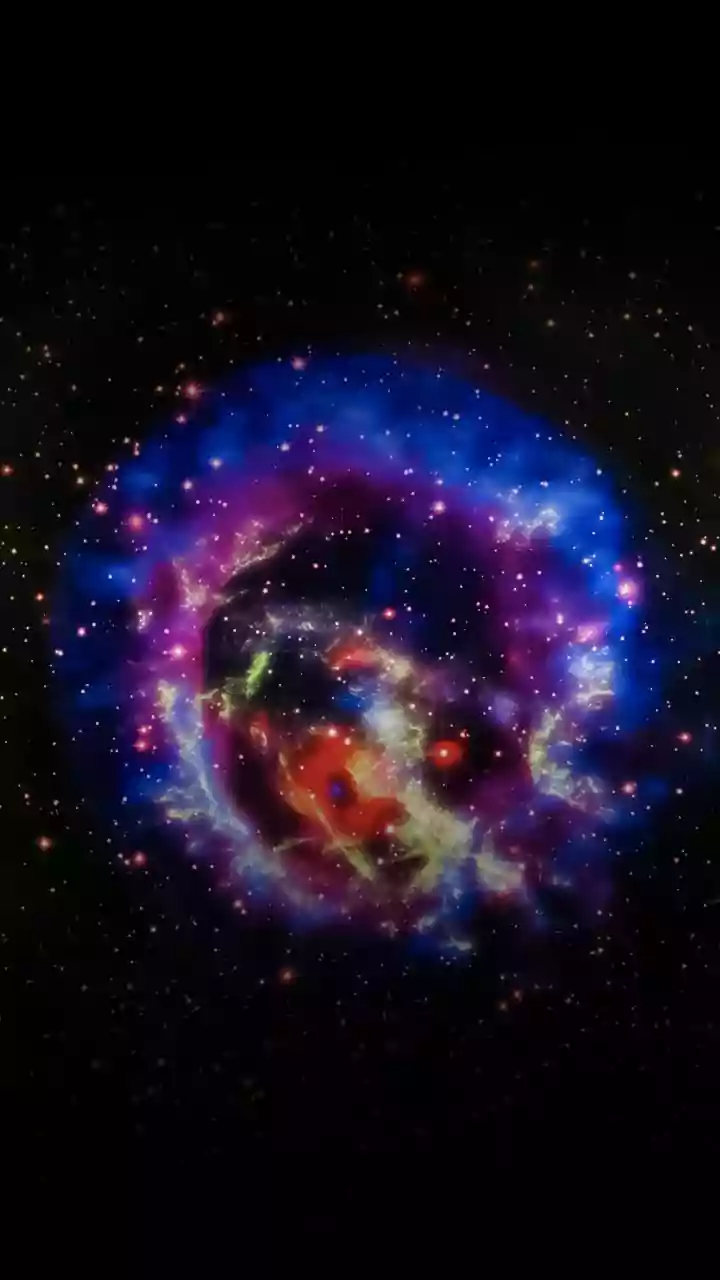
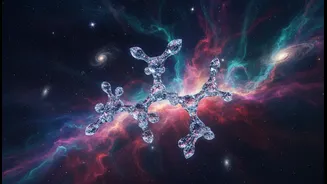
Astronomers have detected various complex organic molecules in the giant clouds of gas and dust that float between stars. Recently, a sugar called erythrulose was identified in a molecular cloud known as G+0.693-0.027, located about 27,000 light-years
from Earth near the galactic core. This wasn't the first time a sugar-like molecule was found in space. Glycolaldehyde, a simpler sugar, has previously been detected in star-forming regions like Sagittarius B2, which is also near the Milky Way's center. What makes these findings so significant is the location. These molecular clouds are stellar nurseries, places where new stars and, eventually, planets are born. Finding the ingredients for life here suggests they are present from the very beginning of a solar system's formation.
The Cosmic Recipe for Life
When we talk about 'sugar' in space, we aren't talking about the kind you put in your morning coffee. Glycolaldehyde and erythrulose are much simpler carbohydrate molecules. However, they are considered prebiotic, meaning they are chemical precursors to life-sustaining molecules. Sugars are crucial components of life as we know it. They form the structural backbone of RNA and DNA, the genetic blueprints for all known organisms. The puzzle for scientists has been figuring out how these essential sugars could have formed in sufficient quantities on early Earth. Discovering them pre-formed in interstellar space offers a compelling solution: they didn't necessarily have to form on Earth at all. Instead, they could have been delivered to our young planet by comets and asteroids that incorporated them from the primordial cloud where our solar system was born.
How Astronomers Go Molecule Hunting
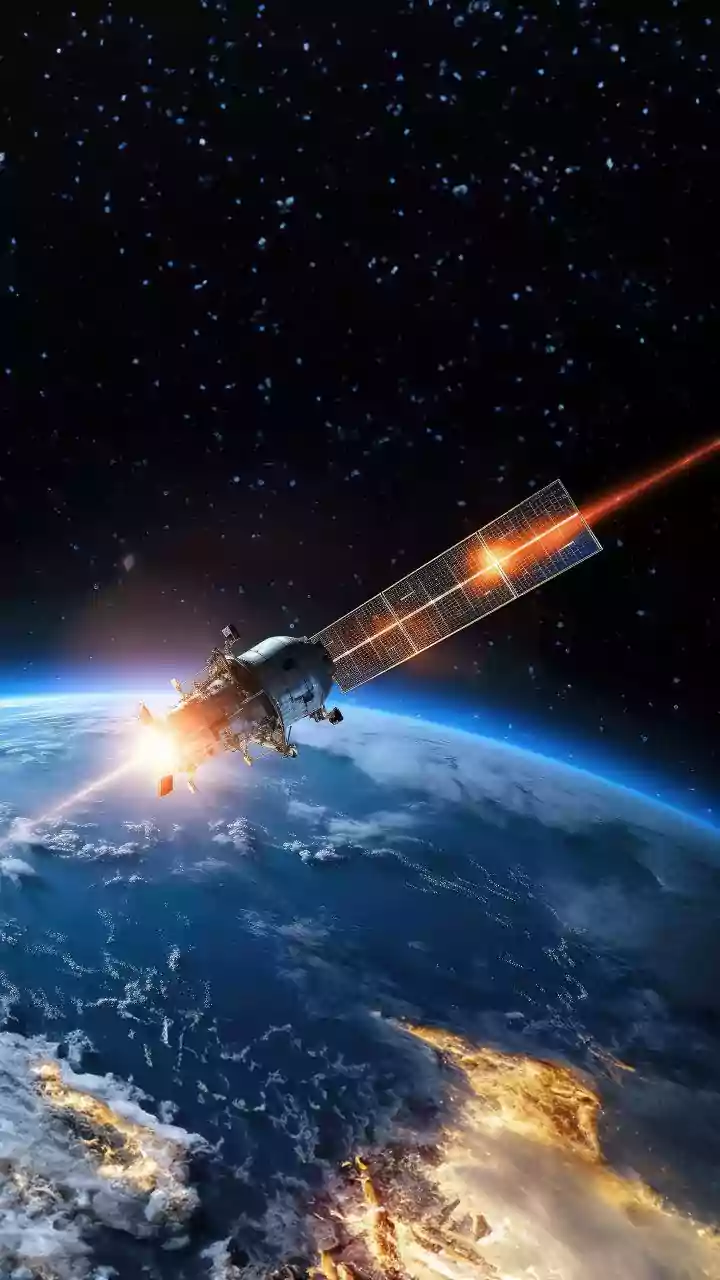
Detecting a specific molecule from thousands of light-years away is a remarkable feat of science. Astronomers use powerful radio telescopes, such as the Atacama Large Millimeter/submillimeter Array (ALMA) in Chile and various telescopes in Spain, to listen for faint radio signals from space. Every molecule vibrates and rotates at specific frequencies, emitting radio waves that act as a unique 'fingerprint'. By matching the signals from a distant gas cloud to the known frequencies of molecules measured in a lab, scientists can identify complex compounds like sugars with high confidence. These advanced observatories are so sensitive they can not only detect the molecules but also map their location and even observe their motion, revealing that these sugars are often falling toward newly forming stars.
Rewriting Planetary Science
The presence of these molecules in cold, pre-stellar cores challenges the long-held assumption that the violent, hot process of star formation would destroy any complex chemistry. It was once thought that these crucial organic compounds would need to be re-formed in the protoplanetary disk around a young star. Instead, it appears that planetary systems inherit a rich chemical inventory from the interstellar cloud they form from. This means the building blocks for life are not a rare, lucky accident but a common ingredient available from the start. This discovery significantly widens the window for when and where life's chemistry can begin, suggesting that the raw materials for life are widespread throughout the galaxy. It reinforces the idea that interstellar space is an active chemical factory, creating the ingredients needed for habitable worlds before those worlds even exist.