


The Silent Mission Killer
For solar-powered craft on Mars, a sunny day is a matter of life and death. The primary threat isn't a malfunction, but a fine layer of dust that gradually accumulates on solar panels. This coating blocks sunlight, slowly starving the vehicle of the energy
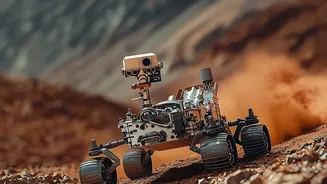
it needs to operate, communicate, and survive frigid nights. The history of Mars exploration is littered with examples. NASA's Spirit and Opportunity rovers, designed for 90-day missions, lasted for years partly thanks to winds that occasionally cleaned their panels. Ultimately, however, a massive 2018 planet-encircling dust storm blocked so much sunlight that Opportunity could no longer recharge its batteries, ending its historic 15-year mission. More recently, the InSight lander succumbed to the same fate in late 2022 after its panels were progressively covered.
This Isn't Your Average Dust
Martian dust is uniquely hazardous compared to what we find on Earth. It is incredibly fine, with particles often as small as 1 to 2 micrometers, similar to talcum powder. More importantly, due to the thin, dry atmosphere and solar radiation, this dust becomes electrostatically charged. This electrical charge makes it incredibly sticky, causing it to cling tenaciously to surfaces like a statically charged balloon. Wiping it off isn't a simple solution; the dust is also gritty and abrasive, so mechanical brushing could scratch and permanently damage the solar panels, making the power problem even worse. This combination of fine, sticky, and abrasive particles makes dust a formidable engineering adversary.
The Martian Weather Watch
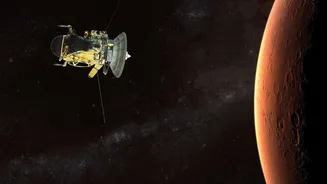
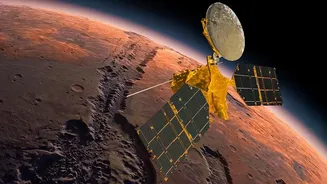
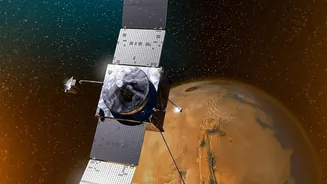
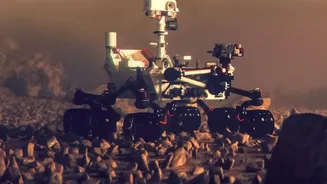
To protect these valuable assets, space agencies have become interplanetary meteorologists. A fleet of orbiters acts as a crucial early-warning system. NASA's Mars Reconnaissance Orbiter (MRO) is a key player, with instruments like the Mars Color Imager (MARCI) creating daily global weather maps to spot developing storms. The Mars Climate Sounder, also on MRO, measures atmospheric temperatures, which reveals how dust is heating the atmosphere and helps predict a storm's growth. This orbital view is complemented by ground-based weather stations. The Perseverance rover carries the Mars Environmental Dynamics Analyzer (MEDA), a sophisticated suite of sensors that measures wind speed, temperature, and the amount and size of dust particles in its immediate vicinity. This provides a ground-truth look at how orbital forecasts translate to surface conditions.
From Data to Drastic Action
This constant stream of data allows mission controllers to make critical, time-sensitive decisions. When a major dust storm is detected, teams can proactively conserve a rover's energy. This might involve suspending science operations, limiting driving, and reducing communications to a bare minimum. During a severe 2007 storm, daily power output for Opportunity dropped by over 99%, forcing controllers to put it into a low-power state and hope it could ride out the storm. Knowing the atmospheric opacity allows engineers to forecast daily energy production and determine if a rover can survive. While large storms are a threat, smaller wind gusts and dust devils can sometimes be a blessing, providing unpredictable "cleaning events" that blow dust off panels and extend a mission's life, as was often the case for Spirit and Opportunity.
Designing for a Dusty Future
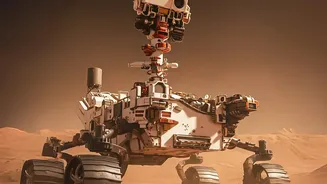
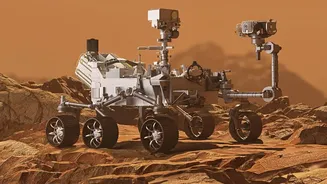
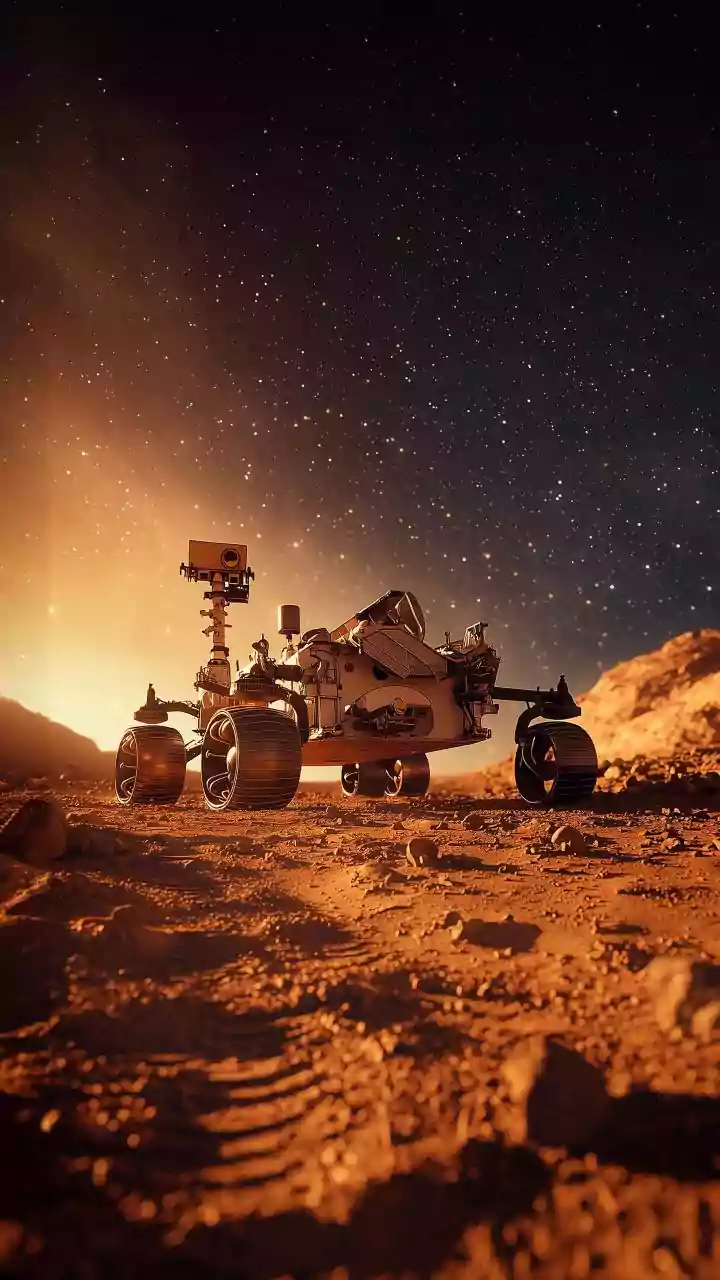
The hard-won lessons from past missions are directly influencing the design of future hardware. For high-power-demand missions like the Curiosity and Perseverance rovers, NASA has bypassed the problem entirely by using Radioisotope Thermoelectric Generators (RTGs). These nuclear power sources are immune to dust, allowing them to operate through the darkest storms. For future solar-powered vessels and even human habitats, engineers are developing new dust mitigation strategies. These include developing special coatings that repel dust, panels that can be tilted to shed dust, and active technologies like the Electrodynamic Dust Shield, which uses electric fields to actively clear particles from a surface. Understanding dust isn't just about protecting rovers; it is critical for planning future human missions, where clogged life support filters or obscured landing sensors could have life-threatening consequences.