







The Soothing Science of Twists
Yoga twists are particularly effective for digestive discomfort. Think of it as a 'wring and release' process for your internal organs. When you twist, you gently compress your abdominal organs, including your stomach and intestines. This compression
helps to move along trapped gas and stimulates the digestive tract. Upon releasing the twist, fresh, oxygenated blood flows back into the organs, which can improve their overall function and efficiency. This combination of massage and renewed circulation can be a game-changer for alleviating that heavy, bloated sensation.
Timing Is Everything
While these poses are beneficial, you should not jump into them immediately after a large dinner. Practicing yoga, especially twists, on a full stomach can be uncomfortable and may lead to issues like acid reflux. It is generally recommended to wait at least two to three hours after a heavy meal before engaging in a yoga session. For a lighter snack, a wait of 60 to 90 minutes is often sufficient. The key is to listen to your body; if you feel any discomfort, it's best to wait a bit longer.
Pose 1: Seated Spinal Twist
Known in Sanskrit as Ardha Matsyendrasana, this is a classic pose for stimulating digestion. Start by sitting on the floor with your legs extended in front of you. Bend your right knee and place your right foot on the floor outside of your left thigh. Bend your left knee and tuck your left foot near your right hip. Lengthen your spine, then as you exhale, twist your torso to the right. Place your right hand on the floor behind you for support. You can bring your left elbow to the outside of your right knee to deepen the twist. Hold for 30 seconds, breathing deeply, then release and repeat on the other side. This pose massages the ascending and descending colon, which can promote regularity.
Pose 2: Supine Spinal Twist
Supta Matsyendrasana is a gentler, more restorative twist that is perfect for beginners or when you're feeling particularly sluggish. Lie on your back and hug both knees into your chest. Extend your arms out to the sides in a 'T' shape. As you exhale, let both knees fall to your left side. Try to keep both shoulders pressed firmly to the floor. You can turn your head to the right to complete the stretch. This passive twist helps to release tension in the lower back and can be very effective at relieving trapped gas and abdominal tension. Hold for up to a minute before switching sides.
Pose 3: Wind-Relieving Pose
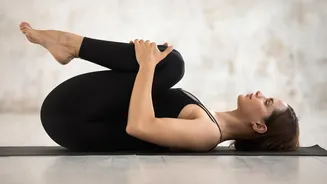
The name of this pose, Pawanmuktasana, literally translates to 'Wind-Relieving Pose'. It's incredibly simple yet highly effective for bloating. Lie on your back and draw both knees towards your chest. Clasp your hands around your shins and gently hug your knees in, applying light pressure to your abdomen. For a deeper stretch, you can lift your head and try to touch your nose to your knees. This direct compression on the large intestine can help move gas through the system and alleviate cramping. Hold for 30 to 60 seconds, focusing on deep, steady breaths.
Pose 4: Cat-Cow Stretch
While not a twist, the gentle movement of Marjaryasana-Bitilasana is excellent for waking up the digestive system. Start on your hands and knees in a tabletop position. As you inhale (Cow Pose), drop your belly towards the floor, lift your chest and tailbone, and look forward. As you exhale (Cat Pose), round your spine towards the ceiling, tucking your chin to your chest and pressing the floor away. The movement between these two positions massages the abdominal organs and can help get things moving when you feel stagnant. Flow between the two poses for 5-10 breath cycles.