


Earth’s Hellish Sister Planet
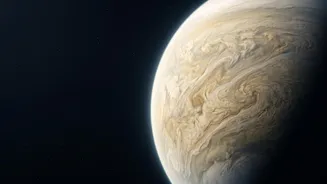
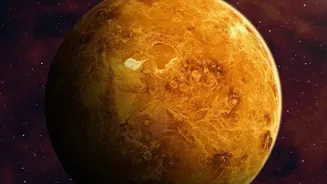
Venus is often called Earth's twin due to its similar size, mass, and composition. But the similarities end there. While Earth is a cradle of life, Venus is a hellscape. Surface temperatures reach a staggering 475°C, hot enough to melt lead, and the atmospheric
pressure is over 90 times that of Earth's surface. Billions of years ago, Venus may have had liquid water oceans, much like early Earth. However, a runaway greenhouse effect, driven by a thick atmosphere composed of 96% carbon dioxide, trapped solar heat and boiled the oceans away. What remains is a dry, scorching world perpetually veiled by thick clouds of corrosive sulfuric acid. Understanding how and why these two sister planets took such drastically different evolutionary paths is one of the biggest questions in planetary science.
The Enigma in the Clouds
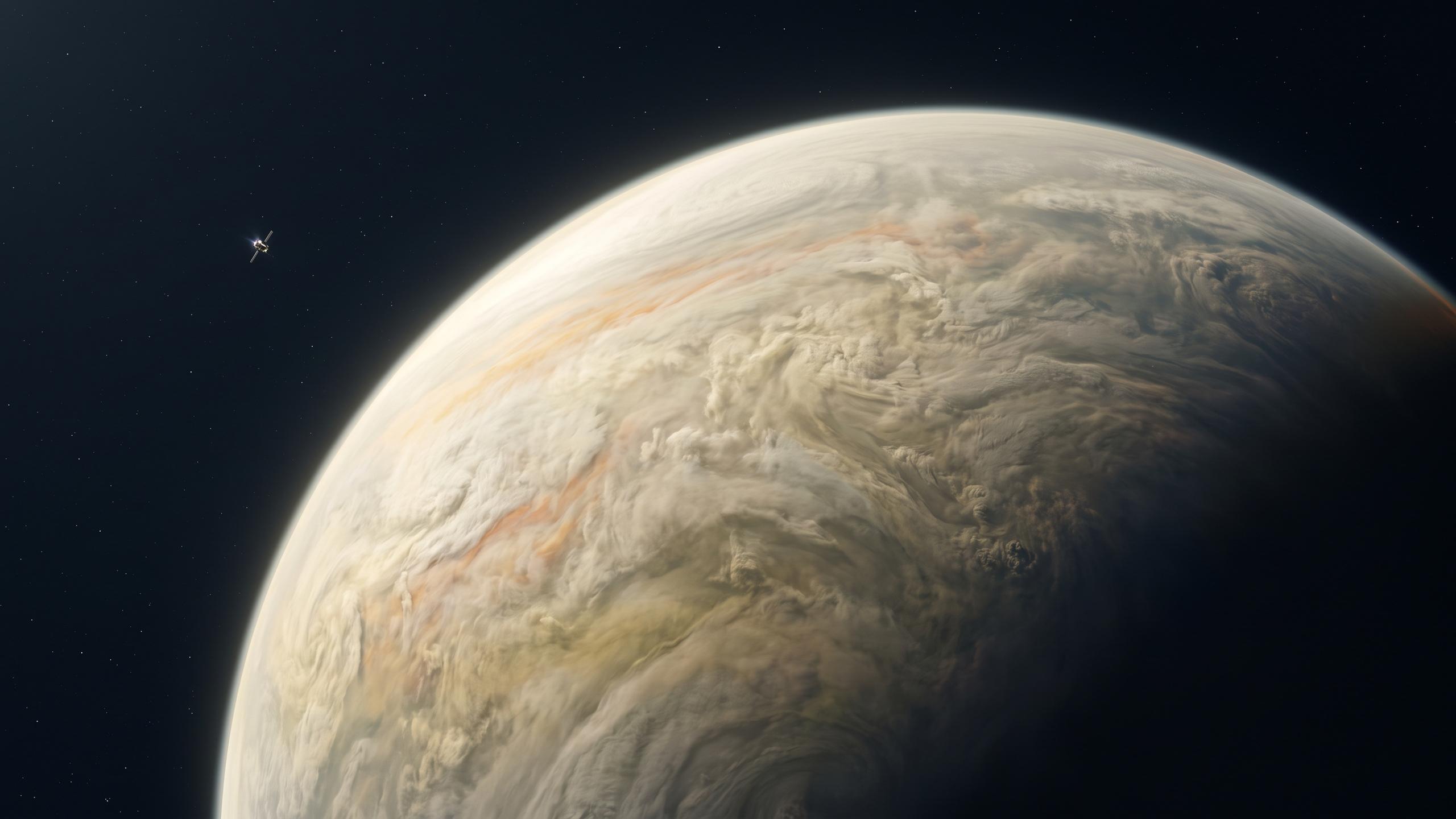
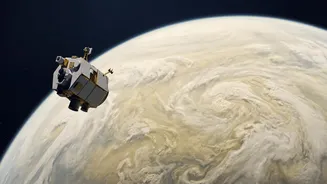
For scientists, the most tantalizing secrets of Venus are hidden within its thick, yellowish clouds. These clouds are not made of water, but of sulfuric acid, and they race around the planet at speeds up to 360 km/h. For over a century, astronomers have been puzzled by mysterious dark patches, or streaks, seen in ultraviolet light, which are caused by an 'unknown UV absorber'. Something in the clouds is absorbing huge amounts of solar radiation, but its identity remains a mystery. Some theories suggest it could be iron-bearing minerals like rhomboclase and acid ferric sulfate. Furthermore, the unconfirmed but debated detection of phosphine gas in 2020 ignited intense interest, as on Earth, phosphine is associated with anaerobic life. Shukrayaan's instruments are designed to investigate these atmospheric puzzles directly.
ISRO's Scientific Toolkit
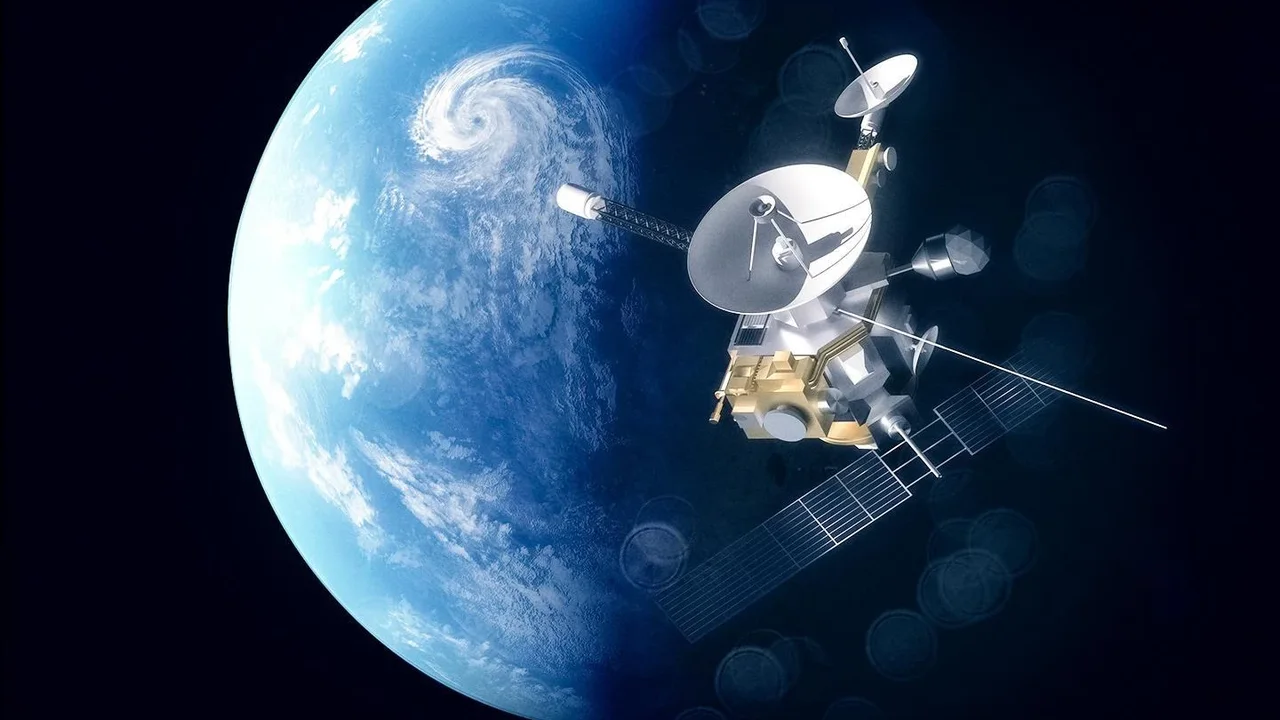
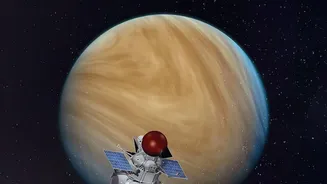
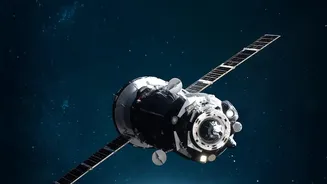
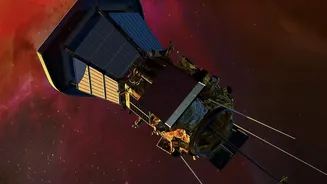
To peer through the veil, ISRO's Shukrayaan orbiter will carry a sophisticated suite of about 19 scientific instruments, a combination of Indian and international payloads. Key instruments are aimed squarely at atmospheric chemistry. The VIRAL (Venus InfraRed Atmospheric gases Linker), a collaboration with Russia, is designed to study atmospheric gases and could help verify the presence of phosphine. Other instruments will map the structure and dynamics of the atmosphere, looking for volcanic hotspots and lightning. Beyond the clouds, a high-resolution Synthetic Aperture Radar (SAR) will pierce the thick atmosphere to map the planet's surface in unprecedented detail, searching for signs of active volcanism which may be pumping gases into the atmosphere. Another groundbreaking instrument is a ground-penetrating radar, a world-first for Venus, which will study the planet's subsurface.
Answering the Big Questions
The focus on cloud chemistry is strategic. The composition of the atmosphere holds the story of the planet's past and present. By studying these clouds, Shukrayaan aims to answer several critical questions. First, what is the 'unknown UV absorber' and how does it influence the planet's energy balance? Second, is there really phosphine, and if so, what is its origin—geological or biological? Third, how do the surface and atmosphere interact? Scientists believe weather patterns in the clouds are directly linked to the topography of the mountains below, with winds dredging up material from lower altitudes. By combining atmospheric data with surface mapping, ISRO can build a holistic model of Venus. The mission will also study the interaction between the Venusian ionosphere and the solar wind, which will help explain how the planet lost its water.
Why This Mission Matters
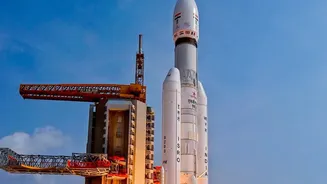
Scheduled for a launch in March 2028, Shukrayaan represents India's next great leap in interplanetary exploration, following the successes of Chandrayaan and Mangalyaan. The mission's findings will have global significance. Understanding Venus's runaway greenhouse effect provides a stark cautionary tale for our own planet, offering invaluable data for climate modeling on Earth. For ISRO, it is a chance to demonstrate its capability in complex planetary science and foster international collaborations with agencies from Sweden, Russia, and Germany. By tackling the mysteries of Venus, from its subsurface geology to the chemical secrets of its clouds, India is not just exploring another world; it's seeking to better understand our own place in the solar system.