

From a Trickle to a Flood
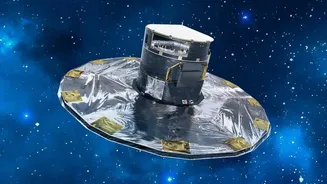
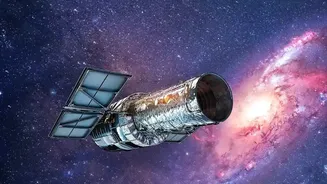
The first confirmed exoplanet discovery in the early 1990s opened the floodgates. Since then, missions like the Kepler Space Telescope and the Transiting Exoplanet Survey Satellite (TESS) have cataloged thousands of planets, revealing that the neat and tidy
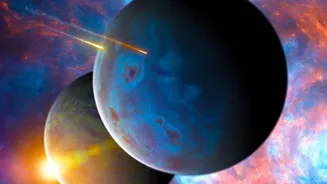
model of our own solar system is more of an exception than the rule. These discoveries have been categorized into broad types: gas giants, Neptunian, super-Earth, and terrestrial. But within these labels lies a zoo of planetary diversity that challenges our imagination and pushes the boundaries of planetary science.
Hot Jupiters and Super-Earths
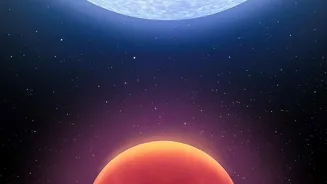
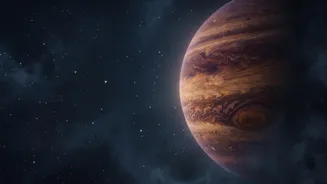
Among the first and most surprising discoveries were 'Hot Jupiters'. These are gas giants, often much more massive than our own Jupiter, that orbit their stars in a blistering-fast embrace. Some complete a full year in just a few Earth days, with surface temperatures hot enough to boil metal. Just as common, but entirely absent from our solar system, are 'Super-Earths'. These are planets more massive than Earth but lighter than Neptune. They represent a mysterious middle ground; some may be rocky worlds with thick atmospheres, while others could be dense 'water worlds' completely covered by a global ocean. Their prevalence suggests they are a standard outcome of planet formation, making their absence here a fascinating puzzle.
The Search for Water: Hycean Worlds
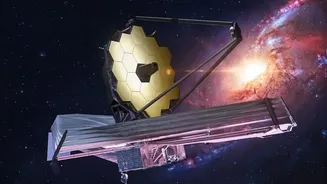
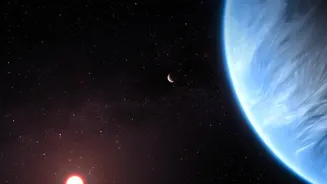
One of the most exciting theoretical categories in the hunt for life is the 'Hycean' planet, a portmanteau of 'hydrogen' and 'ocean'. These are hypothetical worlds with liquid water oceans under a dense hydrogen-rich atmosphere. Their larger size compared to rocky Earth-like planets could make their atmospheres easier to study for biosignatures. Using the James Webb Space Telescope (JWST), scientists have already begun to probe the atmospheres of candidates like K2-18b, detecting methane and carbon dioxide, which is consistent with an ocean world. While the existence of true Hycean worlds is still debated, they represent a tantalizing new frontier in our search for habitable environments.
Worlds of Fire and Ice
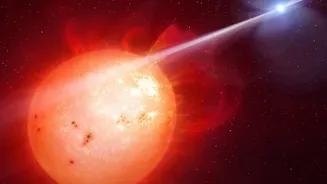
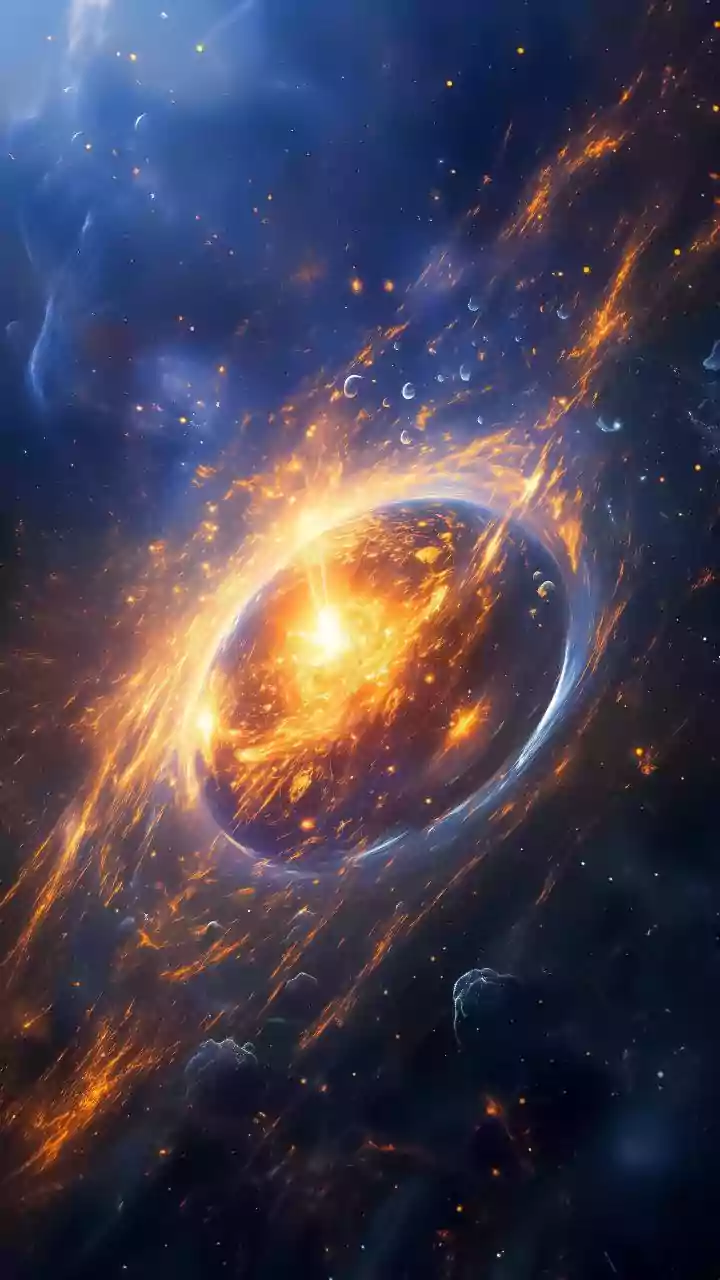
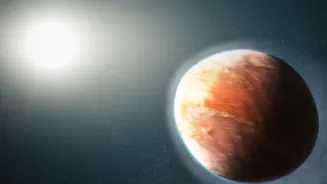
The galaxy's planetary catalog also includes worlds of extreme conditions. 'Lava planets' are rocky worlds orbiting so close to their stars that their surfaces are likely molten oceans of magma. Surprisingly, recent JWST findings suggest that some of these scorching planets, like HD 3167 b, may have managed to hold onto an atmosphere despite the intense stellar radiation. On the other end of the spectrum are 'rogue planets'—worlds that wander through the galaxy in permanent darkness, untethered to any star. There are even 'Tatooine' planets, like Kepler-16b, that orbit two suns at once, proving that science fiction is sometimes a preview of scientific fact.
Redefining the Search for 'Another Earth'
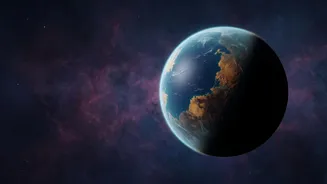
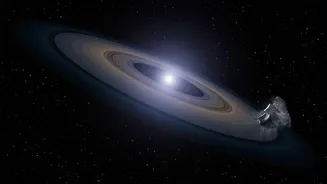
While finding a true Earth-twin remains a primary goal, the sheer variety of exoplanets has broadened our perspective on what makes a planet 'habitable'. The discovery of planets with potential magnetic fields, like YZ Ceti b, is a significant step, as a magnetic field is crucial for protecting an atmosphere and any potential life from harmful stellar radiation. Meanwhile, the discovery of a planet as light as a marshmallow (TOI-3757 b) or another with massive rings that dwarf Saturn's (Wasp J1407b) shows that our galaxy has a wilder imagination than we ever did. Each new world, no matter how strange, provides another data point in our quest to understand planet formation and our own place in the cosmos.