




The Next Chapter of the Artemis Saga
All eyes are on the Artemis program, NASA's monumental effort to return humans to the Moon. Following the successful uncrewed Artemis I in 2022 and the crewed lunar flyby of Artemis II in April 2026, the next steps are becoming concrete. NASA is now deep
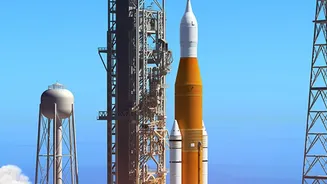
in preparation for Artemis III, a crewed demonstration mission planned for 2027. This flight will carry four astronauts into low Earth orbit aboard the Orion spacecraft, launched by the powerful Space Launch System (SLS) rocket. The primary goal is to test the critical rendezvous and docking capabilities with commercial human landing systems being developed by partners like SpaceX and Blue Origin. This mission is a crucial dress rehearsal, designed to reduce risk before the first lunar landing of the 21st century, now slated for the Artemis IV mission in 2028. Recent progress is visible, with rocket hardware arriving and being assembled at Kennedy Space Center, and NASA's administrator expressing high confidence in the 2027 launch target.
A New Eye on the Cosmos
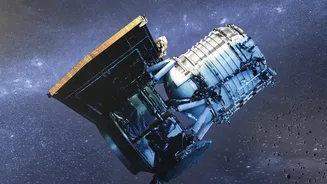
Just days away, on August 30, 2026, NASA is scheduled to launch its next great observatory: the Nancy Grace Roman Space Telescope. Named after NASA's first chief of astronomy, this telescope is a flagship mission on par with Hubble and the James Webb Space Telescope. Roman's primary mirror is the same size as Hubble's, but its field of view is a staggering 200 times larger, allowing it to create vast, panoramic maps of the universe at incredible resolution. Its core objectives are to tackle two of the biggest mysteries in physics: dark energy and dark matter. By surveying billions of galaxies, Roman will map the cosmos's structure and expansion, providing unprecedented data on these enigmatic forces. Simultaneously, the telescope will hunt for thousands of new exoplanets, using a powerful coronagraph to directly image planets that are a billion times dimmer than their stars, pushing the boundaries of planet-finding technology.
The Long Journey to Mars
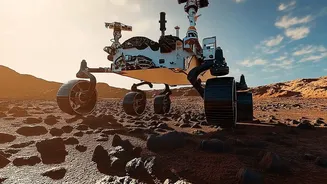
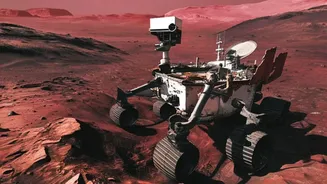
The ambition to bring pieces of Mars back to Earth has hit a strategic reset. The original Mars Sample Return (MSR) program, a joint effort with the European Space Agency (ESA), has been re-evaluated due to budget and timeline concerns. NASA is now set to decide on a new mission profile by mid-2026, exploring more streamlined and commercially-supported options to retrieve the rock and soil samples collected by the Perseverance rover. While that mission is being redefined, other Mars exploration continues. Japan's Martian Moons eXploration (MMX) mission is planned for launch in late 2026, aiming to be the first to return samples from the Martian system by visiting its moon Phobos. NASA's own ESCAPADE spacecraft are en route and expected to perform a gravity assist in November 2026 to study the Martian atmosphere. The ultimate goal of understanding Mars's past habitability remains a top priority, even as the methods for achieving it evolve.
A Clipper Ship Bound for an Ocean Moon
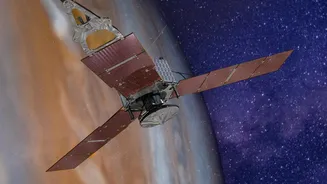
One of NASA's most exciting interplanetary missions is already well on its way. The Europa Clipper spacecraft, which launched in October 2024, is currently on a multi-year journey to Jupiter's icy moon, Europa. This moon is believed to hide a vast global ocean beneath its frozen crust, containing more water than all of Earth's oceans combined. Europa Clipper will perform an Earth gravity assist in December 2026 to continue its trajectory toward a 2030 arrival in the Jupiter system. It won't orbit Europa directly due to the intense radiation but will conduct dozens of close flybys, some just 25 kilometers above the surface. Using a suite of nine advanced instruments, the probe will analyze the moon's icy shell, confirm the ocean's existence, and search for any signs of plumes or other activity that could reveal the chemistry of the water below, assessing its potential to harbor life.