





The Basics: Earth’s Conveyor Belt
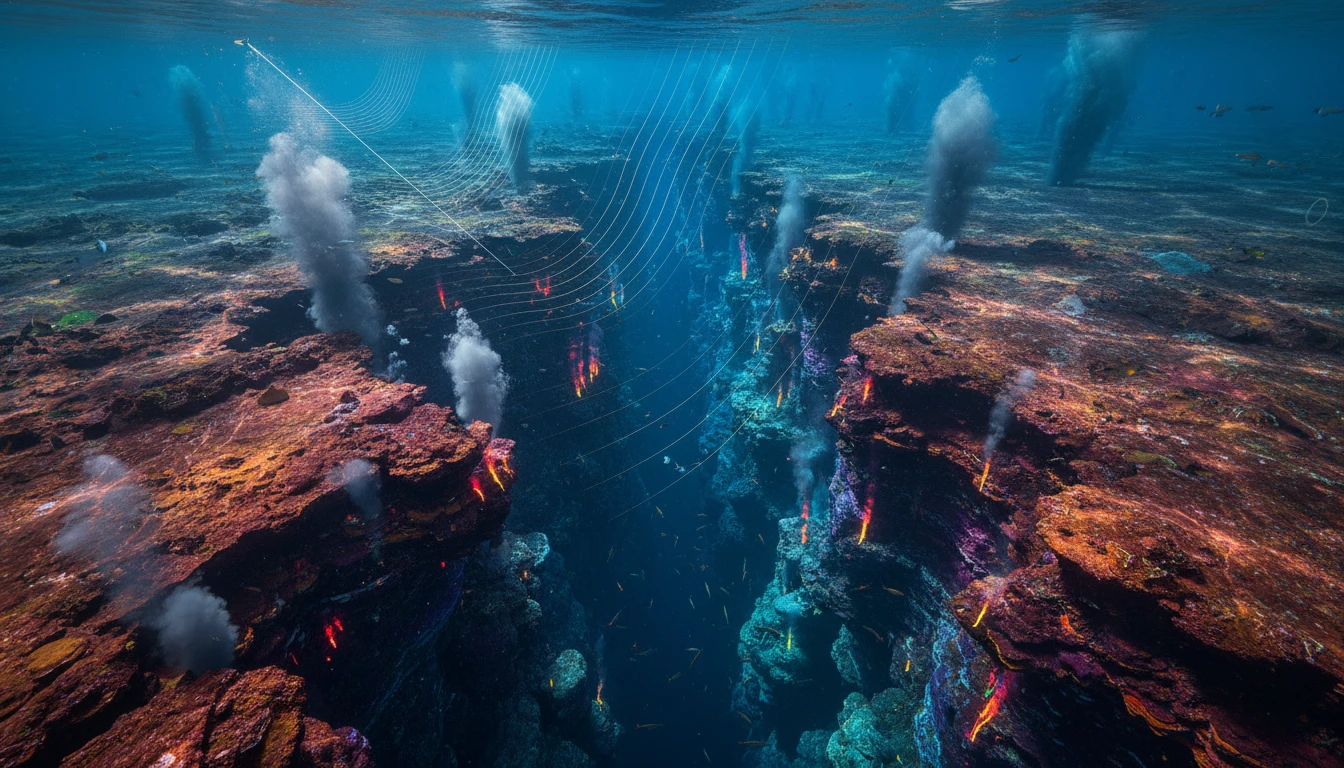
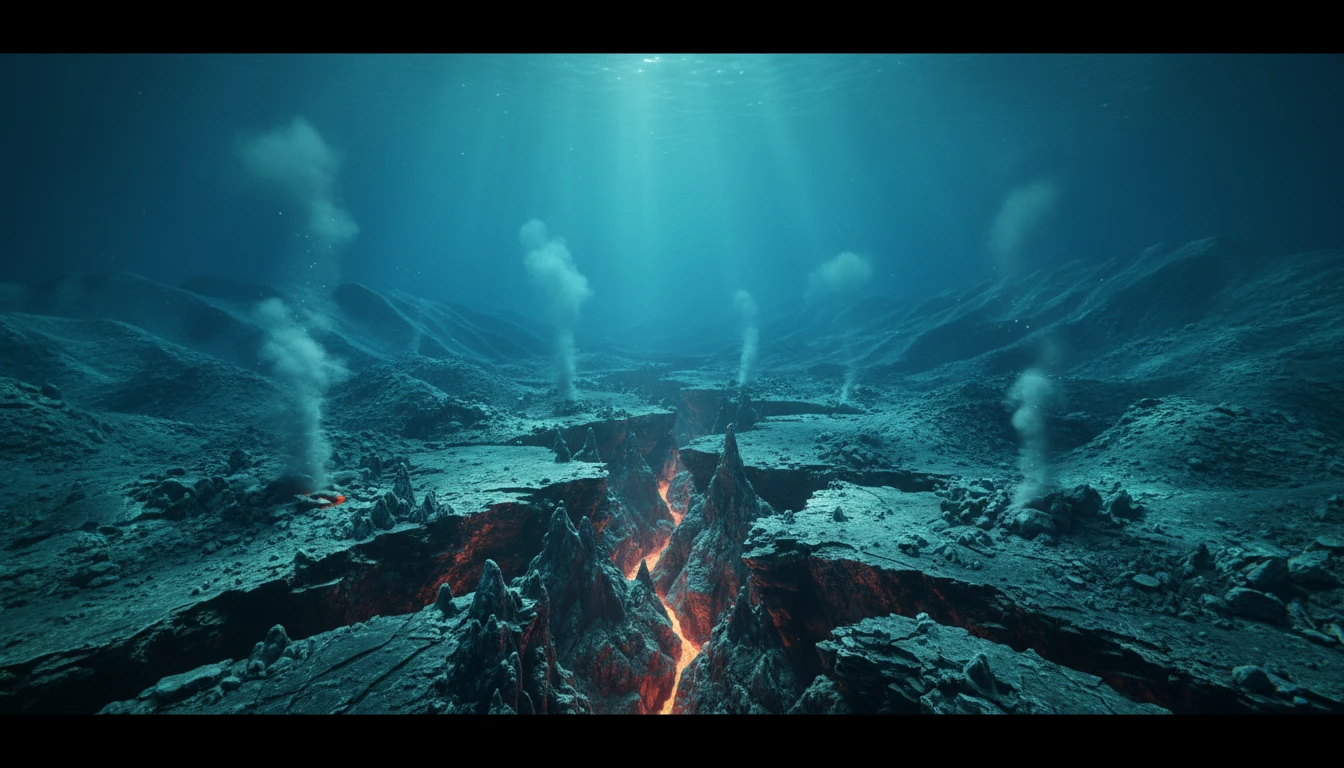
Imagine a giant, slow-moving conveyor belt deep beneath the ocean. That's a simple way to picture seafloor spreading. It all happens at mid-ocean ridges, which are vast underwater mountain ranges that crisscross the globe like seams on a baseball. In
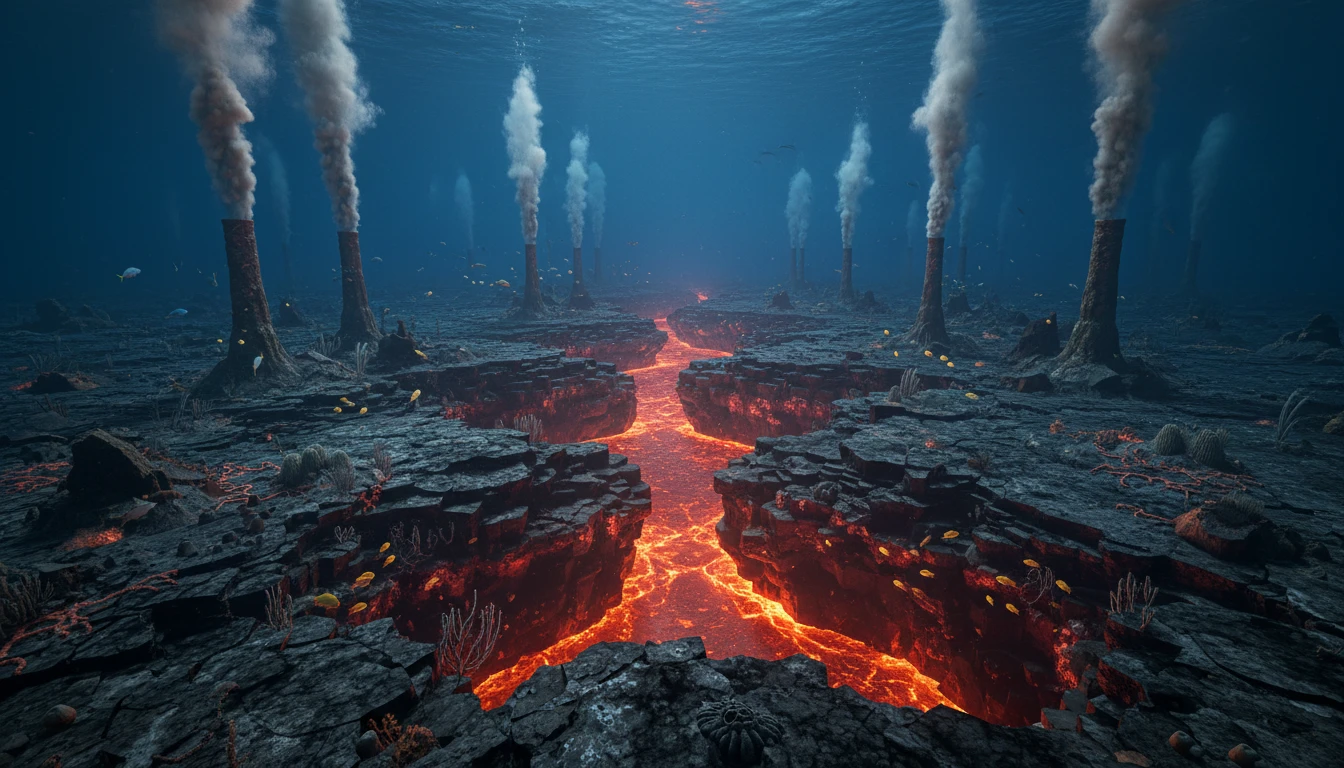
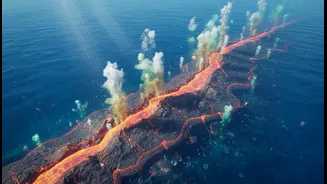
the Indian Ocean, a key player is the Central Indian Ridge (CIR), a north-south running boundary where the African and Indian tectonic plates are pulling apart. As they separate, molten rock, or magma, from the Earth’s mantle rises to fill the gap. This magma cools and solidifies, forming a brand-new strip of oceanic crust. This new crust is then pushed sideways as more magma rises, effectively spreading the seafloor. This process happens at a rate of just a few centimetres per year—about the speed your fingernails grow—but over millions of years, it has the power to move continents.
The Engine Room: The Central Indian Ridge
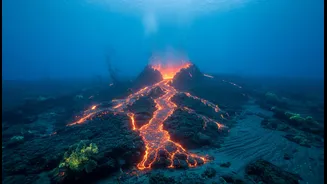
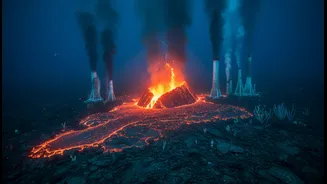
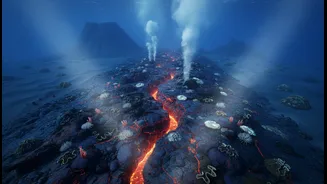
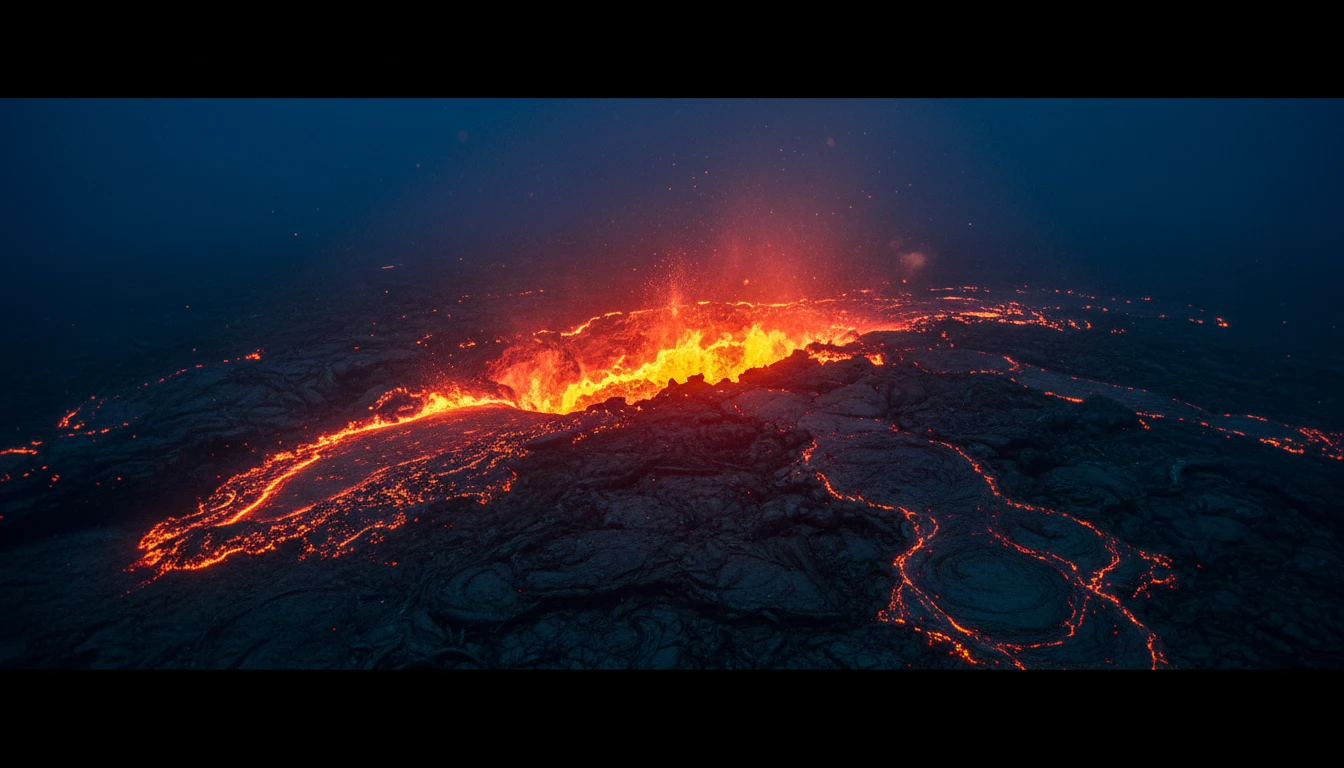
The Central Indian Ridge isn't a single, smooth crack; it's a complex system of segments, faults, and volcanic zones. It's considered a slow-to-intermediate spreading ridge, with spreading rates ranging from about 30 to 49 millimetres per year. The process is not always steady. Recent, groundbreaking research from July 2026 revealed the first-ever direct observation of a seafloor spreading event in the southern Indian Ocean. In April 2024, instruments captured the seafloor splitting apart, dropping by metres, and erupting around 160 million cubic metres of lava over just a few days. This event proved that while the average movement is slow, the actual process can happen in sudden, violent bursts, releasing decades of built-up strain in a short period.
Practical Impact: Mountains and Earthquakes
The movement of plates driven by seafloor spreading has dramatic consequences that are visible even on land. The most famous example for India is the Himalayan mountain range. The Indian Plate's relentless northward journey, a result of spreading elsewhere, led to its collision with the Eurasian Plate, a crash that continues to push the Himalayas higher. The process also creates immense stress within the Earth's crust. The Indo-Australian plate itself is showing signs of breaking apart in a region known as the Wharton Basin. This internal stress was responsible for the massive, unusual intra-plate earthquakes in 2012, which were not on a traditional fault line.
The Hazard: Tsunamis and Seismic Risk
The same tectonic forces that build mountains also pose significant threats. The boundaries where plates interact are hotspots for seismic activity. Subduction zones, where one plate dives beneath another, are particularly dangerous. The devastating 2004 Indian Ocean tsunami was caused by a massive earthquake along the Sunda subduction zone, where the Indo-Australian plate is forced under the Sunda plate. While mid-ocean ridges themselves are associated with smaller, shallow earthquakes, the overall system of plate movement creates the conditions for mega-thrust earthquakes that can generate catastrophic tsunamis. Understanding the dynamics of the seafloor, including ridges and fracture zones, is critical for tsunami hazard assessment for India's long coastline.
Remaining Questions: From Minerals to Plate Breakup
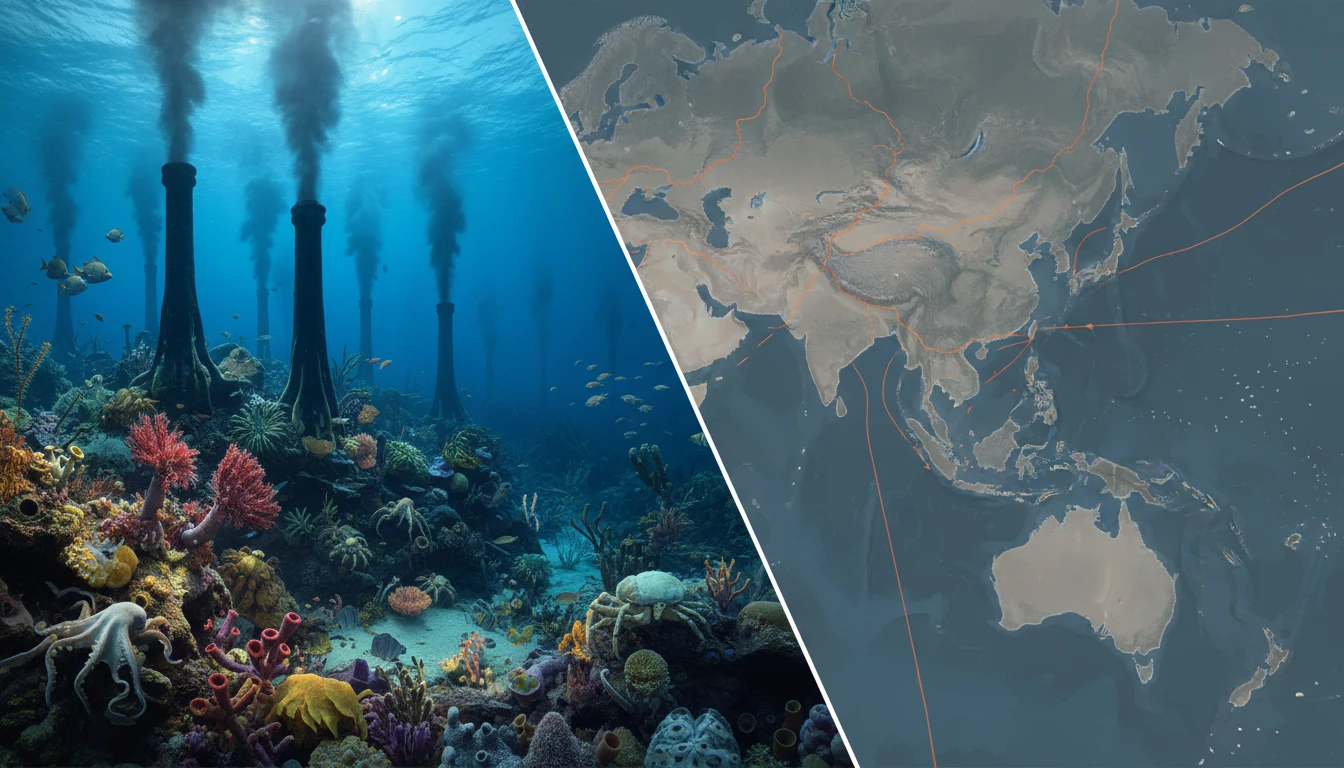
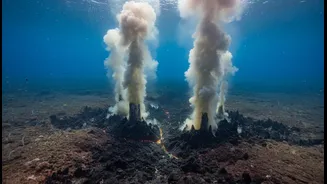
Despite recent breakthroughs, many questions remain. Scientists are keenly interested in the mineral resources found around mid-ocean ridges. The intense heat and chemical reactions create hydrothermal vents that can deposit valuable minerals, but their economic and environmental potential is still being explored. Another major area of research is the breakup of the Indo-Australian plate. Geologists are trying to determine if it is becoming two separate plates and how this 'divorce' will impact regional tectonics and earthquake risk. The recent direct observation of a spreading event has opened a new window into these processes, but scientists stress that most of the world's 65,000 km long mid-ocean ridge system remains unmonitored, hiding its secrets deep beneath the waves.