





The Core-Breath Connection Explained
The link between holding a plank and mastering pranayama might seem tenuous, but it’s grounded in simple biomechanics. Pranayama, the yogic practice of breath regulation, isn't just about inhaling and exhaling. It’s about controlling the breath with precision,
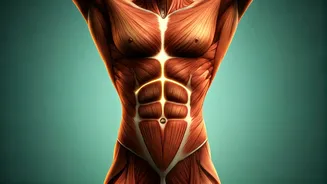
which requires the support of your entire torso. Your primary breathing muscle is the diaphragm, a large dome-shaped muscle at the base of your lungs. For the diaphragm to function optimally—contracting downward to allow a full inhale and relaxing upward for a complete exhale—it needs a stable base. This is where your core comes in. A strong, stable core, which includes your abdominal muscles, obliques, and lower back, acts like a sturdy container for your internal organs. This stability prevents your belly from pooching out excessively when you breathe, allowing the diaphragm to move more efficiently. In essence, a weak core can lead to shallow, inefficient breathing. By strengthening your core with an exercise like the plank, you are inadvertently training your body to support deeper, more controlled, and more powerful breaths—the very goal of a dedicated pranayama practice.
How to Hold the Perfect Plank
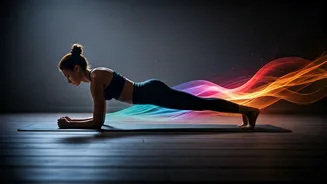
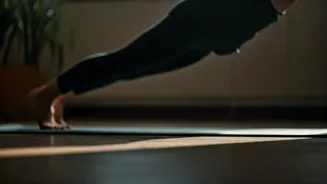
Before you start any challenge, mastering the form is non-negotiable. An incorrect plank is ineffective and can lead to strain or injury, particularly in the lower back. Here’s how to do it right: 1. **Get into position:** Start on all fours, then step your feet back one at a time, extending your legs fully. Your body should form a straight line from your head to your heels. You can also perform this on your forearms, which is often preferred for longer holds. 2. **Engage your core:** This is the most important step. Imagine pulling your belly button in towards your spine. This activates the transverse abdominis, the deepest abdominal muscle that acts like a corset for your midsection. 3. **Align your body:** Your hips should not sag towards the floor or pike up towards the ceiling. Keep your back flat—don't let it arch. Your neck should be in a neutral position, with your gaze directed at the floor a few inches in front of your hands. Avoid tucking your chin or craning your neck up. 4. **Breathe:** Don’t hold your breath! Breathe steadily and calmly. This reinforces the connection between core engagement and respiratory control. If you find yourself unable to breathe, you may be tensing up too much.
The 10-Day Progressive Plank Challenge
This challenge is designed for accessibility and steady progress. The goal isn't to suffer; it's to build strength sustainably. Rest for 60 seconds between sets if you are doing more than one. Remember to listen to your body and hold the plank for a shorter time if needed, always prioritising form over duration. * **Day 1:** 20 seconds * **Day 2:** 30 seconds * **Day 3:** 40 seconds * **Day 4:** 45 seconds * **Day 5:** 60 seconds (one full minute!) * **Day 6:** Rest Day. Focus on gentle stretching. * **Day 7:** 60 seconds, followed by a second set of 30 seconds. * **Day 8:** 75 seconds * **Day 9:** 90 seconds * **Day 10:** 120 seconds (two full minutes!)
Integrating Strength into Your Practice
Completing the challenge is a fantastic achievement, but the real benefit comes from integrating this newfound strength. After your 10 days, you don't need to stop. Try incorporating a 60-90 second plank into your regular workout routine 3-4 times a week to maintain your core stability. More importantly, start noticing the difference during your quiet moments. The next time you sit for meditation or a formal pranayama session, bring your awareness to your core. Sit tall and feel the solid foundation you’ve built. As you inhale, notice how your posture supports a deeper, fuller breath without strain. You may find that your capacity for holding the breath (kumbhaka) feels more comfortable and controlled. The physical work of the plank challenge translates directly into the subtle, internal work of pranayama by creating a body that is better equipped for the task.