



The Era of Shaky Cams and Quick Cuts
To understand the John Wick phenomenon, one must first remember what much of Hollywood action looked like in the early 2010s. The genre was dominated by the kinetic, often chaotic, style popularized by films like the Bourne series. Characterized by rapid-fire
editing, close-up shots, and a perpetually shaking camera, this technique was effective at creating a sense of disorientation and urgency. However, it was also often used to mask an actor's lack of fighting prowess or to construct a fight sequence in the editing room rather than in front of the camera. The audience rarely got a clear, sustained view of the action, relying on sound design and frantic cuts to feel the impact.
A New Philosophy of Performance
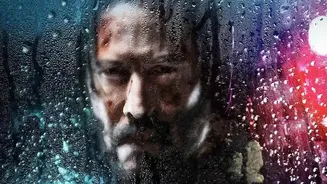
The team behind John Wick, including directors Chad Stahelski and David Leitch—both veteran stunt performers themselves—had a different vision. They wanted the audience to see the action clearly, performed in long, fluid takes. This approach, heavily influenced by classic Hong Kong martial arts cinema, requires something the shaky-cam era often avoided: an actor who could actually perform the complex choreography. Enter Keanu Reeves. Known for his legendary work ethic since his training for 'The Matrix', Reeves embraced the challenge with unparalleled dedication. He didn't just learn the moves; he sought to master the disciplines.
Training for Authenticity
Reeves’s training regimen for the first film was an intense, months-long bootcamp. He spent four to five hours a day, five days a week, immersing himself in a curriculum designed to build a real-world killer. This wasn't about aesthetics; it was about function. His training included Judo and Brazilian Jiu-Jitsu for grappling, along with extensive tactical firearms training with experts like Taran Butler to make the gunplay look as authentic as the hand-to-hand combat. This fusion of disciplines created the series' signature style: 'gun fu', a seamless and deadly ballet of martial arts and marksmanship. The goal was to build a body that could perform, allowing the directors to capture entire fight sequences in wide shots and long takes without needing a stunt double or deceptive edits.
From Stuntmen to Storytellers
The vision for John Wick's action was born from experience. Director Chad Stahelski was Reeves's stunt double on 'The Matrix', and he understood what was possible when an actor was willing to commit fully. Stahelski and Leitch's company, 87eleven Action Design, championed a philosophy where action sequences are not just interludes between plot points but are integral to character and storytelling. Reeves's ability to perform the fights himself meant that the character of John Wick was always present in the action. Every reload, every takedown, every fluid transition from a pistol to a submission hold was performed by Reeves, deepening the audience's connection to the character and the stakes. According to Stahelski, Reeves's commitment is not normal, as he consistently pushes his limits to do the hard work alongside the stunt team.
The 'John Wick' Effect
The success of the John Wick films sent a clear message to Hollywood: audiences were hungry for clarity, skill, and authenticity in their action. The series' influence can be seen in a new wave of action films that prioritize practical stunts, long takes, and actors who have visibly put in the training hours. Movies like 'Atomic Blonde' (also directed by David Leitch), 'Extraction', and 'Nobody' all bear the hallmarks of the John Wick style. The bar has been raised. It is no longer enough for an action star to simply look the part; they are now increasingly expected to be able to move the part. Keanu Reeves, in his 50s, didn't just create a new iconic character; he sparked a renaissance in action filmmaking, proving that commitment to craft is the most compelling special effect of all.