





The Ticking Time Bombs: Glacial Lakes
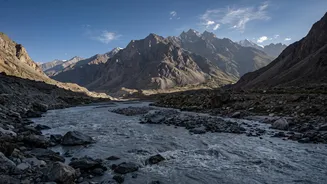
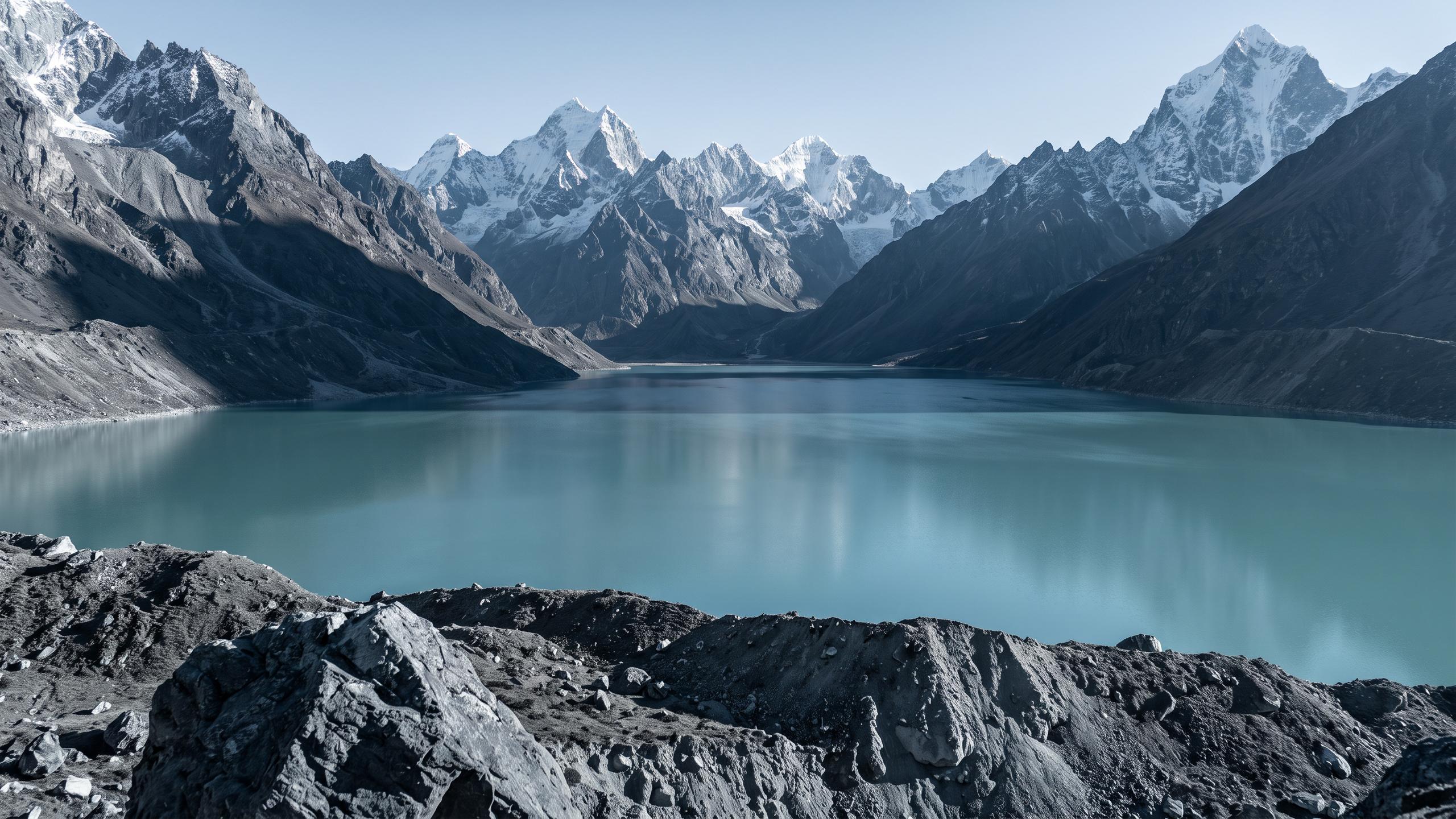
High in the Himalayas, hundreds of glacial lakes are swelling as temperatures rise. These are not serene water bodies; many are unstable pools dammed by loose walls of rock and ice, known as moraines. A Glacial Lake Outburst Flood, or GLOF, occurs when
this natural dam fails. The trigger could be a large chunk of ice falling into the lake, an earthquake, or simply the mounting pressure of the water itself. When the dam breaks, it releases a massive, sudden torrent of water, mud, and boulders that scours the landscape downstream with immense destructive power. Scientists have identified dozens of potentially dangerous glacial lakes across Nepal, each a ticking time bomb for the valleys below.
When Mountains Move: Landslide Dams
The steep, seismically active slopes of the Himalayas are prone to landslides. A massive landslide can block a river, creating a temporary dam and a large lake behind it. This is a highly unstable situation. The water level rises, and the dam—made of loose earth and rock—can fail catastrophically and without warning. The resulting flood is similar in its destructive force to a GLOF, a sudden, debris-filled wave that travels at high speed. Following the devastating events of August 26, 2026, which were triggered by an ice-rock avalanche, authorities warned of a remaining blockage upstream that could cause a second flood, highlighting the persistent danger of landslide dams.
The Fury From The Sky: Cloudbursts
While glacial and landslide-related floods can occur even on clear days, the monsoon season brings its own acute threat: cloudbursts. A cloudburst is an extreme, highly localised rainfall event where a huge amount of rain is dumped in a very short period. Instead of a steady downpour, it is akin to a bucket of water being overturned. In mountainous terrain, this sudden deluge can trigger flash floods and landslides almost instantly. The sheer volume of water overwhelms natural drainage channels, sweeping away everything in its path. Climate change is believed to be increasing the intensity and frequency of these extreme weather events, adding another layer of risk to the region.
A Deadly Cocktail of Risks
These triggers do not exist in isolation; they often interact to create even more complex and dangerous disasters. An earthquake could trigger a landslide, which then blocks a river. An extreme rainfall event could saturate the ground, making a landslide more likely, or it could accelerate the melting of a glacier, increasing pressure on a moraine dam. The recent disaster in Nepal is a prime example of this complexity, with initial reports pointing to an ice-rock avalanche, possibly linked to seismic activity, that created a temporary dam and a devastating flood. This cascading sequence of events makes prediction and mitigation incredibly challenging.
The Cross-Border Impact on India
A disaster in Nepal’s mountains does not respect international borders. Major rivers like the Gandak (called Narayani in Nepal) and Koshi flow from Nepal into the densely populated plains of Bihar and Uttar Pradesh. A massive flood surge originating in Nepal can travel downstream within hours, posing a grave threat to Indian communities. Following the August 2026 floods in Nepal, which involved a surge in the Bhote Koshi-Trishuli river system that flows into the Gandak, authorities in Bihar and UP were put on high alert. This highlights the critical need for robust cross-border early warning systems and coordinated disaster management between India and Nepal to save lives on both sides of the border.