


A New Era of Lunar Collaboration
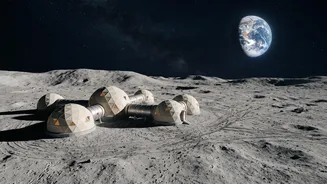
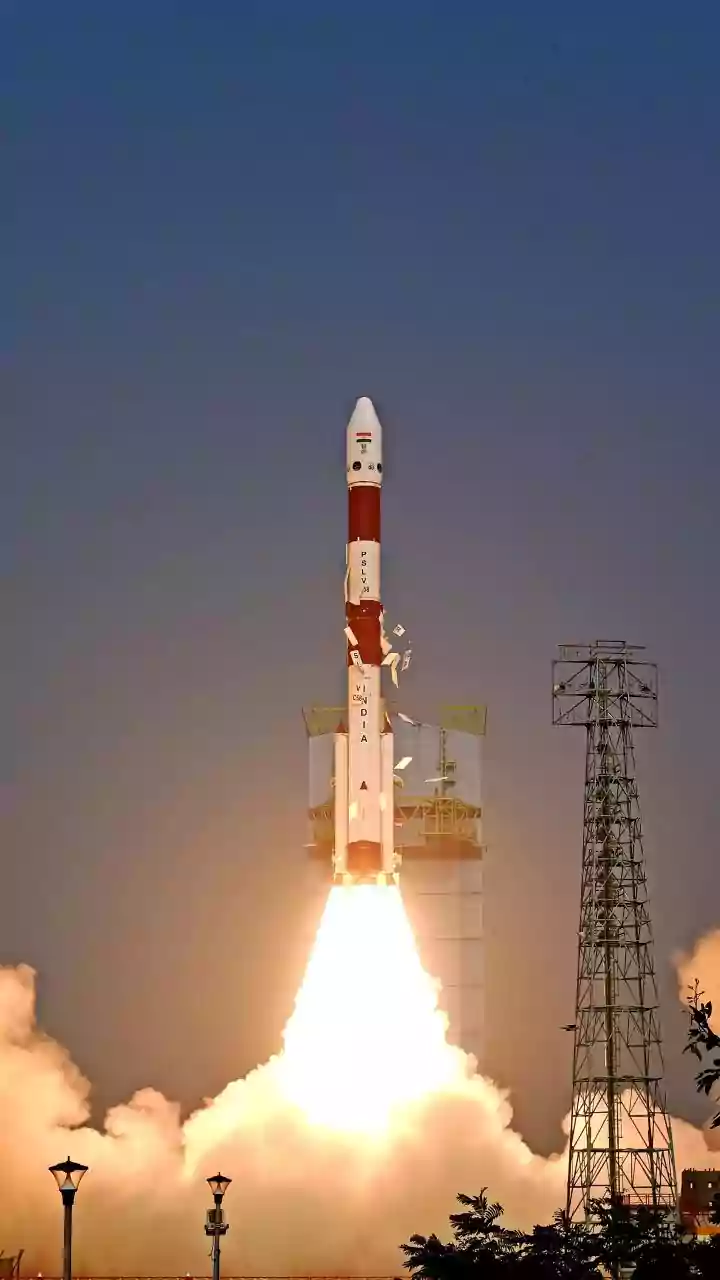
India is deepening its role in global space exploration. In August 2026, NASA formally invited the Indian Space Research Organisation (ISRO) to participate in its ambitious Moon Base programme. This comes after India signed the Artemis Accords in 2023,
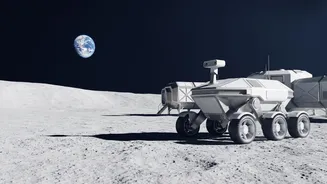
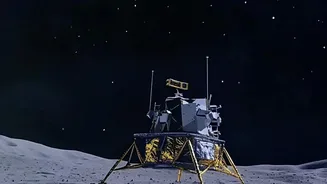
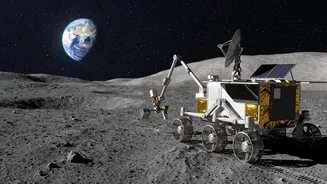
a set of principles for peaceful and cooperative space exploration led by the United States. This partnership aims to establish a sustainable human presence on the Moon, likely near the lunar south pole where water ice is believed to exist. Beyond the US collaboration, India is also partnering with the Japan Aerospace Exploration Agency (JAXA) on the Lunar Polar Exploration (LUPEX) mission. For LUPEX, planned for no earlier than 2028, ISRO is developing the lander while JAXA is building the rover, designed to search for and analyse lunar water. These high-level collaborations signal a shift from independent missions to integrated global efforts, creating a demand for Indian talent that can work within international standards and on shared technological platforms.
Robotics and Autonomous Systems
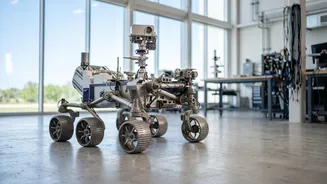
Building and maintaining a lunar outpost will rely heavily on robotics. Astronaut time is precious and the environment is hazardous, making autonomous systems essential for construction, resource extraction, maintenance, and scientific surveys. For missions like LUPEX, the rover developed by JAXA will need to navigate semi-autonomously and operate a drill to collect subsurface samples. Future careers in this domain will go beyond traditional mechanical engineering. Professionals will need expertise in AI-driven navigation, robotic arm manipulation, sensor fusion, and remote operations. Engineers who can design, build, and program robots that can withstand extreme temperatures and lunar dust will be in high demand.
In-Situ Resource Utilisation (ISRU)
The key to a sustainable lunar presence is living off the land, a concept known as In-Situ Resource Utilisation (ISRU). A primary goal of both the Artemis and LUPEX missions is to locate and learn how to extract water ice. This water can be converted into breathable air for astronauts and rocket propellant for return journeys or missions deeper into space. ISRU creates a need for a new class of professionals: space miners, chemical engineers, and materials scientists focused on extraterrestrial processing. Skills in geology, mineralogy, and chemical processing will be crucial for developing technologies that can extract oxygen from lunar regolith (soil) and water from ice deposits, turning the Moon into a vital refuelling station.
Data Science and Artificial Intelligence
Space missions generate colossal amounts of data, from spacecraft telemetry and health monitoring to scientific readings from dozens of instruments. The Artemis Accords specifically highlight the importance of sharing scientific data openly among partner nations. This creates a massive opportunity for data scientists and AI specialists. These professionals will be needed to develop algorithms that can quickly analyse geological data to find resources, monitor the health of life support systems, automate spacecraft operations, and sift through terabytes of information to find patterns that humans might miss. A background in machine learning, data analytics, and software development will be foundational for many of the ground-based jobs supporting a permanent lunar outpost.
Aerospace and Systems Engineering
While new fields are emerging, the demand for core aerospace disciplines will only intensify. However, the focus will shift towards interoperability and long-duration systems. Engineers will need to design hardware—from habitat modules and power systems to landers and vehicles—that is compatible with international standards set by partners like NASA, JAXA, and the European Space Agency (ESA). This requires a deep understanding of systems engineering to ensure that components built in India can seamlessly connect and function with hardware built elsewhere. Expertise in propulsion, life support systems, radiation shielding, thermal control, and advanced materials will be more critical than ever as missions shift from short sorties to establishing a permanent off-world settlement.
Space Medicine and Human Health
Keeping astronauts healthy and productive on the Moon for long durations presents a unique set of challenges, including exposure to cosmic radiation and the effects of reduced gravity. The lunar Gateway, a planned orbital station, will serve as a laboratory to validate health operations with significant time delays in communication. This field requires a blend of medicine, biology, psychology, and engineering. Future specialists will work on developing compact medical devices for remote diagnosis, creating effective exercise and nutrition plans to counteract physiological deconditioning, and designing habitats that support the psychological well-being of the crew. This niche but critical area will require doctors, biomedical engineers, and life sciences researchers dedicated to solving the problems of living beyond Earth.