




In the vast emptiness of space, most objects follow predictable paths governed by gravity. But a tiny, bus-sized asteroid named 1998 KY26 is breaking the rules, and scientists are zeroing in on a surprising culprit: the gentle push of sunlight.
Meet the Cosmic Speedster
Asteroid
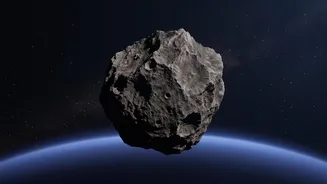
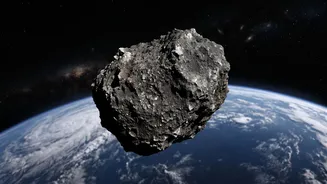
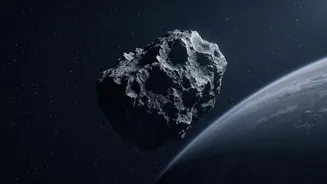
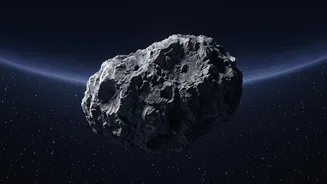
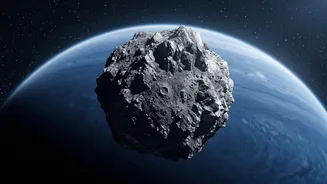
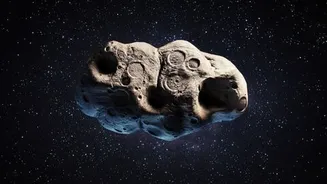
1998 KY26 is anything but ordinary. Discovered in 1998, it’s a remarkably small near-Earth asteroid, estimated to be only about 11 metres (or 36 feet) in diameter. What truly sets it apart is its incredible rotation speed. It completes a full spin in just over 5 minutes, making it one of the fastest-rotating objects known in our solar system. This rapid spin suggests it's not a loose collection of rubble held together by weak gravity, like many larger asteroids. Instead, it is likely a single, solid piece of rock, a monolithic fragment possibly broken off a much larger parent body long ago. Its unusual characteristics have made it a prime target for further study, a cosmic curiosity that challenges our assumptions about small celestial bodies.
An Unexplained Acceleration
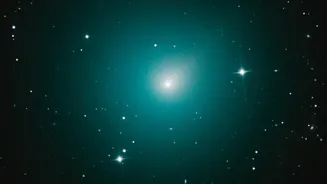
For years, astronomers have been tracking 1998 KY26 and noticed something odd. Its orbit is changing in a way that can't be explained by the gravitational pull of the Sun and planets alone. Specifically, it shows a slight acceleration perpendicular to its orbital plane. This kind of non-gravitational nudge isn't unheard of. For comets, it's easily explained: as they near the Sun, their ice turns to gas and escapes, creating a natural jet propulsion. This led some scientists to propose that 1998 KY26 might be a 'dark comet'—an object releasing gas so faintly that it doesn't form a visible tail but is still pushed by the escaping vapours.
Debunking the 'Dark Comet' Theory
The idea of a stealth comet was intriguing, but recent research has cast serious doubt on it. A new study from aerospace engineers at the Georgia Institute of Technology modeled the asteroid's internal and surface temperatures. They concluded that 1998 KY26 is simply too warm to hold onto buried water ice for long periods. Their calculations showed that if the asteroid's strange movement were caused by outgassing, its entire ice supply would be depleted in as little as 62 to 2,000 years, a blink of an eye in cosmic terms. With no evidence of a dust coma and temperatures too high to sustain ice, the dark comet theory appears unlikely, forcing scientists to look for another explanation.
A Gentle Nudge From Sunlight
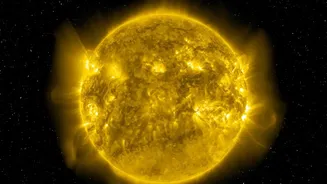
If not gas, then what is pushing the asteroid? The leading suspect is now solar radiation pressure, a phenomenon known as the Yarkovsky effect. It sounds like science fiction, but sunlight can indeed move asteroids. As an asteroid rotates, its sun-facing side absorbs energy and heats up. Later, as that patch rotates into darkness, it radiates that heat away. This emission of thermal photons creates a minuscule but constant thrust, like an incredibly gentle, persistent jet engine. Over thousands or millions of years, this tiny push can significantly alter the path of a small asteroid. For a tiny, lightweight body like 1998 KY26, this effect would be more pronounced, and scientists now believe it could be strong enough to account for its mysterious acceleration.
Why This Tiny Rock Matters
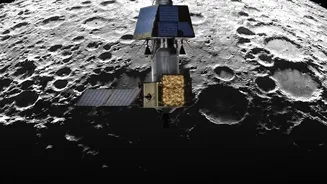
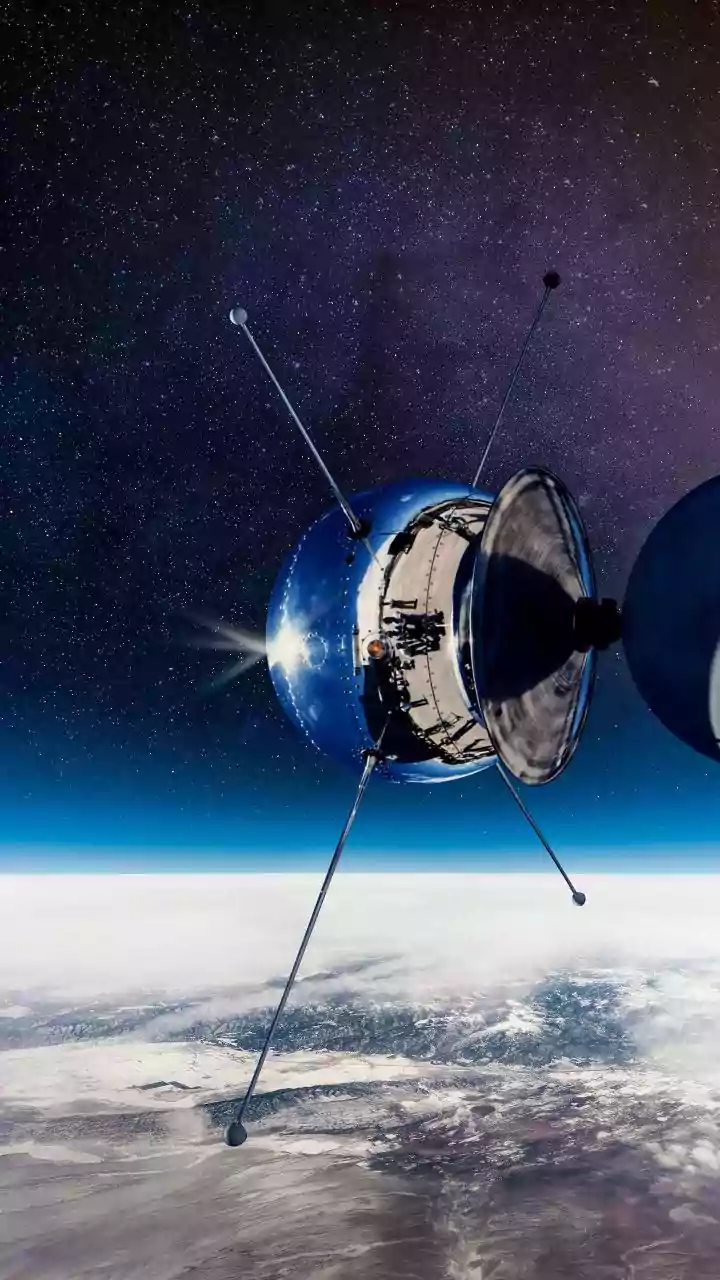
Understanding what moves 1998 KY26 is more than just solving an academic puzzle. This research has crucial implications for planetary defence. If we are to accurately predict the longterm paths of nearEarth asteroids, we must account for nongravitational forces like the Yarkovsky effect. Furthermore, this tiny asteroid is the target of an extended mission by Japans Hayabusa2 spacecraft, which is scheduled to rendezvous with it in July 2031. This will be the first time a spacecraft has visited such a small, rapidly spinning body. The data gathered will provide a groundtruth look at its composition and dynamics, helping scientists confirm whether sunlight is the true cause of its drift and offering invaluable insights into the nature of the smallest objects in our solar system.