



A Sudden, Unprecedented Brightening
Imagine watching a distant city skyline for years, only to see its downtown core suddenly blaze with the light of a million suns. That’s the cosmic equivalent of what happened in the constellation Virgo. Until late 2019, the galaxy SDSS1335+0728 was unremarkable,
a quiet collection of stars going about its business. Then, in December 2019, the Zwicky Transient Facility in California noted a dramatic and unexpected brightening at the galaxy's centre. Unlike a supernova or other transient events that flare and fade within days or months, this galaxy just kept getting brighter. Four years later, it is radiating more light across the ultraviolet, optical, and infrared spectrums, and in February 2024, it even began emitting X-rays. This sustained and escalating activity was something new, pointing to a much larger and more fundamental change within the galaxy.
What It Means for a Black Hole to 'Wake Up'
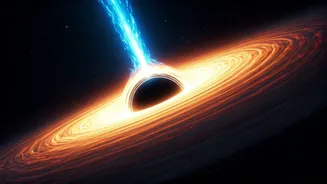
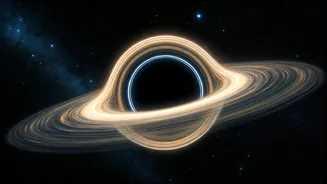
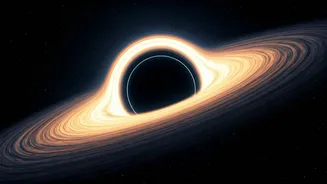
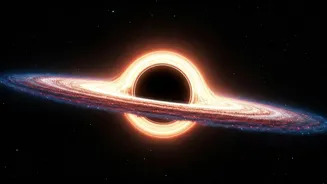
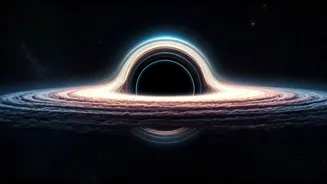
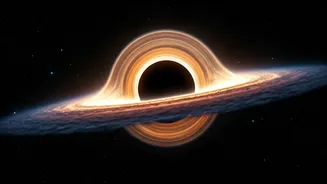
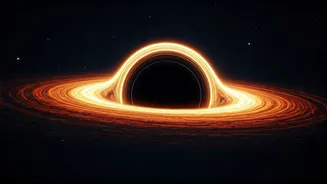
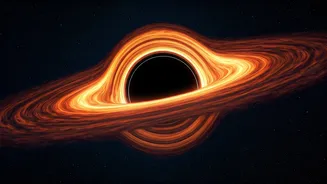
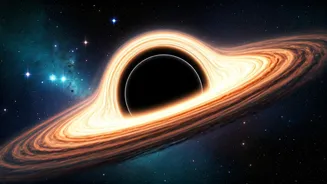
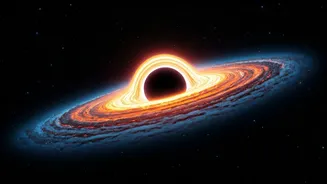
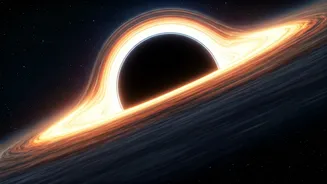
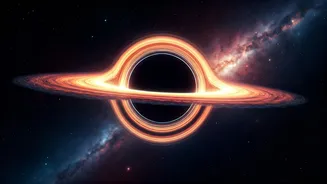
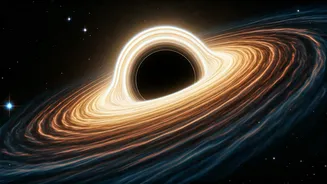
Most large galaxies, including our own Milky Way, have a supermassive black hole at their center. These 'giant monsters', as one astronomer described them, are usually dormant or 'sleeping'. This means they aren't actively swallowing large amounts of matter. A sleeping black hole is hard to see because, by definition, it doesn't emit light. We only know it's there by observing the orbits of stars around it. However, when a vast cloud of gas or a star wanders too close, the black hole's immense gravity begins to pull that material in. This matter doesn't fall straight in; it forms a swirling, superheated disc around the black hole called an accretion disc. As the material is torn apart and accelerated, it heats up to incredible temperatures and radiates an enormous amount of energy across the entire electromagnetic spectrum, outshining all the stars in its host galaxy combined. This 'active' state is known as an Active Galactic Nucleus (AGN), and witnessing one turn on is what astronomers mean when they say a black hole has 'woken up'.
The Detective Work of Modern Astronomy
Confirming this cosmic awakening required a global effort. After the initial alert from the Zwicky Transient Facility, astronomers turned a host of powerful instruments towards SDSS1335+0728. By digging into archival data from the past two decades, a team led by researchers at the European Southern Observatory (ESO) confirmed that the galaxy had indeed been quiet before 2019. They then used new observations from world-class facilities, including ESO's Very Large Telescope (VLT) in Chile, to study the changes. They compared data taken before and after the event, ruling out other possibilities. A tidal disruption event—where a black hole shreds a single star—is too short-lived to explain a brightening that has lasted for years. The evidence increasingly pointed to one conclusion: they were seeing the birth of an Active Galactic Nucleus in real time.
A Cosmic First: Witnessing the Awakening
While astronomers have identified millions of active galaxies, they have never before seen one switch on from a dormant state. Previous discoveries have found galaxies that were inactive in the past and active now, but missed the transition itself. This event is the first time scientists have been able to observe the activation process as it happens. "Imagine you’ve been observing a distant galaxy for years, and it always seemed calm and inactive," said lead researcher Dr. Paula Sánchez Sáez. "Suddenly, its core starts showing dramatic changes in brightness, unlike any typical events we’ve seen before." This gives them an unprecedented front-row seat to one of the most powerful processes in the universe. It’s a unique chance to understand how these behemoths grow and how their activity shapes the evolution of their host galaxies.
What Happens Next in This Distant Galaxy?
The show is far from over. The black hole in SDSS1335+0728 continues to be active, and astronomers will be watching closely to see what it does next. Follow-up observations are planned to study how gas is moving around the black hole, which could reveal what triggered the awakening in the first place. Was it the remnants of a small galaxy that was consumed? Or a particularly large gas cloud that was disturbed? The two main theories are that this is either a brand new AGN igniting for the first time or a very unusual and long-lasting tidal disruption event. Continued monitoring will be crucial to confirm which hypothesis is correct. This living laboratory provides a rare opportunity to test theories about black hole accretion, a process fundamental to how galaxies are built. This sudden awakening in a distant galaxy is more than just a cosmic light show; it’s a vital clue in the grand story of our universe.