





The Foundation of Innerspring Support
Innerspring mattresses have been a popular choice for decades, known for their responsive support, durability, and breathability. Their core is a support system made of steel coils, which are designed to distribute your weight and provide that classic
bounce. However, not all springs are created equal. The construction of the coil system dramatically affects how a mattress feels, how well it isolates motion, and how long it lasts. The four main types of spring construction you will encounter are Bonnell, offset, continuous wire, and pocketed coils. Understanding the differences is the first step toward choosing a mattress that truly suits your needs.
Bonnell Coils: The Traditional Workhorse
Bonnell coils are the oldest and often most common type of innerspring system, especially in budget-friendly mattresses. These coils have an hourglass shape and are interconnected with spiral-shaped wires to form a single, unified grid. This linked structure provides a firm, durable, and responsive surface. The main drawback is motion transfer; because the springs are all connected, movement on one side of the bed is easily felt on the other. This makes it a less ideal choice for couples or light sleepers who are easily disturbed. Still, for a guest room or a sleeper on a budget who prefers a firm feel, a Bonnell coil mattress can be a reliable and economical option.
Offset Coils: An Upgrade in Contouring
Offset coils represent an evolution of the Bonnell design. They also have an hourglass shape, but the tops and bottoms of the coils are squared off. These flat edges allow the coils to hinge together more effectively when compressed, which enables the mattress to conform more closely to the body's contours than a Bonnell system. This design offers a good balance of firm support and body-hugging comfort. It also reduces motion transfer compared to Bonnell coils, making it a solid choice for mid-range to high-end mattresses. Think of it as a quieter, more adaptable version of the traditional spring system.
Continuous Wire Coils: The Durable System
As the name suggests, a continuous wire system is constructed from a single, long piece of steel wire that is shaped into rows of coils. These rows are linked together, creating a very firm and stable support structure. The interconnected design makes these mattresses exceptionally durable and supportive. However, like Bonnell coils, this system is prone to motion transfer because the entire network moves as one unit. These are often found in very firm mattress models and can be a good choice for solo sleepers who need robust support and longevity at a reasonable price point.
Pocketed Coils: The Modern Standard for Motion Isolation
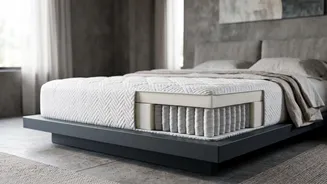
Pocketed coils, also known as Marshall coils or individually wrapped coils, are considered the modern standard in innerspring technology. Each spring is individually encased in its own fabric pocket. Because the coils are not directly connected to each other, they can move independently. This design provides two major benefits: superior motion isolation and excellent body contouring. When one person moves, the disturbance doesn't travel across the bed, making it ideal for couples. The independent springs also adapt precisely to your body's shape, offering targeted pressure relief for areas like the hips and shoulders. For this reason, pocketed coil mattresses are often recommended for side sleepers and are commonly found in hybrid and luxury models.
How to Make Your Choice
Choosing the right spring type depends on your personal priorities. If you sleep with a partner and are easily disturbed by movement, a pocketed coil mattress is your best bet. If budget is your primary concern, a Bonnell or continuous wire system can provide durable support for a lower price. For those seeking a middle ground with good contouring and less motion transfer than a basic model, an offset coil mattress is a great option. Also consider your sleeping position. Side sleepers often benefit from the pressure relief of pocketed coils, while back and stomach sleepers may prefer the firm, uniform support of a connected coil system like Bonnell or continuous wire. Ultimately, the coil system is just one part of the mattress; the comfort layers of foam or fiber on top also play a huge role in the final feel.