






Meet India's Private Space Pioneer
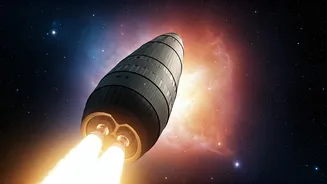
So, what exactly is Vikram-1? It's India's first privately developed orbital-class rocket, created by the Hyderabad-based startup Skyroot Aerospace. Standing about seven-storeys tall, this multi-stage launch vehicle is engineered to carry small satellites,
weighing up to 350 kg, into Low Earth Orbit. Its upcoming maiden test flight, named 'Mission Aagaman' (meaning 'arrival'), is scheduled for a launch window between July 12 and August 4, 2026, from the Satish Dhawan Space Centre in Sriharikota. This mission isn't just a test; it's designed to announce India's arrival on the global stage of private space exploration. The name itself, Vikram, pays homage to Dr. Vikram Sarabhai, the visionary founder of India's space program.
More Than Just a Rocket
The significance of Vikram-1 extends far beyond its technical specifications. Its launch marks a monumental threshold for India’s private space industry. For decades, space exploration in India was the domain of the Indian Space Research Organisation (ISRO). But since the government opened the sector to private players in 2020, a new ecosystem of startups has emerged, eager to innovate. Skyroot Aerospace, founded by former ISRO scientists, is at the forefront of this movement. The successful suborbital flight of its precursor, Vikram-S, in November 2022 was the first private rocket to reach space from Indian soil. Now, Vikram-1's orbital mission represents the next giant leap, aiming to position India as a key player in the projected $44 billion space economy by 2033.
Engineered for a New Generation
Part of what makes Vikram-1 so captivating is its cutting-edge technology, which sounds like something straight out of science fiction. The rocket is built with an all-carbon composite structure, making it both incredibly strong and lightweight. Perhaps most impressively, it features 3D-printed engines. This advanced manufacturing technique drastically reduces production time and cost, making space access more efficient. The rocket's onboard mission computer, named 'Ramanujan', allows it to make autonomous decisions in orbit, flying without a pilot or joystick. Skyroot has documented the rocket's creation journey on social media, giving the public, and especially young people, a behind-the-scenes look at how modern rockets are built.
Why It's Capturing the Youth's Imagination
The phrase "entered the chat" perfectly describes Vikram-1's cultural impact. This isn't just another government project; it's a story of a homegrown startup taking on the final frontier. The narrative of former ISRO scientists building a space-faring company resonates with the entrepreneurial spirit of young India. Furthermore, the government and its agencies like IN-SPACe are actively fostering this interest. They have been organizing competitions for students to design model rockets and small satellites, known as CanSats. These initiatives, along with ISRO's own student outreach programs like YUVIKA (Young Scientist Programme), are creating a strong talent pipeline and making space science accessible and exciting. The success of private players like Skyroot provides a tangible, inspiring goal for these aspiring scientists and engineers.