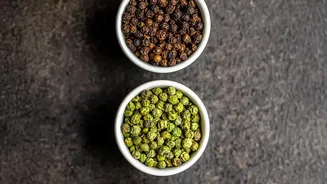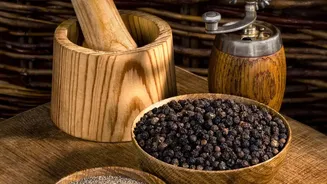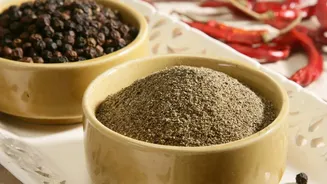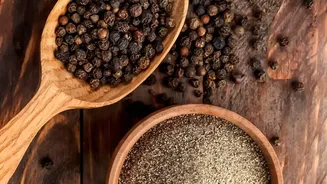





Kali mirch, or black pepper, is the king of spices in many Indian kitchens. But its high value makes it a target for adulteration. Here are simple, FSSAI-approved methods to ensure the pepper you are using is pure, safe, and flavourful.
The Water Float Test for Papaya Seeds
One of the most
common adulterants in whole black pepper is dried papaya seeds, which look strikingly similar to the real spice. Thankfully, telling them apart is simple. Fill a clear glass with water and drop a spoonful of your black peppercorns into it. Stir gently and wait for a minute. Pure, dense peppercorns will sink to the bottom of the glass. Papaya seeds, being lighter, will float on the surface. If you see a significant number of 'peppercorns' floating, your batch is likely adulterated.
Visual Inspection: Wrinkles vs. Smoothness
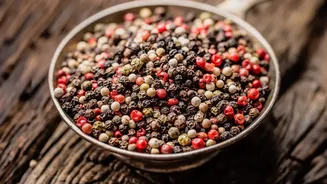
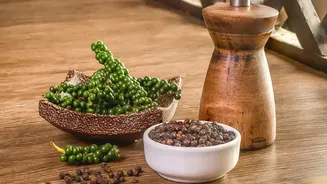
Your eyes are a powerful tool for spotting fakes. Spread a few peppercorns on a white plate and examine them closely, using a magnifying glass if you have one. Genuine black pepper has a dense, almost spherical shape with a distinctly wrinkled, net-like surface. In contrast, papaya seeds are often more oval-shaped, have a shrunken but smoother surface, and can appear greenish-brown or blackish-brown. Once you know what to look for, the difference in texture and shape becomes quite obvious.
The Press Test for Light Berries
Another common issue is the inclusion of 'light berries'. These are underdeveloped peppercorns without a full core, offering little flavour. To check for these, place a few peppercorns on a hard surface and press down firmly with your finger or thumb. A good-quality, unadulterated peppercorn is hard and will not break easily. Adulterated batches often contain light berries or softer papaya seeds that will crush or crumble under pressure, revealing their poor quality.
The Smell and Shine Test for Mineral Oil
Sometimes, sellers coat black pepper with mineral oil to give it an appealing, uniform shine and add weight. This adulterant can be harmful to consume. Judging by shine alone can be misleading, so the best way to check is by using your sense of smell. Take a handful of peppercorns and rub them vigorously in your palms. If you notice a faint kerosene-like or chemical odour, it's a strong indicator that the pepper has been coated with mineral oil. Pure black pepper should only have its characteristic sharp, pungent, and spicy aroma.
Checking Ground Pepper for Fillers
Ground pepper is even more susceptible to adulteration because the original form of the spice is hidden. Common fillers include sawdust or bran. To test for these, sprinkle a pinch of your pepper powder onto the surface of a glass of water. Pure black pepper powder will mostly settle at the bottom. Adulterants like sawdust, however, will float on the surface. This simple test can help you quickly identify low-quality ground pepper.