








The Slow Toll of Zero Gravity
The most well-known effects of long-duration spaceflight are the ones you can see and feel. In the absence of gravity, the body adapts in ways that are detrimental over time. Astronauts experience significant muscle atrophy and a steady loss of bone density,
at a rate of about 1% to 2% per month in critical weight-bearing bones like the hip and spine. This is because bones and muscles, without the constant stress of supporting a body against gravity, simply stop maintaining themselves as rigorously. Fluids also shift upwards in the body, leading to the characteristic puffy “moon-face” seen in microgravity, but also creating more serious issues like increased pressure inside the skull and vision problems known as Space-Associated Neuro-ocular Syndrome (SANS). This condition can cause swelling at the back of the eye and vision changes, a significant concern for tasks requiring sharp sight.
A Hazard at the Cellular Level
The challenges go far deeper than bones and muscles. At a molecular level, the body is under siege. Outside Earth’s protective magnetic field, astronauts are exposed to much higher levels of space radiation. This constant bombardment of high-energy particles can damage DNA, increasing the long-term risk of cancer and degenerative diseases. The body’s immune system also becomes dysregulated; studies have shown that an astronaut's immune response is dampened, making them more susceptible to infections. In a strange twist, dormant viruses within the body can even reactivate during spaceflight. Furthermore, research, including NASA's landmark Twins Study, has revealed subtle changes in gene expression and mitochondrial function, the powerhouses of our cells, indicating that the body is under widespread systemic stress.
When Biology Becomes an Operational Failure
These biological changes are not just medical footnotes; they translate directly into operational risks that could jeopardize a mission's success. An operational risk is any factor that could cause a mission-critical procedure to fail. For example, the neurocognitive effects are a major concern. Spatial disorientation, dizziness, and impaired coordination can make it difficult for an astronaut to perform delicate tasks, like docking a spacecraft or operating robotic equipment. A decline in cognitive function or mental fatigue, brought on by sleep disturbances and the stress of confinement, could lead to a critical human error. A weakened immune system means a simple infection could become a major medical event far from Earth's hospitals, and vision problems from SANS could impair an astronaut's ability to land a vehicle or identify a hazard on a planetary surface.
The Ultimate Test: A Mission to Mars
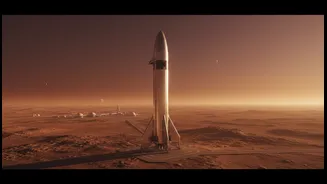
Nowhere are these risks more pronounced than in the planning for a crewed mission to Mars. A round trip could take up to three years, far longer than the typical six-month stints on the International Space Station. Over that period, the accumulated effects of radiation exposure, bone loss, and psychological stress from isolation become profound. The distance from Earth means there is no quick return and no possibility of a rapid supply mission. Communication delays would make real-time medical consultations with Earth impossible. The crew would need to be a self-sufficient medical unit, capable of handling everything from a fractured bone—made more likely by demineralization—to a serious illness, all while operating complex systems in a hostile environment.
Fighting Back with Science
Space agencies like NASA are not taking these threats lightly. The International Space Station serves as a crucial laboratory for studying these effects and testing countermeasures. Astronauts follow rigorous, two-hour daily exercise regimens using specialized equipment to provide resistance and simulate weight-bearing, which helps mitigate muscle and bone loss. Scientists are exploring everything from advanced shielding materials to protect against radiation to nutritional supplements and pharmacological interventions that could protect the body at a cellular level. Understanding how to manage these accumulated biological risks is the key that will unlock our ability to safely send humans deeper into space than ever before, ensuring the crew that lands on Mars is as healthy as the day they left Earth.