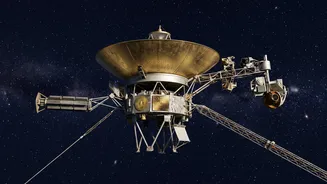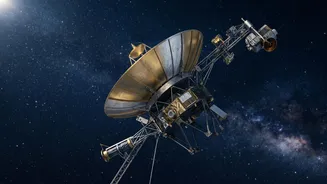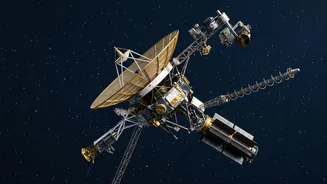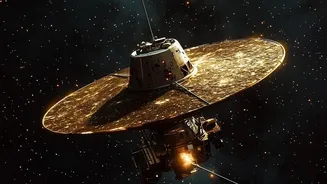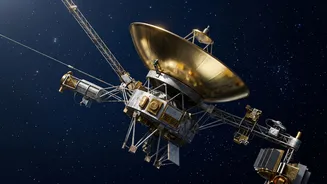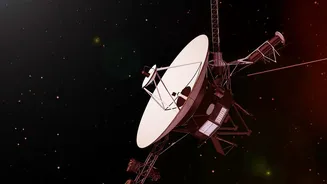

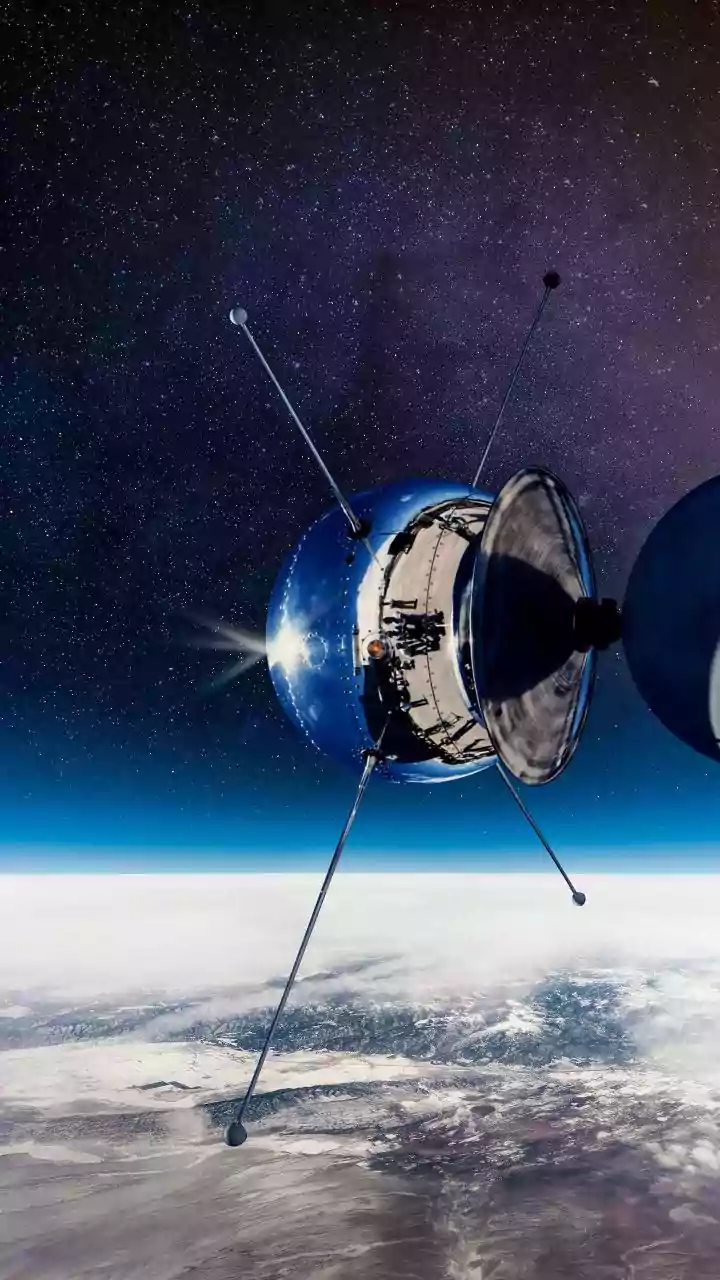

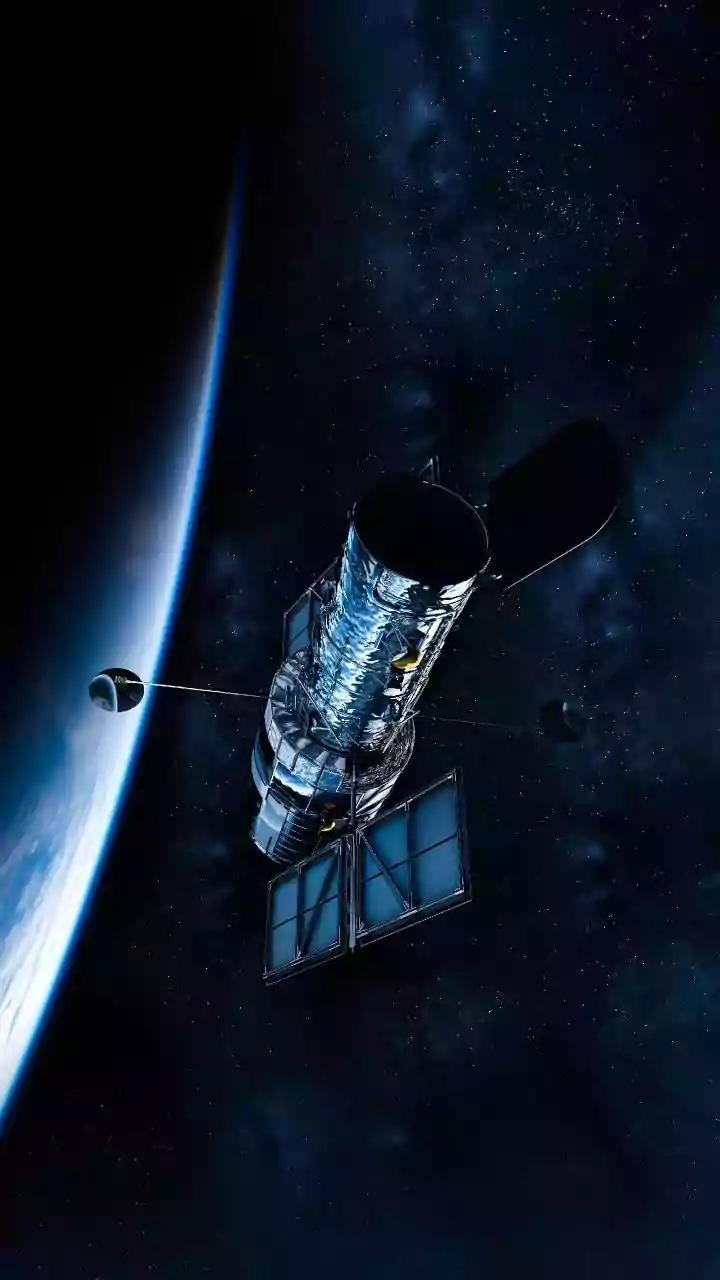

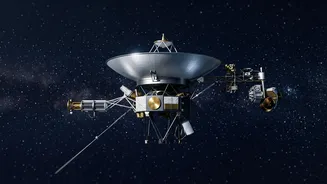
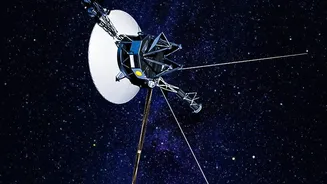
For two days, humanity’s farthest messenger was silent. NASA’s Voyager 1, now hurtling through interstellar space, stopped phoning home. Then, as mysteriously as it stopped, the signal returned, adding another chapter to its epic journey.
A Sudden, Anxious Silence
On October 18th
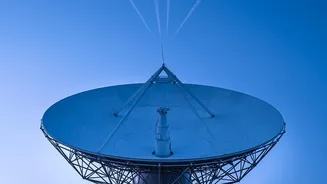
and 19th, 2026, NASA’s Deep Space Network—a global array of giant antennas—listened for Voyager 1’s faint signal and heard nothing. For roughly 48 hours, the nearly 50-year-old probe was out of contact. Then, on October 20th, before engineers on the ground could even send troubleshooting commands, the signal reappeared. The spacecraft, it seems, had fixed itself. According to Kareem Badaruddin, the Voyager mission manager at NASA's Jet Propulsion Laboratory, this was a new kind of surprise from the aging explorer. “We're relieved to be back in contact with Voyager 1 and are eager to understand what happened,” he stated.
Diagnosing a Distant Patient
Engineers are still investigating the root cause, but they have a crucial clue. It appears the spacecraft’s fault protection system automatically triggered, switching from a primary set of thrusters to its backup set. This autonomous safety feature is designed to put the probe into a stable, safe configuration if it detects a problem, giving the ground team time to diagnose the issue. In this case, the fix occurred before any human intervention was needed. The timing of the incident is notable, as it happened just weeks after engineers performed a major power-saving maneuver nicknamed the 'Big Bang' in early September to prolong the mission's life.
A 49-Year Journey into the Void
Launched in 1977, Voyager 1’s original mission was to conduct a 'grand tour' of Jupiter and Saturn. It revolutionized our understanding of these gas giants, discovering Jupiter's faint rings and several new moons around both planets. After its flyby of Saturn in 1980, its trajectory flung it out of the plane of the solar system. In August 2012, it made history by becoming the first human-made object to enter interstellar space—the region beyond the influence of our Sun. It is now traveling at over 60,000 kilometres per hour, farther from Earth than any other object in history.
The Challenge of Resilience
Keeping a vintage spacecraft running is a masterclass in creative problem-solving. Voyager 1 is powered by a radioisotope thermoelectric generator, which converts the heat from decaying plutonium into electricity. This power source loses about four watts of output each year, forcing engineers to make tough decisions about which systems to shut down to conserve energy. The recent 'Big Bang' procedure, which swapped three older devices for lower-power alternatives, was designed to keep its remaining science instruments operating longer than previously thought. This recent thruster issue is just the latest in a series of age-related glitches the team has successfully navigated, including a memorable memory fault in 2023 that corrupted its data for months before a clever fix was devised.
A New Milestone on the Horizon
The successful recovery of communication comes just as Voyager 1 is about to cross another unprecedented milestone. On November 18, 2026, the spacecraft will be one light-day from Earth, a distance of nearly 26 billion kilometers. This means a radio signal, traveling at the speed of light, will take a full 24 hours to reach the probe, and any response will take another 24 hours to return. As project manager Suzanne Dodd puts it, saying 'hello' to Voyager will soon involve a two-day wait for a reply. This staggering distance underscores the immensity of space and the incredible endurance of this trailblazing mission.