







A Tale of Two Seas
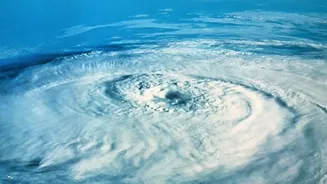
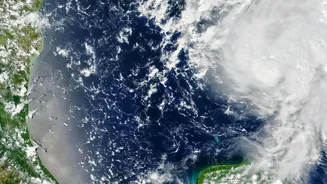
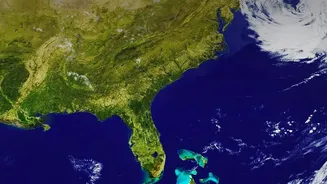
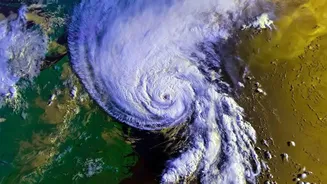
Historically, India's east coast, bordering the Bay of Bengal, has been the nation's cyclone hotspot. This warmer, larger, and more enclosed sea has always been an ideal breeding ground for tropical storms, accounting for the vast majority of cyclones
that make landfall in India. The Arabian Sea, by contrast, was traditionally cooler and less prone to intense cyclonic activity. Storms that formed there were typically weaker and less frequent. However, that long-standing pattern is now changing. Scientists have noted a clear and significant uptick in both the frequency and intensity of cyclones forming in the Arabian Sea, posing a new and growing threat to the states on India's west coast, including Gujarat and Maharashtra.
The Ocean's Rising Fever
The primary culprit behind this shift is the rising temperature of the ocean's surface. Cyclones are essentially giant heat engines, drawing their destructive power from the warm, moist air over tropical waters. As global temperatures climb due to climate change, the oceans absorb a significant portion of this excess heat. The Arabian Sea, in particular, has been warming at a faster rate than many other ocean basins. Sea surface temperatures consistently crossing the 28-degree Celsius threshold, once less common in this region, are now creating fertile conditions for cyclones to form and strengthen where they previously struggled to survive. This added thermal energy doesn't just allow for more storms; it provides the fuel for them to become much more powerful.
Stronger, Slower, and More Unpredictable
The changes being observed go beyond mere frequency. Modern cyclones in the region are exhibiting new and dangerous characteristics. One of the most alarming trends is 'rapid intensification', where a cyclone's wind speeds increase dramatically in a very short period, often less than 24 hours. This phenomenon makes forecasting incredibly challenging, shrinking the crucial window of time available for evacuations and disaster preparedness. Furthermore, some studies suggest that cyclones are now moving more slowly after making landfall. While it may sound counterintuitive, a slower-moving storm is often more destructive, as it lingers over an area for a longer duration, dumping torrential amounts of rain and causing extensive flooding and infrastructure damage long after the initial impact of its winds.
Rethinking Preparedness for a New Reality
These evolving cyclone patterns demand a complete overhaul of India's disaster management strategy. While the country, particularly states like Odisha, has earned global praise for its effective early warning and mass evacuation systems, these models were built around the behaviour of past storms. The increased threat to the west coast means that states like Gujarat, Maharashtra, and even Kerala need to bolster their infrastructure and public awareness campaigns. Forecasting models must be updated to better predict rapid intensification. Coastal zone regulations may need to be re-evaluated to account for stronger storm surges and increased flooding risks. The scientific data is clear: the storms are changing, and our response must change with them to protect vulnerable lives and livelihoods along our shores.