



The Puzzle of a Poisonous Twin
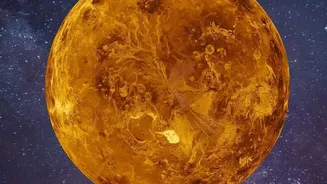
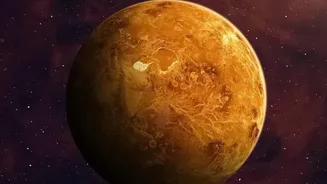
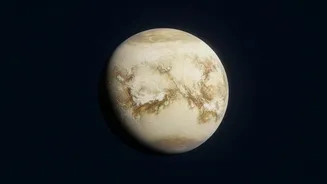
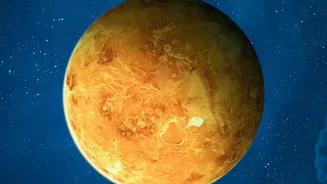
Venus and Earth are similar in size, mass, and composition, yet they could not be more different. While Earth hosts life, Venus is a hellscape with surface temperatures hot enough to melt lead and a thick, choking atmosphere of carbon dioxide and sulfuric
acid clouds. Scientists believe it may have once been more like Earth, with liquid water, but a runaway greenhouse effect transformed it. Understanding how and why this happened is one of the biggest questions in planetary science, and it holds crucial lessons for understanding climate change on our own planet. This is the central mystery ISRO's Venus Orbiter Mission, unofficially named Shukrayaan, aims to solve.
ISRO's Toolkit for an Alien Atmosphere
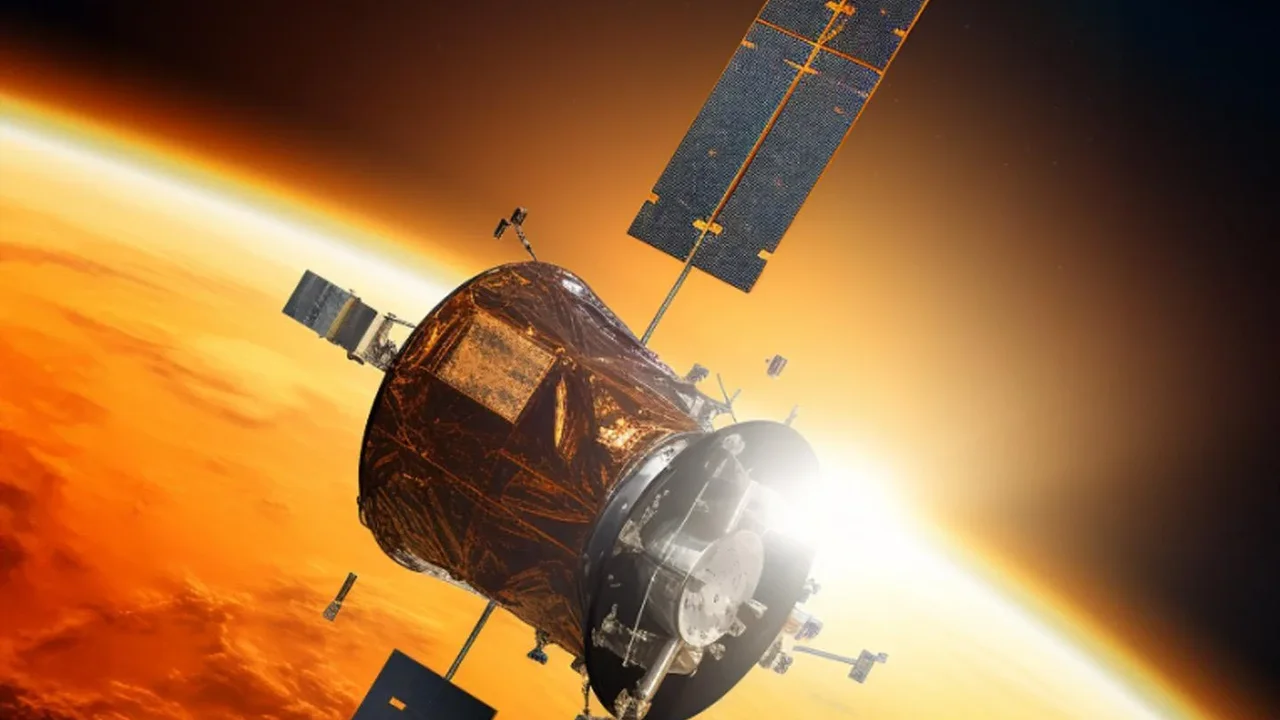
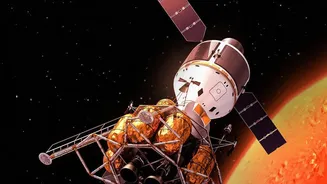
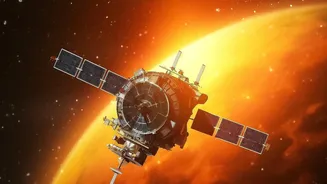
To study a planet shrouded in thick clouds, you need special eyes. ISRO's Shukrayaan orbiter will be equipped with a range of instruments designed to probe Venus from orbit. While payloads like a high-resolution Synthetic Aperture Radar (SAR) will map the hidden surface, a key objective is to study the structure, composition, and dynamics of the atmosphere. This task falls to a category of highly sensitive instruments called spectrometers. These devices are crucial for figuring out what an atmosphere is made of, its temperature, and how its gases move and change over time.
How Spectroscopy Reads the Air
At its core, spectroscopy is the science of analyzing light by splitting it into its constituent colours, much like a prism creates a rainbow. Every chemical element and compound absorbs and emits light at specific, unique wavelengths. By looking at the light from or passing through an atmosphere, a spectrometer can identify these chemical "fingerprints." The Shukrayaan orbiter will carry payloads like the Venus InfraRed Atmospheric Gases Linker (VIRAL), a collaborative instrument designed to do just this. As the orbiter flies around Venus, the instrument will watch the Sun’s light pass through the edge of the planet's atmosphere during sunrise and sunset from the spacecraft's perspective. The gases in Venus's atmosphere will absorb some of this sunlight, leaving dark lines in the light’s spectrum. By analyzing which colours are missing, scientists can determine precisely which gases are present, including sulfur compounds, water vapour, and carbon dioxide.
Tracking a Dynamic Environment
Measuring gas composition is only part of the story; understanding the 'shifts' is key. Venus’s atmosphere is not static. It is a dynamic system, likely influenced by active volcanism below and the harsh solar wind from above. Instruments on Shukrayaan will create a 4D map of the atmosphere—spanning across different locations, altitudes, and times. For example, a sudden increase in sulfur dioxide could signal a recent volcanic eruption. Other instruments will measure the temperature and density of the upper atmosphere, from 80 to 180 kilometers in altitude. By repeatedly measuring these gas concentrations over its multi-year mission, Shukrayaan will track their changes, revealing patterns of atmospheric circulation, chemical reactions, and how the atmosphere interacts with solar radiation.
India Joins the Global Venus Fleet
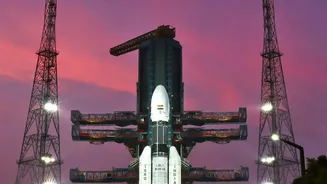
ISRO's mission is part of a renewed global interest in Venus. NASA and the European Space Agency are also planning their own advanced orbiters. Together, this next generation of missions will provide the most comprehensive understanding of Venus ever achieved. Shukrayaan, with its unique set of Indian and international instruments, is poised to make significant contributions. Payloads like the Venusian Neutrals Analyser (VNA), provided by Sweden, will study how particles escape from the atmosphere, a process critical to understanding why Venus lost its water. By focusing on atmospheric chemistry and dynamics, ISRO is targeting fundamental questions about planetary evolution.