






A First-Ever Glimpse into Earth’s Creation Engine
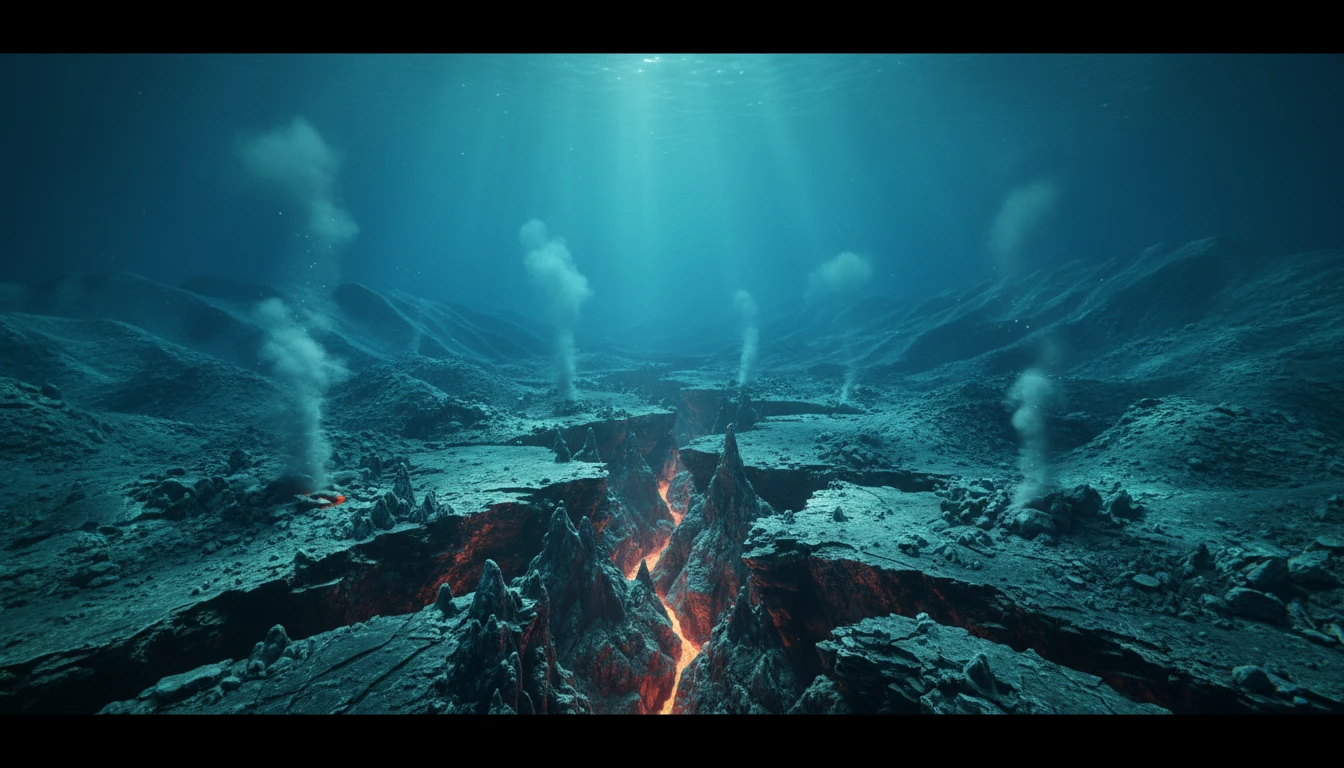
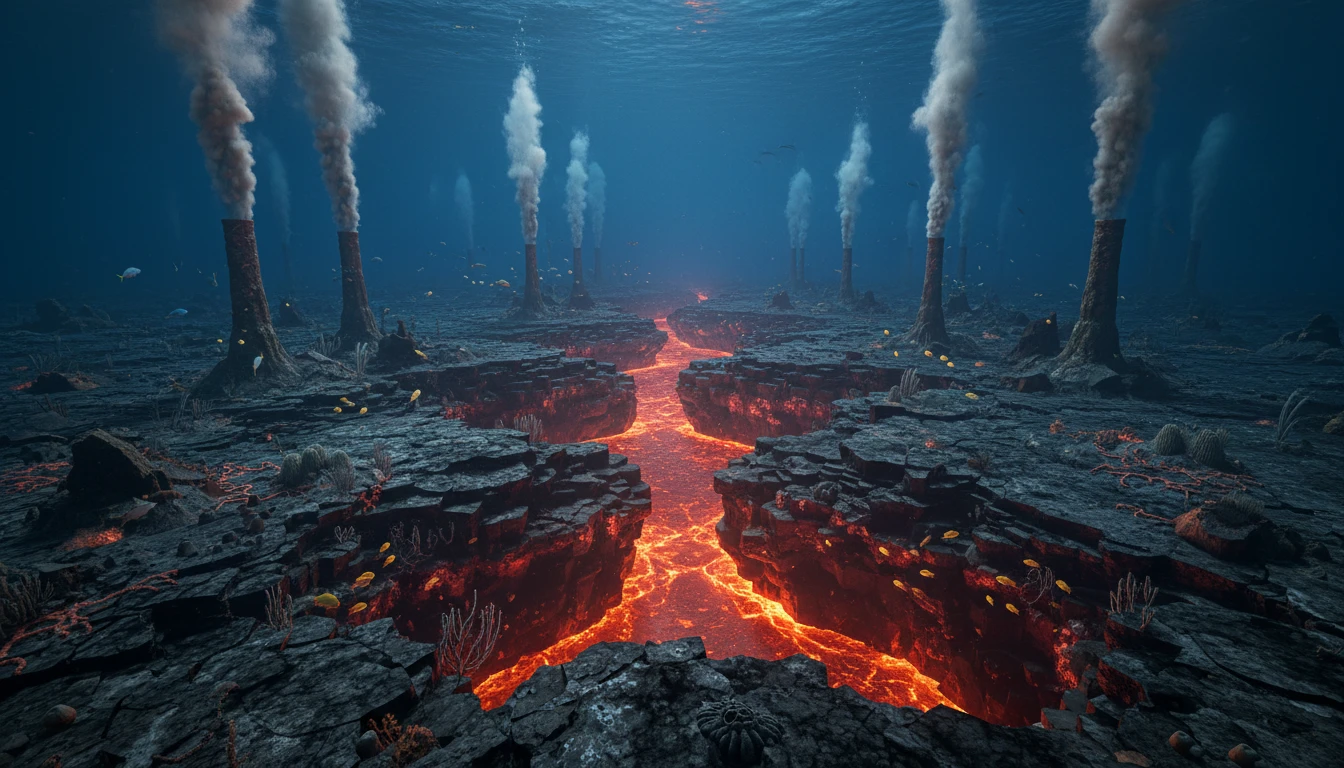
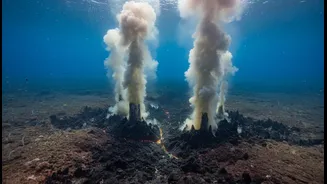
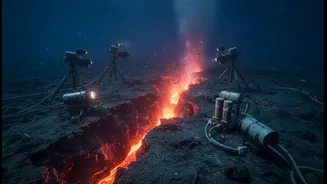
For the first time, scientists have captured a complete seafloor spreading event as it happened. In a remote part of the southern Indian Ocean, along a feature known as the Southeast Indian Ridge, an array of deep-sea instruments recorded the seabed tearing
itself apart in April 2024. Over a matter of days, a swarm of earthquakes signalled that magma was on the move deep below. The valley floor sank by over four metres, and an enormous volume of lava—estimated at up to 160 million cubic metres—poured out to create new oceanic crust. This process, where tectonic plates pull apart and molten rock rises to fill the gap, is fundamental to how our planet works. It has built two-thirds of the Earth's surface, yet it has remained largely hidden beneath kilometres of water. Observing this event directly provides an unprecedented blueprint of how the ocean floor is built, revealing a dynamic interplay of magma, earthquakes, and silent fault movements that reshape the seabed in mere weeks.
Rethinking India's Tsunami and Earthquake Risk
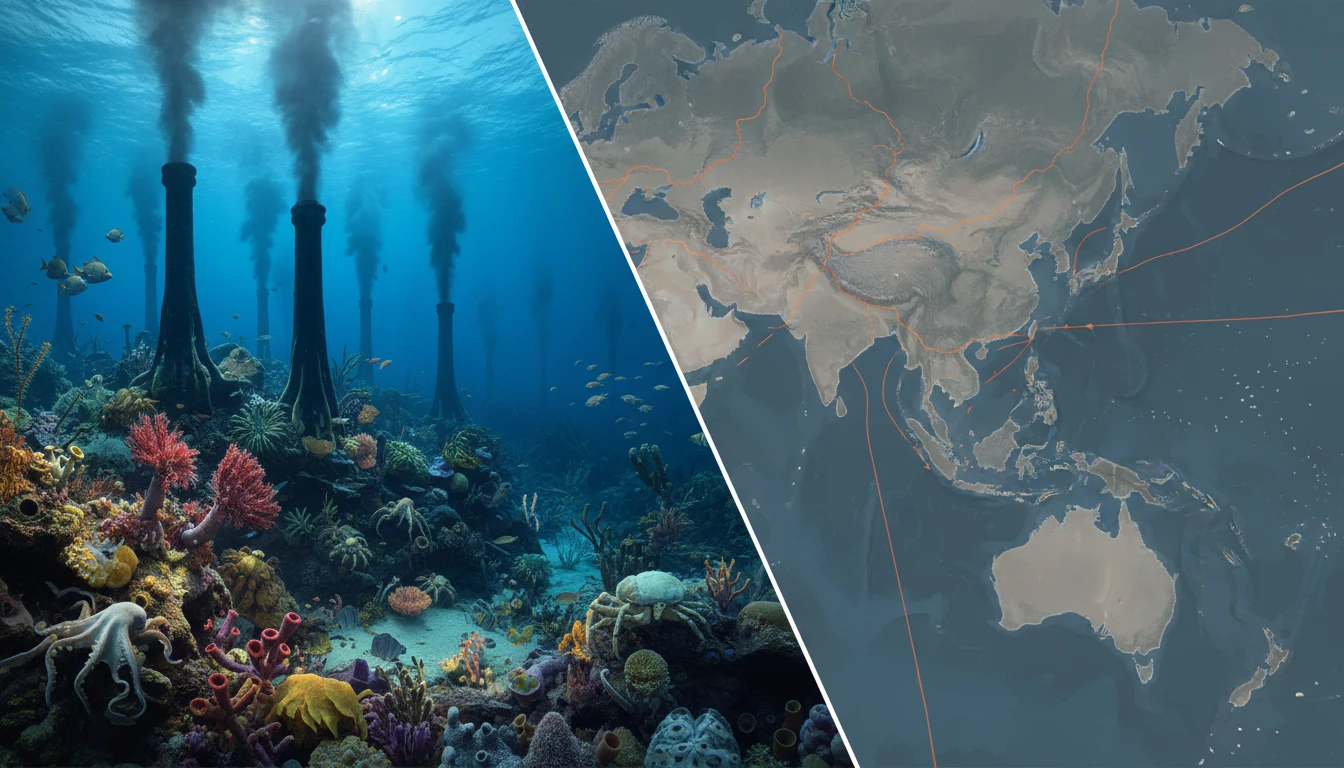
This new understanding of seafloor dynamics is critically important for hazard research, especially for a nation like India with its extensive coastline. The 2004 Indian Ocean tsunami, which originated from a massive earthquake in a subduction zone, was a tragic reminder of the region's vulnerability. While seafloor spreading itself typically causes smaller, less destructive earthquakes, the process is intricately linked to the overall stress and strain on tectonic plates. The recent observations revealed that a spreading event can trigger seismic activity on adjacent major faults. The Indian Ocean is a complex and active geological zone. The Wharton Basin, for instance, has experienced some of the largest intraplate earthquakes ever recorded, like the magnitude 8.6 event in 2012. These quakes reactivated ancient fracture zones in unexpected ways, rupturing multiple faults in a complex cascade. By better understanding how spreading ridges transfer stress and influence nearby fault systems, scientists can build more accurate models of seismic risk. This knowledge can refine hazard maps for India's coastal areas and improve our understanding of where and how future large, tsunamigenic earthquakes might occur.
Designing Smarter Ocean Sentinels
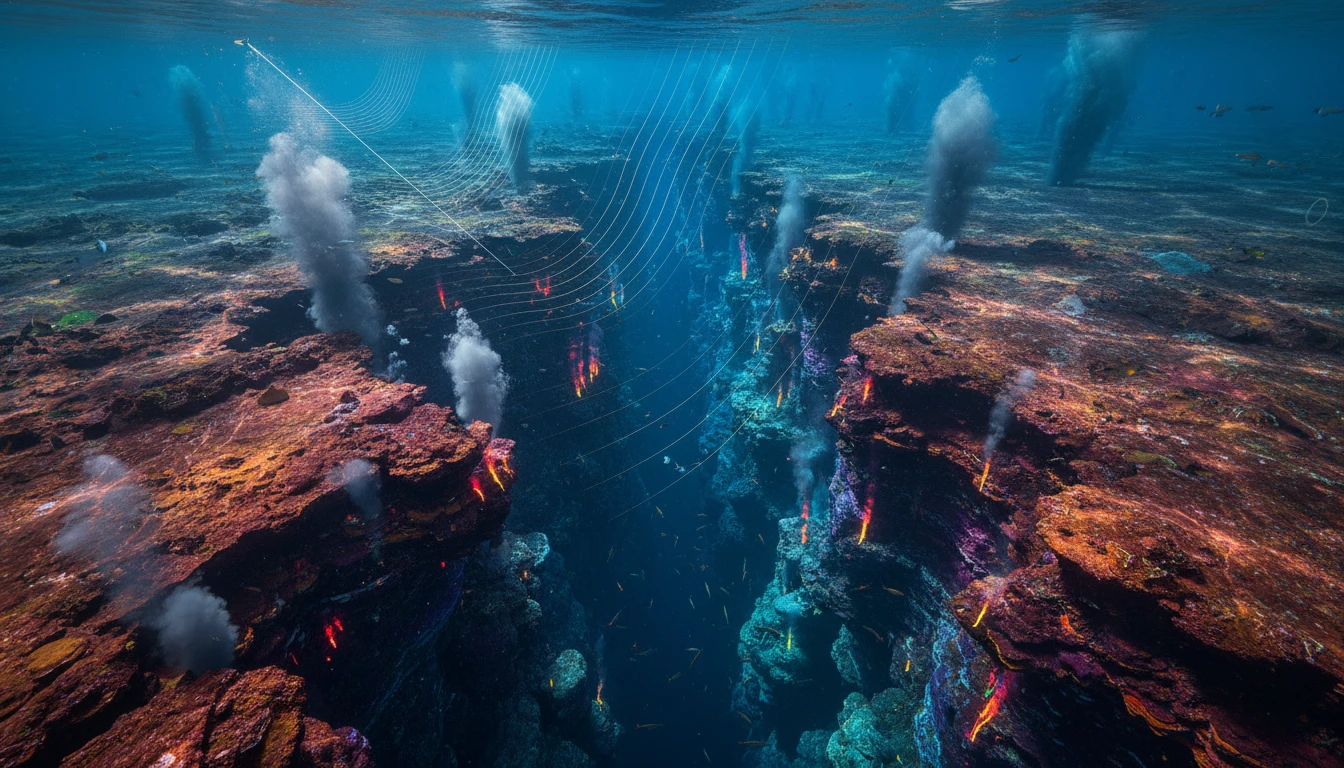
This discovery also has direct consequences for the design of future ocean observatories. For decades, these networks of buoys, sensors, and subsea cables have served as our eyes and ears in the deep. The Indian Tsunami Early Warning Centre (ITEWC) and the broader Indian Ocean Observing System (IndOOS) rely on a network of sensors to detect seismic activity and sea-level changes in real time. However, the recent findings show that the seabed is far more dynamic than previously assumed. Observatories must be designed to withstand rapid, dramatic changes, including sinking floors, extensive lava flows, and intense earthquake swarms. Future designs will need to be more robust and adaptable. This might mean developing more autonomous, mobile sensor platforms, like the deep-sea gliders being deployed under India’s Deep Ocean Mission, which can be repositioned as geological conditions change. It also means rethinking where we place permanent installations. Instead of just avoiding known faults, planners must now account for the wider zone of influence around spreading centres. The data gathered also highlights the need for higher-resolution monitoring to capture the fine details of these rapid events, feeding better data into warning systems.
India's Deep Ocean Mission and the Path Forward
The timing of these discoveries aligns perfectly with India's growing ambitions in marine science, spearheaded by the Deep Ocean Mission. This flagship initiative aims to explore the deepest recesses of the ocean for resources and scientific knowledge, including the development of a manned submersible, MATSYA 6000, capable of reaching depths of 6,000 metres. The mission's focus on developing advanced underwater robotics and observing systems is crucial. By integrating these new insights about seafloor spreading, India can ensure its next generation of ocean observatories are not just technologically advanced but also geologically intelligent. The goal is to create a resilient and adaptive monitoring network that provides more robust alerts for natural disasters and pioneers a new understanding of our planet. As we continue to explore this final frontier, listening to the rumblings of the Earth's engine is not just a scientific pursuit—it is a matter of national security and sustainable development for a blue economy.