





The Triple Advantage of Rolling
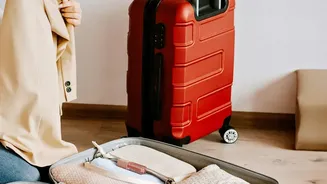
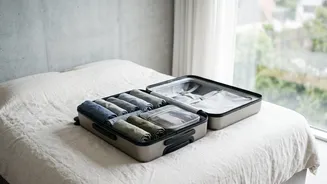
Experienced travelers often swear by rolling clothes, and for good reason. The technique offers three primary benefits over traditional folding. First, and most famously, it saves a significant amount of space. By compressing garments into tight, cylindrical
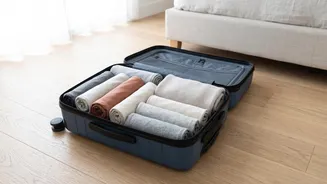
shapes, you can utilize every corner of your carry-on, leaving little to no wasted room. Second, it can drastically reduce wrinkles. Unlike folding, which creates hard creases, rolling keeps fabric smooth and avoids sharp lines, meaning your clothes are more likely to be ready-to-wear upon arrival. Finally, it offers superior organization. When items are rolled and placed in rows, you can see your entire wardrobe at a glance, eliminating the need to dig through stacks of folded clothes to find that one specific t-shirt.
The Basic Roll: Your Everyday Go-To
The simplest method is the basic roll, which is perfect for most casual items like t-shirts, shorts, jeans, and knitwear. Start by laying the garment on a flat surface and smoothing out any existing wrinkles. For a shirt, fold the sleeves inwards to create a neat rectangle. For pants, fold them in half vertically, leg on top of leg. Once you have a uniform shape, begin rolling tightly and consistently from one end to the other—from the bottom hem upwards for shirts and from the waistband down for pants. The key is to keep the roll as tight as possible to maximize compression and prevent it from unraveling inside your bag. These compact little logs can then be arranged side-by-side in your luggage.
Upgrade to the Ranger Roll for Maximum Compression
For even more stability and space-saving, consider the 'Ranger Roll,' also known as the Army roll. This military-approved technique creates a self-contained bundle that won’t come undone. To do it with a t-shirt, lay it flat and fold the bottom hem inside-out to create a two- to three-inch cuff. Then, fold one-third of the shirt over towards the center, and fold the sleeve back onto itself. Repeat on the other side. You should now have a long, narrow rectangle. Starting from the collar, roll the shirt down as tightly as you can. When you reach the end, take the inside-out cuff you created at the beginning and pull it over the roll to lock it in place. The result is an incredibly compact and secure log of clothing.
Knowing What to Roll and What to Fold
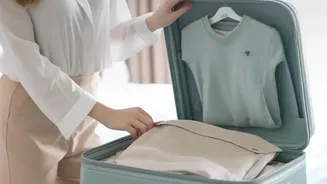
While rolling is a game-changer, it’s not suitable for every item in your wardrobe. The method works best for lightweight and wrinkle-resistant fabrics such as cotton, synthetics, and knits. T-shirts, casual pants, dresses, and workout gear are all excellent candidates for rolling. However, for more structured or easily creased garments, folding remains the superior choice. Items like freshly-pressed dress shirts, blazers, and trousers made from stiff materials should be carefully folded to maintain their shape. Delicate fabrics can also benefit from folding, sometimes with a layer of tissue paper to reduce friction. A smart packing strategy often involves a hybrid approach: roll your casual clothes and fold your formal or bulky ones.
Arranging Your Carry-On Like a Pro
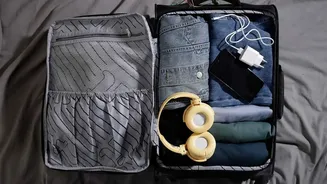
Once your clothes are rolled, how you place them in your bag matters. Think of it like a game of Tetris. Arrange the rolled items in neat rows, either vertically or horizontally. This 'filing' system allows you to see everything you've packed without disturbing the entire contents of your bag. Heavier rolled items like jeans should go near the bottom of the suitcase, close to the wheels, to help with balance. Lighter items can be placed on top. Use smaller rolled pieces, like socks or underwear, to fill in any gaps and awkward spaces, ensuring every inch of your carry-on is used efficiently. This method not only maximizes space but also creates a more stable, organized bag for a smoother journey.