



What Exactly Is a Cool Roof?
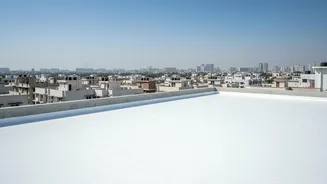
A cool roof isn't a complex piece of machinery; it's a roof that has been treated to stay cooler in the sun. This is achieved by applying a special coating or using materials designed to reflect more sunlight and absorb less heat than a standard dark
roof. Think of it like choosing a white shirt over a black one on a hot day. The principle is the same: light colours reflect heat, while dark colours absorb it. These coatings are made with reflective pigments and additives that bounce a significant portion of the sun's radiation back into the atmosphere. The two key properties are high 'solar reflectance' (reflecting sunlight) and high 'thermal emittance' (releasing any absorbed heat).
The Science of a Cooler Home
So, how does this translate to a cooler room? A traditional concrete or dark-coloured roof can get incredibly hot, with surface temperatures soaring well above 60°C. This intense heat then transfers directly into the building, warming up your top-floor rooms. Cool-roof coatings dramatically lower the roof's surface temperature. Studies have shown they can reduce roof temperatures by over 25°C. This significantly lessens the amount of heat seeping into your home. The result is a noticeable drop in indoor air temperature. While the headline's "four-degree" figure is a strong claim, research confirms that indoor temperatures can be reduced by 2°C to 5°C, providing substantial relief and comfort. Some studies have recorded reductions between 1.2°C and 3.3°C. This makes living spaces more bearable, especially during peak afternoon heat.
More Than Just Comfort: The Extra Benefits
The advantages of a cool roof go beyond just feeling more comfortable. The most immediate benefit for many households is a reduction in electricity bills. By lowering indoor temperatures, the reliance on air conditioners and fans decreases, which can lead to energy savings of 15% to 30%. This not only saves money but also reduces the strain on the city's power grid during peak demand. Furthermore, these coatings protect the roof itself. By shielding the surface from harsh UV radiation and reducing extreme temperature fluctuations, they can prevent cracking and extend the lifespan of the roofing material. On a larger scale, widespread adoption of cool roofs helps combat the 'urban heat island' effect, where cities are significantly warmer than surrounding rural areas, leading to better air quality and a healthier environment for everyone.
Costs and Options in India
The good news is that making your roof 'cool' is increasingly accessible and affordable in India. The cost depends on the type of coating you choose. Simple lime-based washes are a very low-cost starting point. More durable and effective acrylic or elastomeric reflective coatings are widely available from major paint brands. Prices can range from ₹1,500 to ₹3,500 for a 20-litre pack, which can cover a significant area. The overall cost for materials and labour for a typical roof can be quite reasonable, making it a sound long-term investment considering the energy savings. Options range from cost-effective acrylic paints, ideal for most residential buildings, to more flexible elastomeric coatings that also provide waterproofing benefits, and highly durable polyurethane coatings for industrial use.
Is a Cool Roof Right for You?
If you live in a region with hot summers and high cooling costs, a cool roof is almost certainly a smart choice. It is particularly effective for top-floor apartments, independent houses, and buildings with large, sun-exposed roofs. The application process is straightforward, similar to painting, and can be done by professional painters or as a DIY project for those comfortable with the task. Most coatings are suitable for common roofing materials like concrete, metal sheets, and asbestos. Before investing, consider your roof type, the local climate, and your budget. With multiple product types on the market, you can find a solution that fits your specific needs. It's a practical, one-time investment that pays dividends in comfort and savings for years to come.