





For many, a morning jog is the undisputed champion of a healthy routine. But what if the key to unlocking true, lasting joint mobility isn't found on the pavement, but on the mat? It’s time to look closer at the distinct roles these activities play.
The Science of Suppleness
To
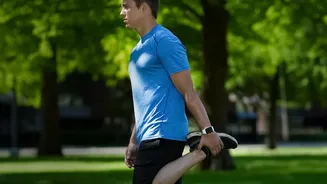
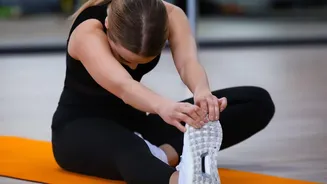
understand why stretching takes the crown for mobility, it's essential to distinguish between mobility and flexibility. Flexibility refers to the ability of your muscles to lengthen, while mobility is about the full, uninhibited range of motion of a joint. Stretching, particularly when done consistently, directly targets both. There are two main types of stretching: static and dynamic. Static stretching involves holding a position for a period, usually after a workout, to lengthen muscles and improve long-term flexibility. Dynamic stretching, on the other hand, involves controlled, repetitive movements that take your joints through their full range of motion, like leg swings or arm circles. This form of stretching is ideal before activity as it increases blood flow, raises muscle temperature, and 'wakes up' the neuromuscular system, preparing your joints for movement. By regularly and intentionally moving your joints through their complete range, you are actively training them to be more mobile.
The Jogger’s Paradox
Running is an exceptional cardiovascular exercise that strengthens your heart, improves endurance, and can aid in weight management, which itself reduces stress on joints. Contrary to popular belief, recreational running doesn't necessarily 'wear out' your joints; in fact, the cyclic loading can help nourish cartilage. However, when it comes to mobility, jogging presents a paradox. The motion of running is repetitive and occurs within a relatively limited range of motion for the hips, knees, and ankles. This repetitive action, without countermeasures, can lead to muscle tightness and adaptive shortening, where muscles and connective tissues become accustomed to a smaller range, potentially reducing flexibility over time. If a runner neglects stretching, the very activity they do for health can inadvertently contribute to stiffness and a reduced range of motion, making dedicated mobility work even more crucial.
Mobility vs. Cardio: The Right Tool for the Job
Framing stretching and jogging as competitors is a common mistake. It is more accurate to see them as specialists with different primary functions. Jogging is your tool for cardiovascular fitness and endurance. Its goal is to challenge your heart and lungs. Stretching is your tool for maintaining and improving the physical freedom of your joints and the elasticity of your muscles. While a dynamic warm-up before a run will include mobility drills, the primary purpose of the run itself is not to increase your range of motion. Conversely, a dedicated stretching session is laser-focused on that goal. For someone seeking to specifically address stiff hips, tight shoulders, or limited ankle movement, ten minutes of targeted mobility exercises will yield far greater results than a ten-minute jog. The headline holds true because stretching directly addresses the mechanics of joint movement in a way that jogging does not.
Designing a Mobility-First Routine
The ideal approach is not to choose one over the other, but to integrate them intelligently. A balanced routine leverages the strengths of both activities for comprehensive health. Before a jog, prioritize a 5-10 minute dynamic warm-up. This includes movements like leg swings, hip circles, walking lunges, and cat-cow stretches. These movements prepare the joints for the impact and repetitive motion of running. After your run, once your muscles are warm and pliable, perform static stretches, holding each for 20-30 seconds. Focus on major muscle groups used in running, like the hamstrings, quadriceps, calves, and hip flexors. On non-running days, consider a standalone 10-15 minute mobility session. Work through a full body routine, moving each major joint—neck, shoulders, spine, hips, knees, and ankles—through its complete, pain free range of motion. This dedicated practice is what truly unlocks greater mobility over time.