









First, What Is Yin Yoga?
Unlike the dynamic, muscle-focused flows of Vinyasa or Ashtanga yoga, Yin Yoga is a slow, quiet, and meditative practice. The core of Yin is its long-held poses, typically lasting anywhere from three to seven minutes. Instead of working your muscles (the
'yang' tissues), this practice targets your deeper connective tissues—your ligaments, joints, bones, and the intricate web of fascia that holds your body together. By applying gentle, sustained stress to these areas, Yin Yoga helps to increase circulation in the joints and improve flexibility over time. It’s not about achieving a perfect shape or pushing your limits; it’s about finding your 'edge,' that sweet spot of sensation, and then softening into the stillness.
The Soothing Power of Candlelight
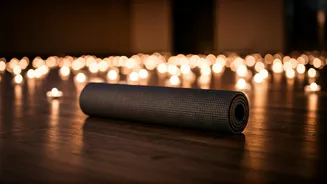
The atmosphere of a candlelit session is more than just an aesthetic choice—it's a crucial part of the experience. The soft, flickering glow of candlelight has a profound effect on our nervous system. It signals to our brains that it's time to wind down, reducing sensory stimulation and encouraging our focus to turn inward. In a world saturated with the harsh blue light of screens, the warm, amber light creates a cocoon of safety and tranquillity. This gentle illumination helps dissolve the distractions of the outside world, making it easier to connect with your breath and body without the self-consciousness that can sometimes arise in brightly lit spaces. It’s a deliberate shift from seeing to feeling.
Where Mindfulness Meets Movement
This is where the 'mindful' aspect truly shines. Holding a pose for several minutes without fidgeting is a mental exercise as much as a physical one. As you settle into a posture, you’re invited to become a curious observer of your own experience. Thoughts will arise—perhaps boredom, impatience, or a mental to-do list. Physical sensations will bubble up. The practice of mindfulness in Yin Yoga is to simply notice these things without judgment or reaction. You learn to sit with discomfort, both physical and emotional, observing it as a passing cloud rather than a permanent storm. This practice trains your mind to be less reactive and more present, a skill that extends far beyond the yoga mat and into the challenges of daily life. It’s a gentle rewiring of your response to stress.
Benefits for Your Body and Mind
The promise to 'transform your mind' comes from the cumulative effects of this practice. On a physical level, Yin Yoga is fantastic for improving flexibility and joint mobility, lubricating the joints and helping release the deep-set tension stored in your fascia. But the mental and emotional benefits are arguably even more profound. By activating the parasympathetic nervous system—our 'rest and digest' mode—Yin Yoga can significantly reduce stress and anxiety. Regular practice can lead to better sleep, improved emotional regulation, and a greater sense of calm and self-awareness. It teaches you patience and the art of surrender, helping you let go of the need to control everything.
What to Expect in Your First Session
Walking into a candlelit Yin class feels like entering a sanctuary. The room will be quiet, warm, and filled with props like bolsters, blankets, and blocks. These aren't for making poses harder, but for supporting your body so you can fully relax and release into the stretches. Wear comfortable, loose-fitting clothing that allows you to stay warm, as your body temperature may drop in a passive practice. The instructor will guide you into each pose, offering variations to suit your body. The most important rule is to listen to your own body—never push into sharp pain. If you have any injuries or specific conditions, be sure to speak with the instructor before class so they can provide helpful modifications. Prepare for a deeply relaxing, and sometimes challenging, journey inward.