




A New Strategy for the Red Planet
NASA recently announced it has selected seven American companies to design the next wave of robots destined for Mars and beyond. This initiative, called Science Transport and Robotic Innovation for Deployment and Exploration (STRIDE), marks a significant
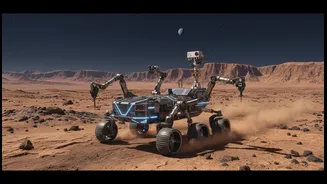
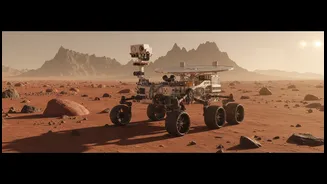
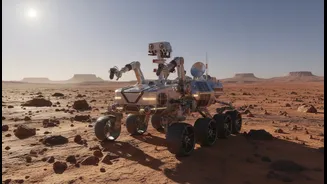
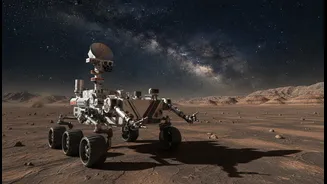
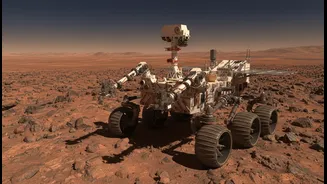
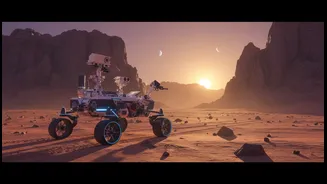
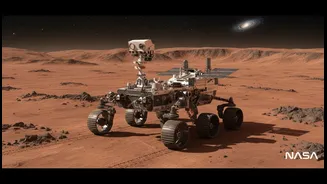
shift in the agency's strategy. For decades, NASA has relied on large, incredibly successful rovers like Curiosity and Perseverance. While these car-sized laboratories have rewritten our understanding of Mars, they are also complex and costly to develop and operate. The STRIDE program, backed by an initial $17 million in contracts, aims to diversify NASA's robotic toolkit by fostering a commercial ecosystem of smaller, more specialized machines. The idea is to leverage private sector innovation to build robots that can explore farther, access terrain that is currently out of reach, and ultimately lower the cost of missions, enabling more frequent science campaigns.
Meet the Robotic Trailblazers
The seven companies chosen represent a cross-section of the modern aerospace and robotics industries. The awardees are AeroVironment, Astrobotic, Venturi Astrolab, Ground Control Robotics, Honeybee Robotics, Intuitive Machines, and MEI Technologies. Many of these names are already familiar in space exploration circles. AeroVironment was a key partner on the revolutionary Ingenuity Mars helicopter, proving flight is possible in the thin Martian atmosphere. Honeybee Robotics has a long and successful history developing drills and sample-collection systems for numerous NASA missions. Meanwhile, Astrobotic and Intuitive Machines are at the forefront of the commercial lunar landing scene, giving them vital experience in delivering payloads to other celestial bodies. This diverse portfolio of partners ensures NASA isn't just funding one approach, but is creating a competitive environment to solve some of the toughest challenges in planetary exploration.
Conquering Difficult Martian Terrain
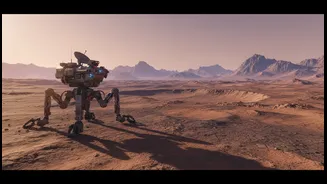
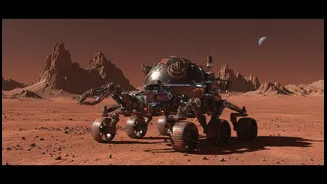
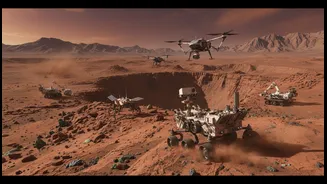
A primary objective of the STRIDE initiative is to overcome the mobility challenges that have limited past and present rovers. Mars is a world of craters, steep slopes, and treacherous sand pits that can easily trap a wheeled vehicle. The new contracts will fund concepts for both ground and aerial vehicles designed to handle these environments. This could include advanced rovers with more robust wheel systems, walking robots, or even next-generation aerial drones that build on Ingenuity's success. The goal is to develop platforms that can carry scientific payloads into scientifically rich areas that are currently inaccessible. By developing a fleet of varied robotic explorers, NASA can deploy the right machine for the right job, whether it's scaling a crater wall, exploring a lava tube, or flying over a vast dust-covered plain to scout ahead for a larger rover.
Beyond Mars: A Blueprint for the Moon
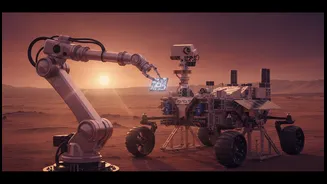
While the immediate focus of the STRIDE contracts is Mars, the technologies developed will have a far wider impact. These next-generation mobility and autonomy systems are directly applicable to NASA's Artemis program, which aims to establish a sustainable human presence on the Moon. Robots will be essential for scouting landing sites, building habitats, prospecting for resources like water ice, and assisting astronauts on the lunar surface. The lessons learned from developing commercial robotics for Mars will directly inform and accelerate the creation of a robotic workforce on the Moon. This approach fits into NASA's broader strategy of using public-private partnerships to build a robust and sustainable commercial space economy. By acting as a key customer and partner, NASA is helping to create a market for these technologies beyond just government missions.