



As our cities grow hotter and more prone to flooding, we often look to engineered solutions. But what if the most effective infrastructure was already there, hidden in plain sight? Urban water bodies are the unsung heroes of our metropolises.
The City's Natural Sponge
In a concrete
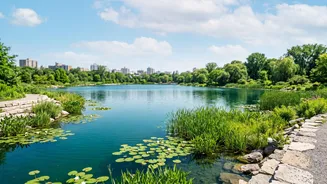
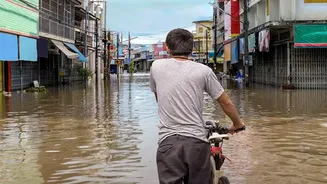
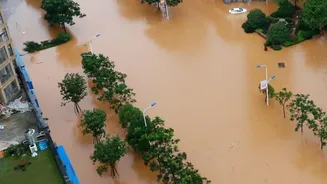
jungle, heavy rainfall has nowhere to go. Impermeable surfaces like roads and buildings prevent water from soaking into the ground, leading to rapid runoff that overwhelms drainage systems. This is a primary cause of the flash floods that increasingly plague Indian cities. Urban water ecosystems—lakes, ponds, and wetlands—act as natural sponges. They are like giant, natural tubs that capture and store immense volumes of rainwater, releasing it slowly back into the ground or downstream channels. This drastically reduces the peak flow of water during a storm, lowering flood heights and preventing widespread damage. When wetlands are lost to urban development, flood peaks in a watershed can increase by as much as 80 percent. The historic, interconnected lake systems in cities like Bengaluru were originally designed to do exactly this: manage monsoon surpluses by channelling water from one lake to the next.
Nature’s Air Conditioners
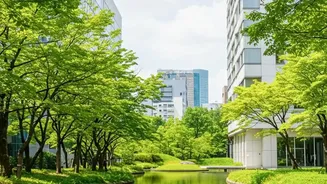
Cities are often several degrees warmer than the surrounding rural areas, a phenomenon known as the Urban Heat Island effect. Water bodies provide a powerful cooling service. Through a process called evaporative cooling, the air around a lake or wetland can be noticeably cooler, with some studies showing temperature reductions of up to 4°C. This latent heat of evaporation uses energy from the water, which in turn cools the ambient air through convection. This 'Urban Cooling Island' effect is a welcome relief during intense heatwaves, offering natural, no-cost air conditioning to dense urban cores that often lack green cover. The degradation of these water bodies has a measurable impact; for instance, the disappearance of lakes in Bengaluru over recent decades has been linked to a significant increase in local temperatures.
Beyond Floods and Heat
The benefits of urban water ecosystems extend far beyond just flood and temperature regulation. They are critical for replenishing groundwater aquifers, a vital service in cities facing water scarcity. As natural recharge zones, they allow surface water to percolate deep into the ground, refilling the wells and borewells upon which many urban communities depend. Furthermore, these ecosystems are hotspots of biodiversity, providing essential habitats for fish, birds, and other wildlife within the urban landscape. They also act as natural water purifiers. The East Kolkata Wetlands, for example, is a world-renowned system that naturally treats a massive portion of the city's sewage. This vast network of fish ponds uses natural biological processes to clean wastewater, turning it into a resource for aquaculture and agriculture that supports thousands of livelihoods.
The High Price of Neglect
Unfortunately, across India, these vital blue infrastructures are under threat. Decades of unchecked urbanisation, encroachment for real estate, pollution from untreated sewage, and the dumping of solid waste have degraded and, in many cases, completely destroyed urban lakes and wetlands. In Bengaluru, a city once famed for its lakes, a staggering 79 percent of its water bodies have been lost over the last few decades, while vegetation has declined by 88 percent. This has had dire and predictable consequences. The catastrophic floods in Chennai in 2015 and the recurrent waterlogging in Bengaluru are directly linked to the encroachment and destruction of the very wetlands and lakes that once absorbed excess rainwater. When we build over our natural sponges, we are, in effect, engineering our own disasters.