






More Than Just a Dry Spell
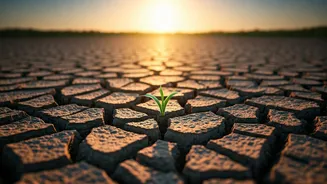
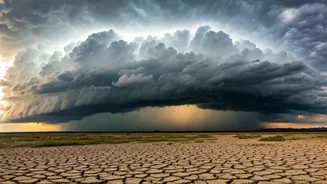
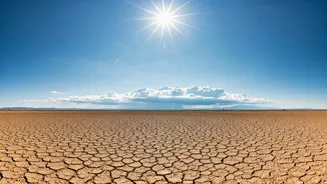
A 46% deficit isn't a minor fluctuation. It represents a significant deviation from the long-period average that our agricultural cycles, reservoirs, and economy depend on. According to the India Meteorological Department (IMD), the first few weeks of
June saw alarmingly poor rainfall distribution, particularly across central and northwestern India. While the monsoon is a famously complex and variable system, a shortfall of this magnitude at the outset is cause for serious concern. It delays Kharif crop sowing, the lifeblood of Indian agriculture, which relies on the June-September rains for over 70% of its annual precipitation. This initial dry spell puts immediate pressure on farmers, who must decide whether to risk sowing expensive seeds or wait, hoping for the rains to pick up, potentially missing the ideal planting window.
The Heartbreak in the Heartland
For millions of farmers, a weak monsoon is not an abstract statistic but a direct threat to their livelihood. The Kharif season, which includes essential crops like rice, soybean, and cotton, is critically dependent on the timing and intensity of the early monsoon showers. A delay forces farmers to dip into savings or take on more debt to manage the uncertainty. Furthermore, erratic rainfall patterns—long dry spells punctuated by intense downpours—are just as damaging. The latter causes flash floods and soil erosion, washing away seeds and nutrients. This precarity has a domino effect, impacting not just rural incomes but also leading to potential shortages and inflationary pressure on food prices, which affects every single household in the country. The distress in our agricultural heartland quickly becomes a national economic headache.
The Urban Ripple Effect
The consequences of a rainfall deficit extend far beyond the farms. Our cities are deeply intertwined with the monsoon's fate. Major reservoirs that supply drinking water and generate hydropower rely on monsoon runoff to be replenished. A significant deficit means lower water levels, forcing municipal bodies to implement water rationing and cuts. This impacts everything from daily household chores to industrial production. Simultaneously, lower reservoir levels cripple hydropower generation, placing a greater strain on the power grid. With concurrent heatwaves driving up demand for air conditioning, the energy sector faces a perfect storm of reduced supply and surging demand, leading to a higher risk of power outages. The intricate web connecting rain, water, and power means that a dry spell in a distant region can turn off taps and lights in a bustling metropolis.
The Unmistakable Climate Fingerprint
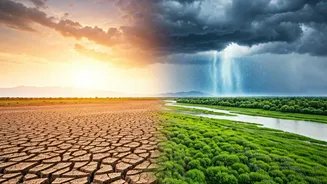
The headline calls this a "brutal climate reality check," and scientists agree. While it is difficult to attribute any single weather event solely to climate change, the increasing frequency and intensity of such extreme events are a well-documented consequence. Global warming is making the monsoon system more erratic and unpredictable. Studies from the Intergovernmental Panel on Climate Change (IPCC) and Indian climate research institutes have consistently warned that India will face more frequent and intense heatwaves, followed by volatile monsoon patterns. The warming of the Arabian Sea can lead to more powerful cyclones, but it can also disrupt the delicate atmospheric pressures that drive the monsoon winds inland. We are no longer talking about a future problem; the 46% deficit is a clear manifestation of a climate system in flux.
Navigating the New Normal
Accepting this new reality is the first step towards building resilience. The challenge is twofold: mitigation and adaptation. On a national level, this means accelerating the transition to renewable energy to reduce carbon emissions. But more immediately, we must focus on adaptation. This involves investing in climate-smart agriculture, such as promoting drought-resistant crop varieties and efficient irrigation techniques like drip systems. It means a massive push for water conservation and rainwater harvesting in both rural and urban areas. Improving our weather forecasting capabilities to provide more accurate, localised advisories is also crucial. This allows farmers and policymakers to make informed, timely decisions instead of simply reacting to crises. The cost of inaction is far greater than the investment required to adapt to this changing climate.