


Sailing on Beams of Light
At its core, a solar sail works like a mirror. Light, though it has no mass, is made of particles called photons, and these photons have momentum. When billions of them strike a large, reflective sail, they transfer their momentum, giving the spacecraft
a tiny but continuous push. In the vacuum of space, where there is no friction, this constant, gentle acceleration builds up over time, allowing a craft to achieve incredible speeds without using a single drop of fuel. The principle is similar to a sailboat using wind, but the 'wind' in this case is the inexhaustible stream of photons flowing from the Sun. By angling the sail, operators can even 'tack' to steer the spacecraft, adjusting its trajectory and orbit.
The Old Way vs. The New
For decades, space exploration has relied on chemical rockets. These are powerful, providing immense thrust for a short period to break free of Earth's gravity. However, they are fundamentally limited by the amount of propellant they can carry. Once the fuel is gone, the spacecraft largely coasts, relying on complex gravity-assist manoeuvres to reach distant targets. This makes missions heavy, expensive, and long. Solar sails offer a revolutionary alternative. By eliminating the need for heavy propulsion systems and fuel tanks, they drastically reduce the mass of the spacecraft. This means they can be launched on smaller, cheaper rockets. The propulsion itself—sunlight—is free and unlimited, enabling missions that can accelerate continuously throughout their journey.
A Perfect Match for Asteroid Hopping
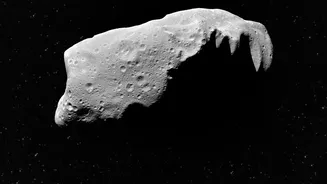
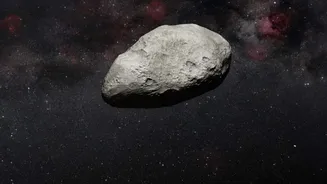
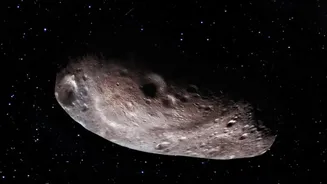
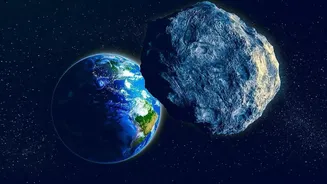
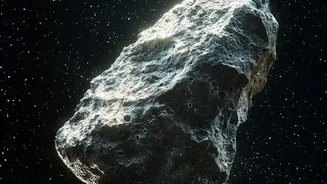
This technology is uniquely suited for exploring the thousands of Near-Earth Asteroids (NEAs) in our solar system. These missions often don't require the brute force of a rocket but rather the ability to make slow, precise orbital changes over a long period. A solar sail allows a lightweight probe to gradually spiral away from Earth and gracefully match the orbit of a target asteroid. This enables extremely slow flybys, giving scientists hours to gather invaluable data and high-resolution images, a feat nearly impossible for a faster, fuel-driven craft. NASA's NEA Scout mission was designed for exactly this purpose: to use an 86-square-meter sail to visit one of the smallest asteroids ever to be studied. Though contact was lost with the craft after launch, the mission concept proved the viability of this approach for asteroid reconnaissance.
The Lightweight Advantage
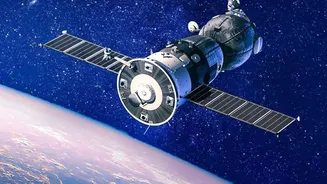
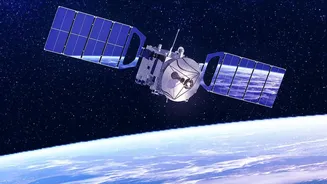
The push from photons is incredibly faint, so it works best on low-mass spacecraft. This perfectly aligns with the modern trend of using small, shoebox-sized satellites known as CubeSats for scientific missions. These probes are far cheaper to design and build than their larger predecessors. The Planetary Society's crowdfunded LightSail 2 mission, which launched in 2019, successfully demonstrated that a CubeSat could use a 32-square-meter sail to change its orbit around Earth, proving the technology's potential for small-scale missions. This synergy between lightweight probes and solar sails opens the door to launching entire fleets of small explorers, potentially visiting thousands of NEAs for the cost of a single, traditional mission.
From Theory to Reality
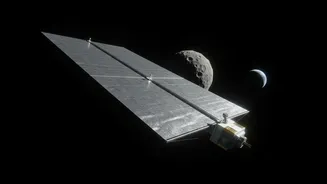
Solar sailing is no longer just a theoretical concept. Japan's IKAROS spacecraft became the first to successfully demonstrate the technology in interplanetary space back in 2010. The Planetary Society's LightSail missions further advanced the idea, proving that even a small, donor-funded CubeSat could achieve controlled solar sailing. These successes have paved the way for more ambitious projects. NASA has been developing next-generation composite booms that are stronger and lighter, which could support sails as large as a basketball court or even half a soccer field. These advancements could enable not just asteroid missions, but also new types of observation posts for monitoring space weather, providing earlier warnings of solar storms.