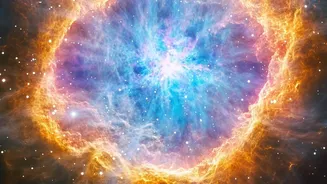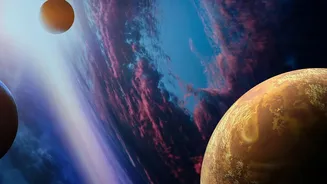



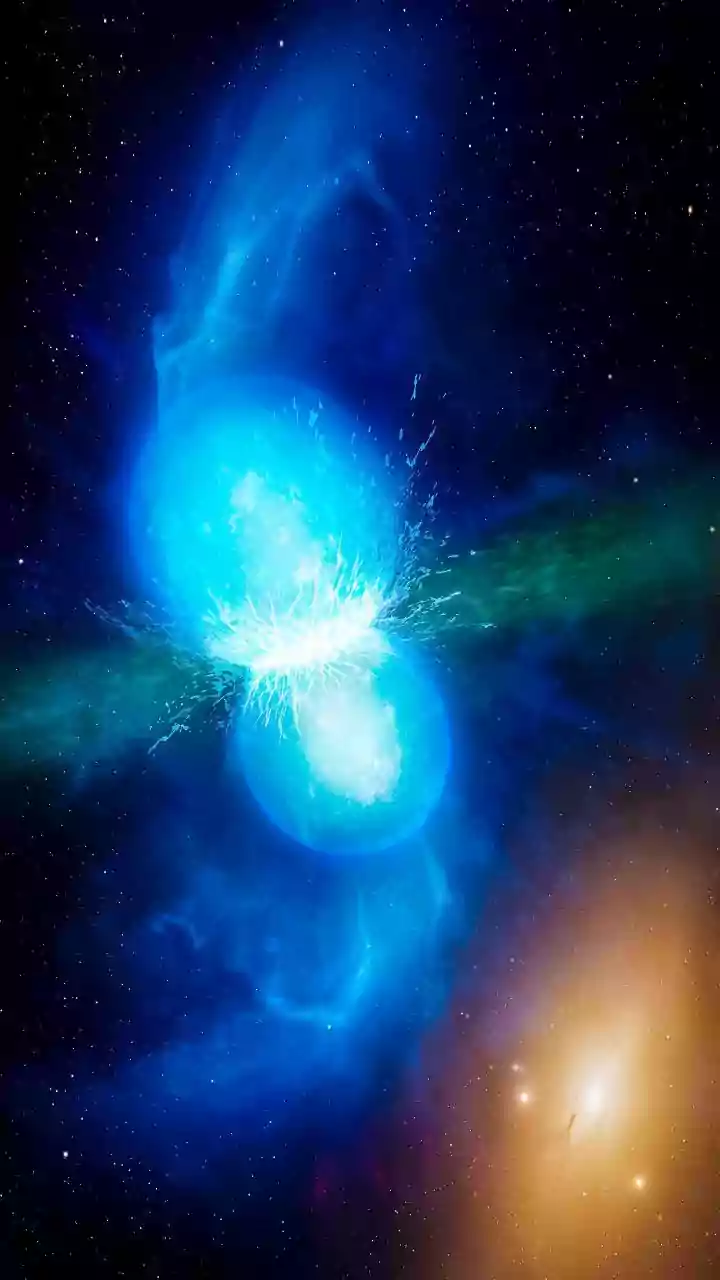
Scattered throughout the cosmos are lonely wanderers that are not quite stars and not quite planets. A new study from NASA's SPHEREx mission is pulling back the curtain on these 'failed stars', revealing their atmospheres are far from simple.
The Universe's Cosmic Misfits
Imagine an
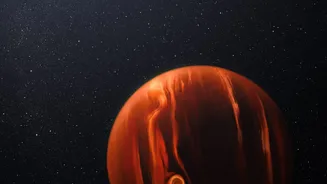
object more massive than Jupiter, but not massive enough to ignite and become a star. That is a brown dwarf. First discovered in the 1990s, these celestial bodies occupy a fascinating grey area. They form from collapsing clouds of gas and dust, just like stars do, but they lack the sheer gravitational force needed to kickstart the hydrogen fusion process that makes stars shine. Because of this, they are often called 'failed stars'. Instead of generating their own brilliant light, they are heated from within and slowly cool and fade over billions of years, glowing dimly in infrared light. This unique status makes them incredibly intriguing to scientists trying to piece together the puzzle of cosmic formation.
Introducing NASA's SPHEREx
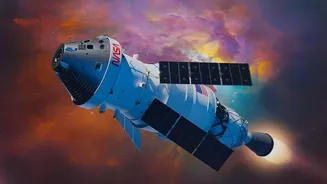
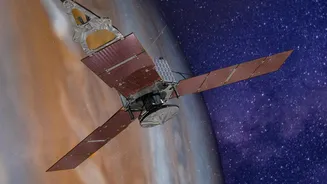
Enter NASA's Spectro-Photometer for the History of the Universe, Epoch of Reionization, and Ices Explorer, or SPHEREx. Launched in March 2025, this space telescope is on a two-year mission to scan the entire sky every six months. It does this in 102 different colours of light, mostly in the near-infrared spectrum, which is invisible to the human eye. This powerful capability allows it to create an unprecedented cosmic map, gathering data on hundreds of millions of galaxies and stars. One of its key objectives is to hunt for the ingredients for life, like water and organic molecules, in the stellar nurseries where new planets might be forming. By analysing the light from distant objects, SPHEREx can identify the chemical signatures of the molecules within them.
A surprisingly Rich Atmosphere
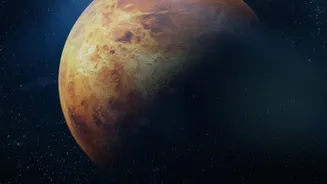
The latest study, published in The Astrophysical Journal, used SPHEREx to examine 37 nearby brown dwarfs. The findings were stunning. Instead of being simple, uniform balls of gas, their atmospheres were revealed to be chemically rich and diverse. The telescope detected the clear signatures of water, carbon monoxide, carbon dioxide, and methane. Scientists found that as these brown dwarfs age and cool, their atmospheric chemistry changes dramatically. For some, this means the formation of exotic clouds made of minerals, which later give way to atmospheres dominated by methane. The complexity was so great that even the most advanced computer models struggled to accurately predict what SPHEREx observed, highlighting just how unique each brown dwarf can be.
Why These Failed Stars Matter
This discovery is more than just a celestial curiosity. Brown dwarfs serve as perfect natural laboratories for understanding planetary atmospheres. Most exoplanets—planets outside our solar system—are incredibly difficult to study because the blinding light of their host star obscures them. But because brown dwarfs drift through space alone, they offer a clear, unobstructed view of planetary-scale atmospheric processes. By studying the weather, clouds, and chemical makeup of these isolated worlds, scientists can build better models to understand the gas giant planets being discovered across the galaxy. This research provides a vital window into the chemistry that shapes worlds, bridging the gap between our understanding of stars and planets and offering clues about the formation of planetary systems everywhere.