




So, What Exactly Is Aphelion?
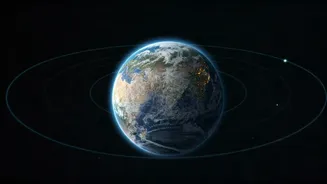
Aphelion is the point in Earth’s orbit when it is farthest from the Sun. The word comes from the Greek words 'apo' (meaning away, or apart) and 'helios' (meaning Sun). Earth doesn’t orbit the Sun in a perfect circle; it’s a slightly oval-shaped path called
an ellipse. This means that throughout the year, our distance from the Sun changes. When we are closest to the Sun, it's called perihelion, which happens in early January. When we are farthest away, that's aphelion, which occurs annually in early July. This isn't unique to Earth; every planet, comet, and asteroid that orbits our Sun has an aphelion and a perihelion.
Mark Your Calendars
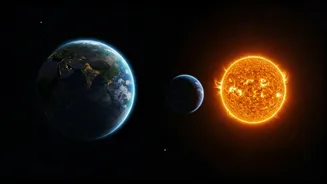
This year, Earth reaches aphelion on July 6, 2026. At that point, our planet will be about 152.1 million kilometers (or 94.5 million miles) away from the Sun. For comparison, during perihelion in January 2026, we were about 147 million kilometers away. That difference of roughly 5 million kilometers might sound like a huge deal, but in the vastness of space, it’s a relatively small variation in our orbital journey. The event is a normal and predictable part of our planet's annual trip around the sun, and astronomers have the dates mapped out for years in advance.
The 'Aphelion Phenomenon' Myth
Every year, as aphelion approaches, social media messages and viral posts start to circulate, often warning of an 'aphelion phenomenon'. These posts frequently claim that because we are farther from the Sun, the Earth will experience unusually cold weather, and sometimes even link this to a rise in illnesses like the flu. However, scientists and astronomers have repeatedly debunked these claims. The idea that aphelion brings a sudden and dramatic cold snap is a persistent myth. The slight increase in distance from the Sun is not enough to have a noticeable effect on our global temperature or daily weather.
But Why Is It Still Hot?
This leads to the most common question: if we are farther from the Sun, shouldn't it be colder? The answer lies not in our distance from the Sun, but in the tilt of the Earth's axis. Our planet is tilted at an angle of 23.5 degrees. This tilt is the reason we have seasons. During the Northern Hemisphere's summer, our part of the planet is tilted toward the Sun. This means the Sun's rays hit us more directly and for longer periods during the day, leading to warmer temperatures. In fact, we reach aphelion in the middle of summer for the Northern Hemisphere. Conversely, during our winter, our hemisphere is tilted away from the Sun, leading to less direct sunlight and colder temperatures, even though the Earth as a whole is actually closer to the Sun during perihelion in January.
An Interesting Quirk of Our Orbit
While aphelion doesn't change the weather, it does have one interesting, subtle effect: it changes the length of the seasons. According to Kepler's Second Law of planetary motion, a planet moves more slowly when it is farther from its star. Because Earth is moving at its slowest during aphelion, it makes summer the longest season in the Northern Hemisphere and winter the longest season in the Southern Hemisphere, by a margin of nearly five days. This fun fact highlights how even small details of our planet's orbit can have fascinating consequences, even if they don't affect our day-to-day lives or the temperature outside. The sunlight we receive at aphelion is about 7% less intense than at perihelion, but the effect of the Earth's tilt overwhelmingly defines our seasons.