







Catch the Fading Perseids
August is synonymous with the Perseid meteor shower, one of the best and brightest of the year. The shower reached its magnificent peak on the nights of August 12 and 13, under ideal conditions thanks to a new moon that kept the skies perfectly dark.
If you missed the peak, don't despair. The Perseids remain active until August 24. While the rate of meteors will be lower now, you still have a good chance of spotting several bright, fast-moving streaks of light per hour in the nights to come. For the best experience, find a dark location after midnight, let your eyes adjust for at least 20 minutes, and look towards the northeastern sky.
A Parade of Planets
August 2026 is a fantastic month for planet spotting. Throughout the month, a pre-dawn planetary parade has been gracing the morning sky. Reddish Mars and yellowish Saturn are relatively easy to spot with the naked eye. Mars can be seen in the east before dawn, while Saturn rises in the evening and remains high in the sky. Bright Mercury and very bright Jupiter have also been making an appearance low on the eastern horizon before sunrise, though they can be tricky to spot. Around August 15, the two planets appear very close together in an event called a conjunction. You'll also find super-bright Venus dominating the western sky in the early evening.
Keep Your Gear Simple
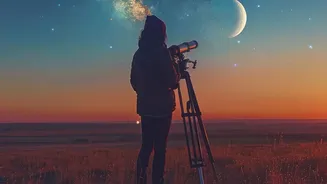
The great news is that you don't need expensive equipment to enjoy August's celestial shows. Most of the month's highlights, including the Perseids and the brighter planets, are perfectly visible to the naked eye. The most important tool is patience. Your eyes need about 20 to 30 minutes to fully adapt to the darkness, which will allow you to see much fainter objects. If you want to enhance your view, a pair of binoculars can reveal more detail, such as the moons of Jupiter or the sprawling beauty of the Pleiades star cluster. For identifying constellations and planets, a stargazing app on your smartphone can be an invaluable guide.
Escape the City Lights
The biggest obstacle to good stargazing in India is not a lack of stars, but an excess of artificial light. Light pollution from cities creates a 'skyglow' that washes out all but the brightest celestial objects. To truly make the most of a clear night, you need to get away from city and town centres. Even a short drive to a more rural area can make a dramatic difference. High-altitude regions are often best, which is why places like Hanle in Ladakh, a designated Dark Sky Reserve, offer some of the most pristine views in the country. For most people, finding a local park, a quiet beach, or a spot in the countryside with an unobstructed view of the sky will significantly improve the experience.
Tips for a Perfect Viewing Night
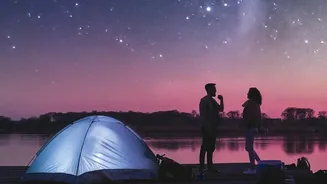
Once you have your spot, a few simple tips can elevate your stargazing night. First, check the weather and the moon phase; the less moonlight, the better. This year's Perseid peak was exceptional for this reason. Dress in comfortable layers, as even summer nights can get chilly during long periods of inactivity. Bring a blanket or a reclining chair to lie back and look up without straining your neck. Use a red-light torch if you need to see; white light from a regular torch or phone screen will ruin your night vision and you’ll have to wait for your eyes to adjust all over again. Finally, turn it into a social event. Sharing the experience with friends or family makes the cosmic display even more magical.