



Beyond Grams: What Is Protein Quality?
When we talk about protein, it's easy to focus only on the total number of grams. But not all protein is created equal. The true value of a protein source lies in its 'quality,' which depends on two things: its amino acid profile and its digestibility.
Proteins are made of building blocks called amino acids. Our bodies need 20 different types, nine of which are 'indispensable' or 'essential,' meaning we must get them from food. A 'complete' protein contains all nine in sufficient amounts. Digestibility refers to how much of that protein our body can actually break down and absorb. If a food is high in protein but our bodies can't access those amino acids, we don't get the full benefit. This is particularly important for plant-based diets, as plant proteins can be less digestible than their animal-based counterparts.
The Old Scale vs. The New Gold Standard
For decades, the standard for measuring protein quality was the Protein Digestibility-Corrected Amino Acid Score (PDCAAS). Established in 1993, this method provided a useful, if imperfect, way to rate proteins. However, PDCAAS has key limitations. It measures protein digestibility in the entire digestive tract, which can be misleading because gut bacteria can alter the results. It also 'truncates' or caps scores at 1.0, meaning it can't distinguish between good and excellent protein sources. In 2013, the Food and Agriculture Organization (FAO) of the United Nations proposed a more accurate method: the Digestible Indispensable Amino Acid Score (DIAAS). DIAAS measures the absorption of individual amino acids at the end of the small intestine (the ileum), which is a much more precise reflection of what the human body actually utilizes. This makes it a superior tool for understanding the true value of a protein source.
Why DIAAS Matters for Plant-Based Diets
The shift to DIAAS is especially significant for anyone following a vegan or vegetarian diet. Many plant proteins contain 'anti-nutritional factors' like phytates, which can inhibit the absorption of amino acids. Because PDCAAS didn't fully account for this, it could overestimate the quality of certain plant proteins. DIAAS provides a clearer, more realistic picture. For example, under the old PDCAAS system, top-tier soy protein isolate and whey protein had nearly identical scores. But with DIAAS, a clearer difference emerges, showing whey protein has higher bioavailability. This doesn't mean plant proteins are inferior; it just means we need to be smarter about how we use them. DIAAS helps pinpoint which indispensable amino acids might be lacking in a single plant source, empowering users to make better combinations.
Putting DIAAS into Practice for Better Meals
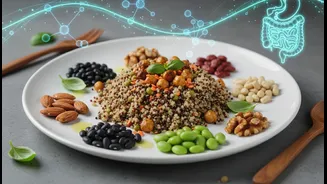
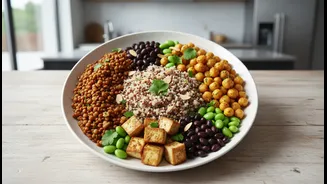
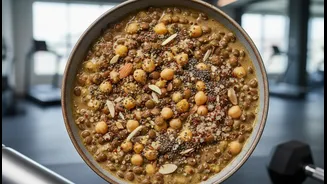
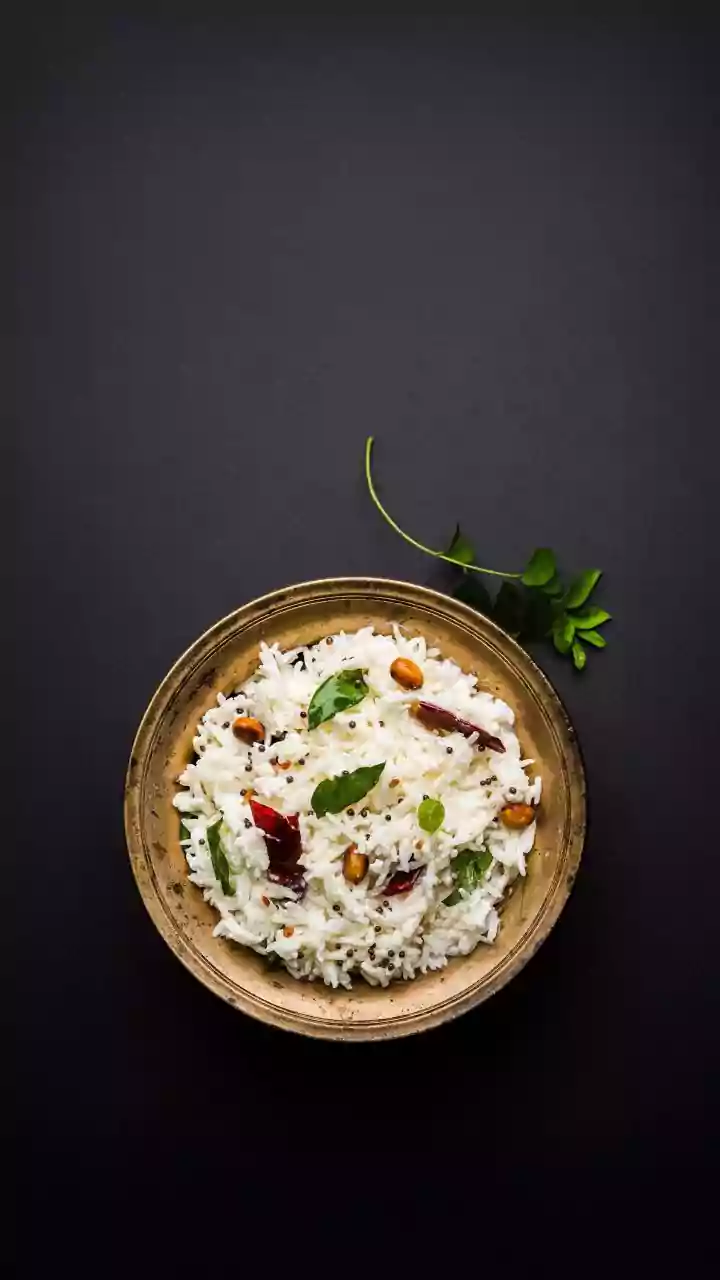
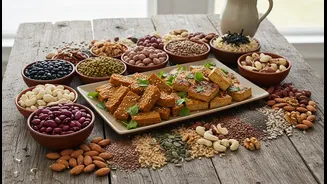
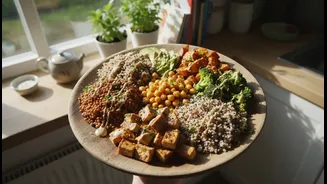
You don't need to be a scientist with a calculator to benefit from DIAAS. The key takeaway is the principle of 'protein complementarity.' Since many plant proteins are low in one or two indispensable amino acids, combining them creates a complete protein profile. DIAAS confirms why classic food pairings work so well. For instance, grains like rice are often low in the amino acid lysine, while legumes like beans and lentils are rich in it. Combining them creates a meal with a higher overall protein quality. High-scoring plant proteins like soy (tofu, tempeh), pea protein, and even potato protein can be used as a base to boost the quality of other meals. By incorporating a wide variety of protein sources—legumes, grains, nuts, seeds, and high-quality isolates—you can easily meet your body's needs.
A Tool, Not a Rule
While DIAAS is a fantastic tool for improving nutritional accuracy, it's important not to get lost in the numbers. For most people, the goal isn't to perfectly calculate the DIAAS of every meal. Instead, use the principle to guide your choices. Focus on variety. A diet rich in different plant-based foods will naturally provide a wide spectrum of amino acids. Simply being aware that some proteins are better utilized by your body can help you build a more robust and effective eating plan. If you rely heavily on a few specific plant proteins, it might be worth checking their general DIAAS ranking to see if you should introduce more variety or complementary sources to round out your intake. The ultimate goal is a balanced, enjoyable, and sustainable diet.